
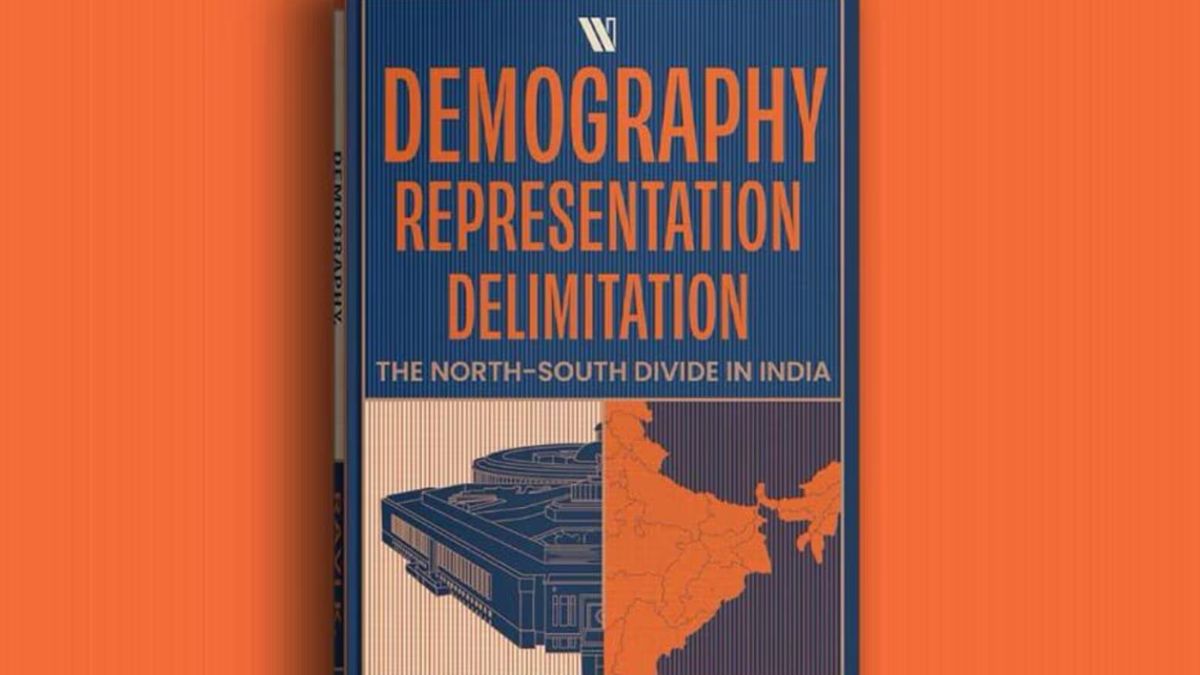
Demography, Representation, Delimitation: The North–South Divide in India” is a recent book by historian Ravi K Mishra, exploring the complexities behind India’s ongoing delimitation debates. The book addresses the tension over redrawing Lok Sabha constituency boundaries, a process deeply intertwined with regional identity, representation, and population control narratives across northern and southern states.
Essence of the Book
- Mishra’s research uses census data from 1881, adjusting for current state boundaries, showing that southern states had higher population growth than northern states until 1971.
- He challenges the narrative that southern states controlled population growth through better policy or culture—arguing they simply progressed earlier along the “demographic transition” timeline.
- Kerala, Madras Presidency, Mysore, and Hyderabad saw population growth above the national average through the late 19th and early 20th centuries; only after 1971 did the North outpace the South.
- If delimitation is based strictly on current population, Mishra forecasts major seat gains for Northern states: UP from 80 to 134, Bihar from 40 to 73, and Maharashtra from 48 to 71; Kerala stays at 20 seats.
- Mishra proposes using Kerala’s seat count as a baseline, and increasing Rajya Sabha seats to preserve regional balance in Parliament.
Information About the Author
- Ravi K Mishra is a historian focused on Indian demography and public policy.
- He is the Joint Director of the Prime Ministers Museum and Library, New Delhi, and has taught at O.P. Jindal Global University.
- Mishra’s work is known for its rigorous research and is cited in academic and mainstream media on topics related to India’s population history.


 Sudha Murty Book 'Tides of Time' Highlig...
 CM Bhupendra Patel Releases Gujarati Bio...
 VP C. P. Radhakrishnan Unveils 'Atal Bih...











