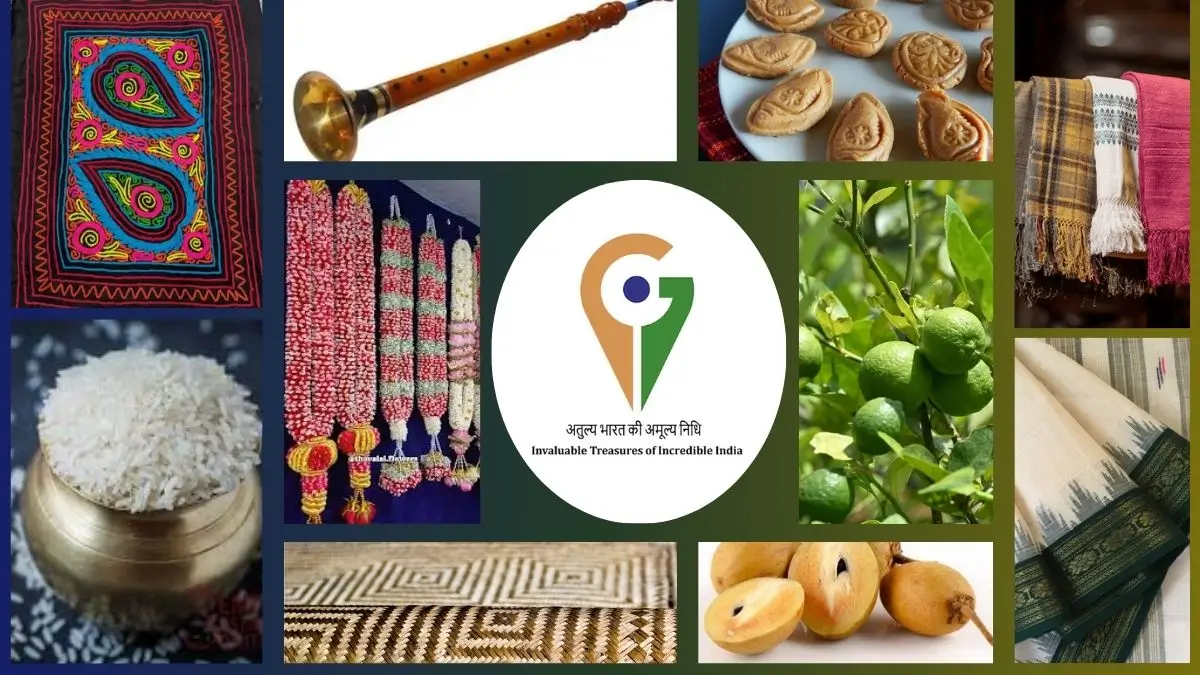
In 2025, India continued to strengthen its efforts to recognize and protect the unique identity of its regional products through Geographical Indication (GI) tags. These recognitions play a vital role in preserving traditional knowledge, cultural heritage, and local craftsmanship while also providing economic benefits to artisans, farmers, and communities. By formalizing GI status for various traditional goods, India not only safeguards its rich regional diversity but also enhances market opportunities and promotes sustainable development for local producers. This ongoing commitment highlights the country’s dedication to valuing and preserving its unique geographical and cultural heritage.
List Of GI Tag of 2025
| State | GI-Tag Product | Features |
| Jammu & Kashmir | Kashmir Namda | Traditional woolen rug with felted wool and detailed handcrafting. |
| Kashmir Gabba |
Thick, warm wool blanket known for insulation in cold climates.
|
|
| Kashmir Willow Bat | Handcrafted cricket bat made from local willow trees. | |
| Kashmir Tweed | Woven wool fabric with characteristic rough texture. | |
| Kashmir Crewel | Wool embroidery with colorful floral patterns. | |
| Kashmir Wagguv | Kashmiri embroidery style used on shawls and textiles. | |
| Kashmir Chain Stitch | Intricate looped embroidery technique. | |
| Kashmir Shikara | Traditional handcrafted wooden boats from Dal Lake. | |
| Uttar Pradesh | Banarasi Shehnai | Traditional wind instrument vital to classical and ceremonial music. |
| Banarasi Tabla | Handcrafted classical percussion instrument. | |
| Meerut Bugle | Brass wind instrument used in ceremonies and bands. | |
| Mathura Zari Dress | Garment with metallic threadwork and intricate designs. | |
| West Bengal | Nolen Gurer Sandesh | Sweet made using date palm jaggery and fresh dairy. |
| Kamarpukar’s White Bonde | Traditional festival sweet made with rice and milk. | |
| Murshidabad’s Channabora | Layered sweet made from gram flour and sugar. | |
| Bishnupuris Motichur Laddoo | Tiny sweet laddoos with distinctive flavor. | |
| Radhunipagal Rice | Aromatic rice with unique aroma and texture. | |
| Malda’s Nistari Silk Yarn | Fine silk yarn for weaving traditional textiles. | |
| Baruipur’s Guava` | Juicy guava with distinctive local taste. | |
| Darjeeling Mandarin Orange | Flavorful citrus from hill regions. | |
| Meghalaya | Meghalaya Ryndia | Traditional textile, often handwoven with natural dyes. |
| Sikkim | Lepcha Musical Instruments (Tungbuk & Pumtong Pulit) | Indigenous instruments used in Lepcha cultural music. |
| Arunachal Pradesh | Dao | Traditional handcrafted utility knife. |
| Gujarat | Amalsad Chikoo | Sweet fruit known for flavor and texture. |
| Ambaji Marble | Milky‑white marble recognized for durability and sheen. | |
| Andhra Pradesh | Ponduru Khadi | Traditional handspun, handwoven cotton celebrated for its fine texture and heritage. |
| Kerala | Kannadippaya | Traditional spice used in food and medicinal applications. |
| Tamil Nadu | Kumbakonam Betel Leaf | Aromatic agricultural leaf recognized for quality and taste. |
| Thovalai Flower Garland | Garlands made from fragrant local flowers. | |
| Panruti Cashew | Cashew variety with rich flavor. | |
| Panruti Palappazham (Jackfruit) | Local jackfruit variety with distinctive sweetness. | |
| Chettikulam Small Onion | Small onion with strong flavor profile. | |
| Puliyangudi Acid Lime | Tangy lime used in culinary dishes. | |
| Virudhunagar Samba Vathal | Sun‑dried lentil snack, typical of local cuisine. | |
| Ramanadu Chithiraikar Rice | Traditional aromatic rice variety. | |
| Woraiyur Cotton Saari | Handwoven cotton sari with classic motifs. | |
| Thooyamalli Rice | Local aromatic rice. | |
| Kavindapadi Nattu Sakarai | Traditional jaggery from sugarcane. | |
| Namakkal Kalchatti | Earthen cooking pots enhancing flavor and heat retention. | |
| Ambasamudram Choppu Saman | Traditional wooden utensils and tools. |
What is a GI Tag?
- A sign used on products with a specific geographical origin.
- Confers unique qualities, reputation, or characteristics attributable to that origin.
- Recognized as a form of Intellectual Property Right (IPR) under TRIPS and Paris Convention.
Benefits
- Legal protection against unauthorized use.
- Exclusive right to use the GI tag.
- Prevents misuse or imitation.
- Provides legal recourse against infringement.
Eligible Products
- Agricultural products, foodstuffs, handicrafts, industrial products.
- Must have specific qualities linked to the region.
Eligibility Criteria
- Any trader group, association, or organization can apply.
- Must demonstrate historical uniqueness and production process.
International Conventions
- Paris Convention (1883) – protection of industrial property including GI.
- Lisbon Agreement (1958) – international registration of appellations of origin.
- Madrid System – trademarks can protect GIs via collective/certification marks.
GI in India
- Governed by Geographical Indications of Goods (Registration & Protection) Act, 1999.
- Registry located in Chennai.
- First GI tag: Darjeeling Tea.


 Supreme Court Rules on SC Status: Conver...
 Lok Sabha Passes Transgender Amendment B...
 Indian Railways New Ticket Cancellation ...