
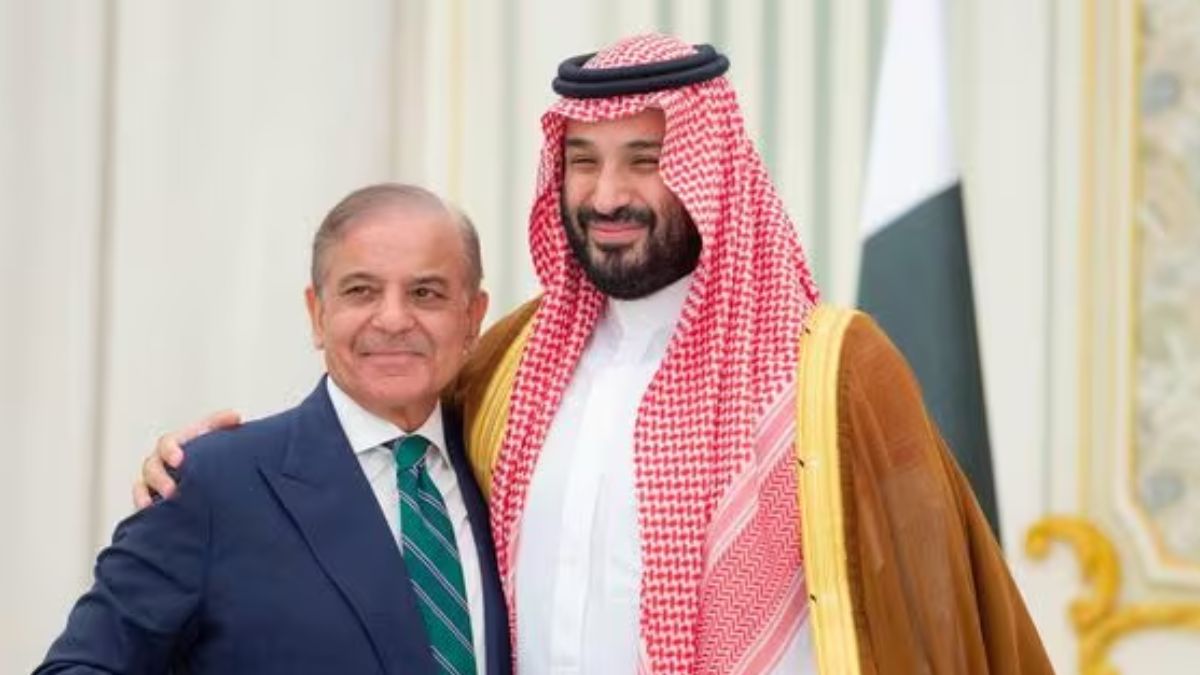
In a move that marks a significant shift in the regional security landscape, Saudi Arabia and Pakistan signed a Mutual Defence Agreement on September 17, 2025. The agreement explicitly states that “any aggression against either country shall be considered an aggression against both,” reflecting a deepened strategic alliance. This pact, signed amid rising instability in West Asia, particularly following escalating tensions involving Israel and Qatar, is being viewed as a turning point in the Saudi–Pakistan relationship. For India, the agreement raises critical geopolitical questions, especially concerning balance of power and regional diplomacy.
What the Defence Pact Entails
The Saudi–Pakistan defence pact formalises long-standing security cooperation between the two nations and expands it significantly in scope and commitment.
Key features include
- Mutual Defence Clause: Any military aggression against one party will be treated as an attack on both.
- Joint Deterrence Measures: Enhanced coordination in intelligence sharing, defence logistics, and military preparedness.
- Possibility of Expanded Military Cooperation: Including future joint exercises and interoperability of forces.
- Long-Term Strategic Commitment: Reflecting a shared vision of defence partnership beyond transactional ties.
This level of alliance suggests a move towards treaty-level strategic depth, uncommon in the region’s traditionally transactional diplomacy.
Why the Pact Was Signed Now
The signing comes at a time when Gulf countries are reassessing their defence strategies, especially amid doubts about the long-term reliability of Western (particularly U.S.) security guarantees.
Recent catalysts include,
- Israeli Airstrike in Doha: A controversial Israeli strike on Hamas targets in Qatar shocked Gulf nations and triggered discussions on regional defence autonomy.
- Uncertain US Commitment: Saudi Arabia, like other Gulf states, is seeking to diversify its strategic partnerships.
- Pakistan’s Nuclear Capability: Seen as a valuable deterrent, it adds a layer of strategic assurance for Saudi Arabia.
- Historic Defence Ties: The agreement formalises what has long existed as informal cooperation, including Pakistani military support in the Kingdom.
What It Means for Saudi Arabia
For Saudi Arabia, this pact reflects a strategic hedge and a move towards building regional deterrence capabilities. It signals,
- Reduced over-reliance on Western powers for security.
- Strengthening ties with a nuclear-armed Muslim-majority state.
- Possible counterbalance to growing Iranian influence in the region.
- A boost to Saudi Arabia’s own ambition to become a regional defence hub.
This comes at a time when Riyadh is also engaging in active diplomacy with Iran and Israel, making this agreement even more strategically layered.
How India is Likely to View the Pact
India has taken a measured stance, stating it remains vigilant and committed to protecting its interests. While the pact does not target any third country explicitly, India has reasons to observe it closely.
Concerns for India include,
- Pakistan’s Enhanced Strategic Backing: Especially with Saudi Arabia now offering treaty-level support.
- Balance of Power in the Gulf: India has growing interests in the Gulf, particularly in trade, energy, and diaspora security.
- Impact on Counterterrorism Dynamics: Cooperation between Pakistan and Saudi Arabia could influence security calculations in the broader region.
- Geopolitical Messaging: The pact projects a new axis that could challenge India’s strategic space in the Middle East.
Static Facts
- Clause Highlight: “Any aggression against either country shall be considered an aggression against both”
- Countries Involved: Saudi Arabia and Pakistan
- Pact Type: Mutual Defence Agreement
- Key Region Affected: West Asia and South Asia


 France Hosts One Health Summit Under G7 ...
 Newcastle Disease Spread in Europe 2026:...
 Mongolia Gets New Prime Minister Amid Po...











