

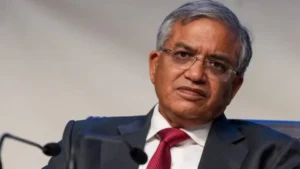
On 17 November 2025, the Sixteenth Finance Commission (XVIFC), chaired by Dr. Arvind Panagariya, formally submitted its much-anticipated report to the President of India. The report will guide India’s fiscal planning for the five-year period from 1 April 2026 to 31 March 2031 and plays a central role in determining the sharing of tax revenue between the Union and States. The submission marks a major development in India’s fiscal federal structure, as it lays the groundwork for resource distribution, grants-in-aid, and disaster management financing over the next half-decade.
What is the Finance Commission?
Constituted under Article 280 of the Indian Constitution, the Finance Commission is a constitutional body tasked with recommending,
- The distribution of the net proceeds of taxes between the Centre and the States
- The allocation of these proceeds among the States
- The principles governing grants-in-aid
- Suggestions related to disaster management funding arrangements
- Any other matter referred by the President in the Terms of Reference (ToR)
The Sixteenth Finance Commission was constituted in 2023 and has now completed its mandate for the 2026–31 award period.
Key Members and Structure of the XVIFC
The Commission was chaired by Dr. Arvind Panagariya, a noted economist and former Vice-Chairman of NITI Aayog. Other members included,
- Smt. Annie George Mathew
- Dr. Manoj Panda
- Shri T. Rabi Sankar
- Dr. Soumyakanti Ghosh
- Shri Ritvik Pandey, Secretary to the Commission
The report was submitted to the President, and later copies were presented to the Prime Minister and Union Finance Minister.
Scope of the XVIFC Report
The recommendations span a wide array of critical areas related to fiscal governance, including,
- Vertical devolution: Share of taxes between Centre and States
- Horizontal devolution: Distribution among States based on criteria like population, income distance, area, etc.
- Performance-based grants: For education, health, sanitation, and green initiatives
- Revenue deficit grants: To support States with structural imbalances
- Disaster risk financing: Review of current financing mechanisms for disaster management
- Local body financing: Recommendations for empowering rural and urban local governments
Process and Consultation
To formulate its report, the XVIFC conducted extensive consultations,
- Meetings with Union and State Governments
- Discussions with local bodies across tiers
- Engagements with previous Finance Commission members
- Inputs from renowned academic institutions and multilateral organisations
- Deliberations with domain experts and the Commission’s Advisory Council
This inclusive process ensured that the report is both comprehensive and representative of diverse fiscal needs and capacities.
Structure of the Report
The final report is divided into two volumes,
- Volume I: Contains the recommendations and policy framework as per the Terms of Reference
- Volume II: Comprises annexures, data tables, and supporting analysis
The report will be made public once it is tabled in Parliament by the Union Finance Minister, as required under Article 281 of the Constitution.
Key Static Facts: Sixteenth Finance Commission (XVIFC)
- Constitutional Basis: Article 280 of the Indian Constitution
- Chairman: Dr. Arvind Panagariya
- Members: Smt. Annie George Mathew, Dr. Manoj Panda, Shri T. Rabi Sankar, Dr. Soumyakanti Ghosh
- Secretary: Shri Ritvik Pandey
- Award Period: 2026–27 to 2030–31
- Report Status: Submitted on 17 November 2025 to the President
- To Be Tabled: In Parliament under Article 281
- Focus Areas: Tax sharing, grants-in-aid, disaster management, local body finance
- Report Volumes: Two (Volume I – Recommendations; Volume II – Annexures)


 Gurgaon Tops the List of India's Most Po...
 Parliament Rejects Impeachment of Chief ...
 Against All Odds: Indian Cyclist Divya S...











