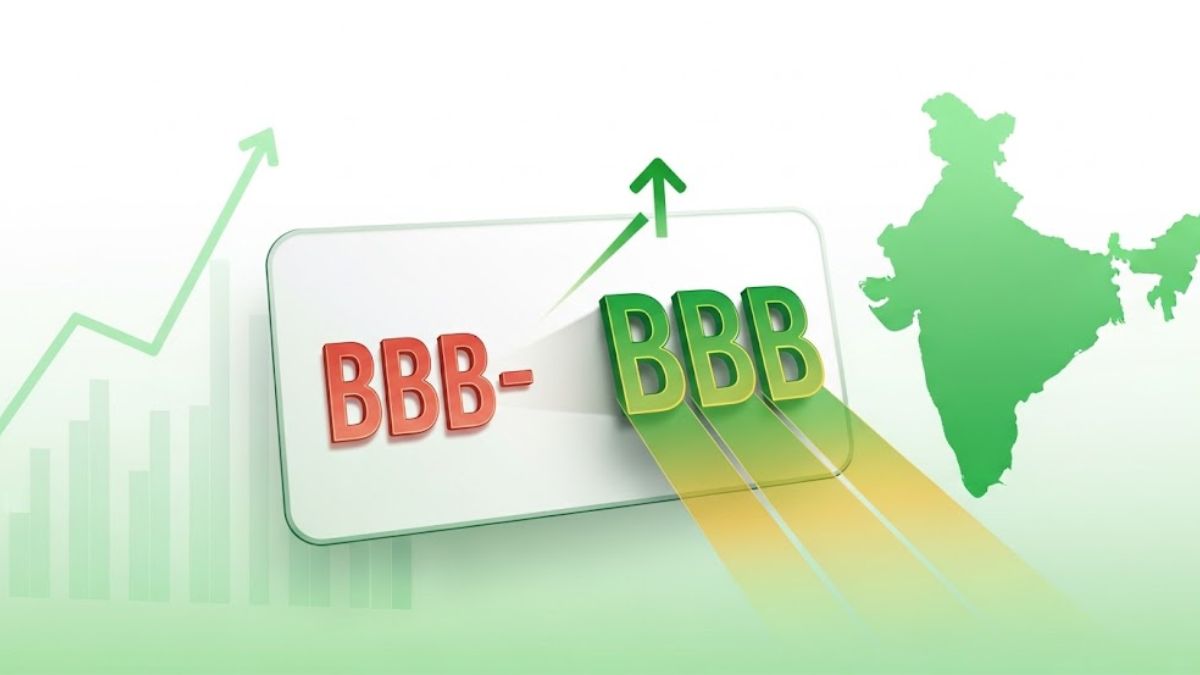
India’s economic momentum remains resilient, according to S&P Global Ratings, which upgraded India’s long-term sovereign credit rating from “BBB–” to “BBB” with a stable outlook — marking the first upgrade in 18 years. The agency cited robust domestic demand, fiscal consolidation, and policy stability as the key drivers behind the upgrade, projecting India’s average growth at 6.8% over the next three years.
Credit Rating Upgrade: What It Means
Sovereign Rating Explained
S&P’s sovereign credit rating evaluates a country’s ability to meet its financial commitments. Moving from BBB– to BBB places India further into the “investment-grade” category, making it more attractive to global investors and improving borrowing conditions.
Timeline of Upgrade
- Previous Rating: BBB– (since 2007)
- New Rating (2025): BBB
- Short-Term Rating: Upgraded from A-3 to A-2
- Transfer & Convertibility Assessment: Raised from BBB+ to A-
Key Drivers of the Upgrade
Strong Domestic Demand
India’s economy has outpaced regional peers in recent years due to,
- Expanding infrastructure spending
- Increased household consumption
- Government capital expenditure push
Fiscal Consolidation
- The rating reflects progress in reducing fiscal deficit and enhancing tax revenue collections, despite global economic uncertainties.
Supportive Monetary Policy
India’s monetary stance has been,
- Inflation-focused yet growth-friendly
- Aligned with macroeconomic stability objectives
Impact of US Tariffs and Global Factors
Trade Resilience
- India’s relatively low trade dependency makes it less vulnerable to external shocks like US tariff hikes.
- This insulates key sectors, such as manufacturing, services, and agriculture, from severe volatility.
S&P’s Regional Context
- India remains a regional outperformer, owing to its diverse economy and strong domestic growth base.
Growth Outlook and Structural Reforms
GDP Projection
- Average GDP growth of 6.8% projected from 2025–2028
Major growth drivers,
- Infrastructure reforms
- Public-private investment synergy
- Ease of doing business improvements
Policy Continuity and Reforms
- Emphasis on transport, logistics, digital public infrastructure
- PLI schemes, Make in India, and Green Energy targets form part of the long-term vision
Broader Impact: Financial Sector and Institutions
NBFC and Bank Ratings Upgraded
- S&P also upgraded ratings of key financial institutions, reflecting improved sectoral confidence:
Non-Banking Financial Companies (NBFCs)
- Bajaj Finance
- Tata Capital
- L&T Finance
Banks
- State Bank of India
- HDFC Bank
- ICICI Bank
- Axis Bank
- Union Bank of India
- Indian Bank
- Kotak Mahindra Bank
This signifies greater financial sector stability and enhanced global trust in India’s financial backbone.


 Fitch Raises India’s FY26 GDP Growth For...
 Inflation in India Hits 10-Month High — ...
 Government Revises Fiscal Deficit Ratios...