
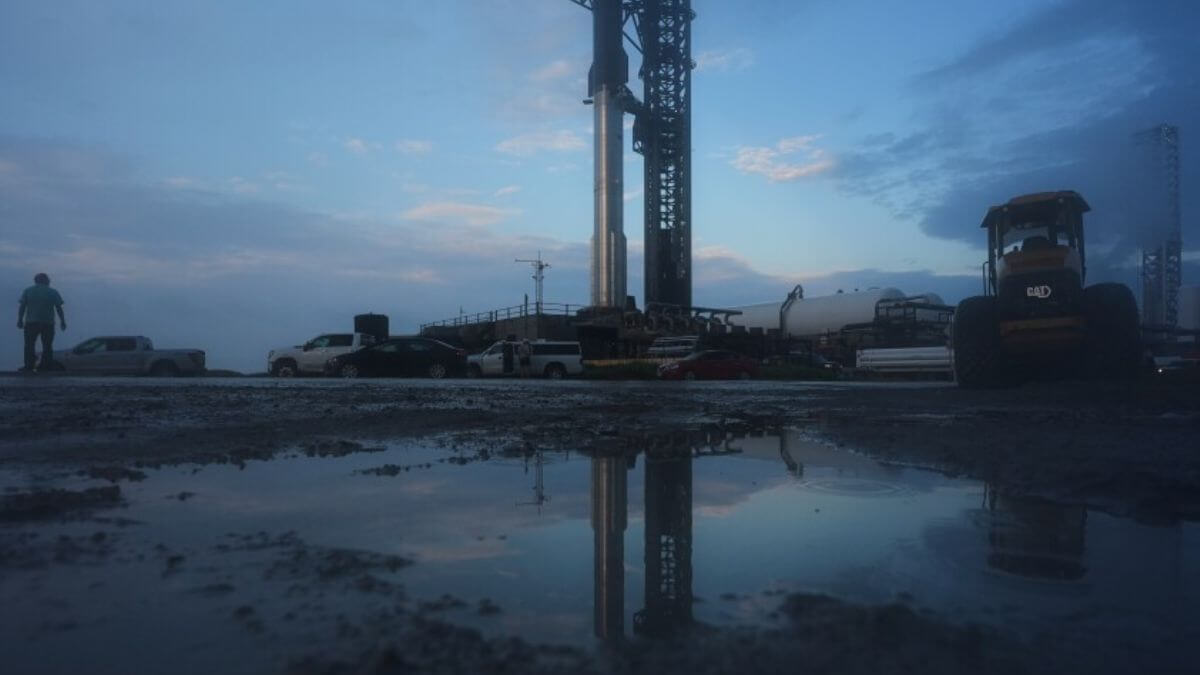
SpaceX has achieved another milestone in its space exploration journey by successfully conducting the 10th test launch of Starship, its next-generation, fully reusable launch system. The liftoff occurred at Starbase in Texas, overcoming earlier weather-related delays, and marked a significant advancement in the quest for low-cost, deep-space missions, including NASA’s upcoming Artemis III Moon landing in 2027.
Key Highlights from the Test Launch
Controlled Splashdowns and Re-Ignition
The two-stage Starship system, comprising the Super Heavy booster and the Starship upper stage, performed flawlessly during the flight,
- Super Heavy Booster: Executed a controlled splashdown in the Gulf of Mexico
- Starship Upper Stage: Completed complex orbital manoeuvres, including a successful engine re-ignition in space, before achieving a soft splashdown in the Indian Ocean
- These operations were crucial tests of reusability and precision landing systems—hallmarks of SpaceX’s long-term strategy to make space travel sustainable and affordable.
First-Ever Payload Deployment Demonstration
Starlink Simulators Used
In a first for the Starship program, the flight included payload deployment testing using Starlink simulators. This demonstration validated,
- Payload deployment mechanisms
- Vehicle control during and post-deployment
- Readiness for commercial and scientific payloads in future missions
This milestone suggests that Starship is transitioning from test flights to mission-ready capabilities, a leap forward for SpaceX’s ambitions.
Relevance to Artemis III and Future Missions
Data Critical for Lunar Exploration
SpaceX’s Starship has been selected as the lunar landing vehicle for NASA’s Artemis III mission, scheduled for 2027. The data from this test will directly inform,
- Landing precision and engine restart protocols
- Heat shield performance and structural resilience
- Deployment dynamics under lunar mission conditions
This launch further cements Starship’s role in NASA’s deep space exploration roadmap, including future missions to the Moon and eventually Mars.


 Meet MAI-Transcribe-1: Microsoft’s Fast,...
 What is Outer Space Treaty 1967? Princip...
 What Is Mission Mitra? ISRO’s New Experi...











