Introduction: Why Food Security Matters
Food is the most basic human need, yet in the 21st century, millions of people still suffer from hunger and malnutrition. This is not because the world fails to produce enough food — in fact, global food production is adequate to feed everyone. The real challenge lies in access, affordability, and distribution. Safe and nutritious food is often too expensive for the poorest populations, leaving them trapped in a cycle of hunger and poor nutrition.
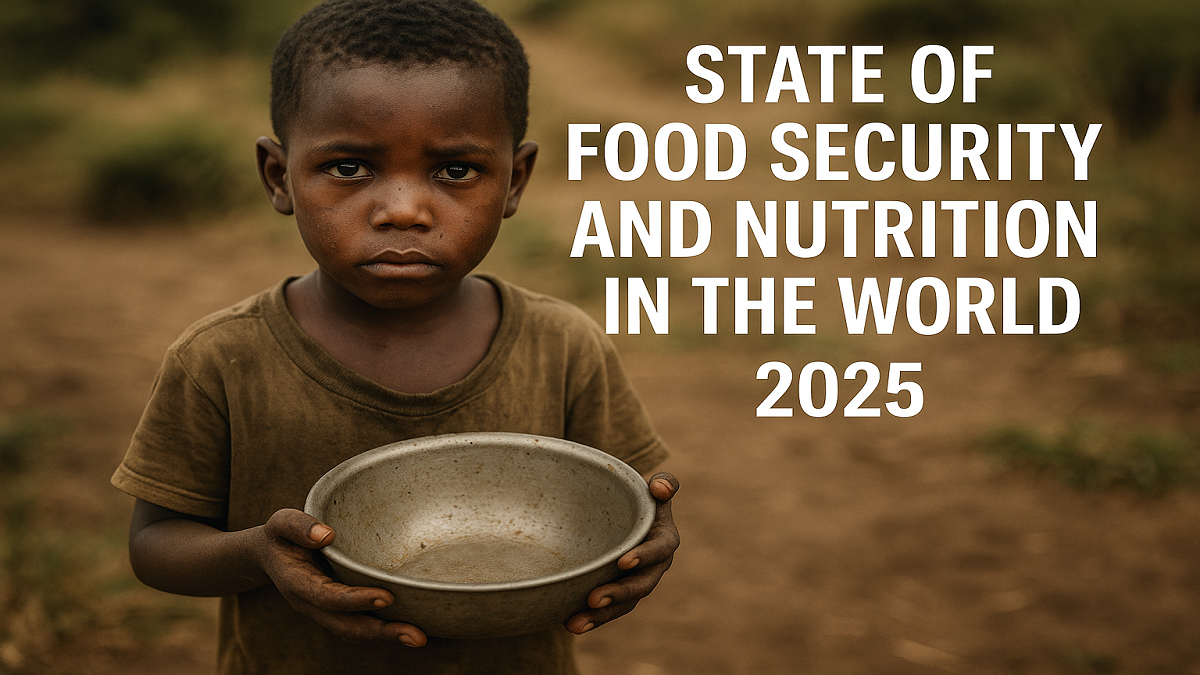
The United Nations Sustainable Development Goal 2 (SDG 2) — known as Zero Hunger — aims to end hunger, achieve food security, improve nutrition, and promote sustainable agriculture by 2030. However, the 2025 edition of “The State of Food Security and Nutrition in the World” report, jointly published by the FAO, IFAD, UNICEF, WFP, and WHO, warns that the recent surge in food price inflation is pushing this goal further out of reach.
Global Food Security: Current Situation
The report paints a mixed picture. While there have been small improvements in some regions, hunger and food insecurity remain alarmingly high. In 2024, 8.2 percent of the global population experienced hunger — only a slight drop from 8.5 percent in 2023.
Africa remains the most affected continent, with one in five people going hungry. Western Asia follows with 12.7 percent, while Asia as a whole fares better at 6.7 percent. India’s progress in reducing hunger has contributed significantly to Asia’s improvement.
Food insecurity — which measures not only hunger but also the struggle to get reliable access to nutritious food — affects 2.3 billion people worldwide. Rural communities and women are particularly vulnerable. In Africa, nearly six out of ten people suffer from moderate or severe food insecurity.
The Cost of a Healthy Diet
A healthy diet is one that includes a balance of whole grains, fruits, vegetables, legumes, nuts, and moderate amounts of animal-based foods. However, this is becoming increasingly unaffordable. In 2024, the average cost of a healthy diet globally was $4.46 per person per day (in purchasing power parity terms).
In low-income countries, the situation is worse: around 72 percent of the population cannot afford such a diet. The highest costs are seen in Africa, where prices have risen sharply in recent years. Globally, 2.6 billion people lack the income needed to eat healthily.
Malnutrition: Persistent and Emerging Problems
Even when people have enough to eat, poor diet quality can lead to malnutrition. The report highlights worrying trends:
- Child stunting (low height for age due to chronic undernutrition) has declined globally from 26.4 percent in 2012 to 23.2 percent in 2024. This is progress, but far from the 14 percent target for 2030.
- Child wasting (dangerously low weight for height) remains stuck at 6.6 percent, while child overweight has not improved either, staying at 5.5 percent.
- Adult obesity is rising — from 12.1 percent in 2012 to 15.8 percent in 2022 — creating new public health challenges.
- Anaemia in women aged 15–49 has worsened, increasing from 27.6 percent to 30.7 percent in the past decade. Anaemia reduces physical productivity, harms maternal health, and is linked to higher risks during pregnancy.
The Surge in Food Price Inflation (2021–2023)
Between 2021 and 2023, the world experienced an extraordinary rise in food prices. Food price inflation — the rate at which food prices increase — went from 5.8 percent in December 2020 to 23.3 percent in December 2022. In some countries like Sudan, Venezuela, and Zimbabwe, inflation exceeded 350 percent.
Food price inflation outpaced general inflation, meaning that food became more expensive at a faster rate than most other goods and services. At its peak in early 2023, food inflation was 5.1 percentage points higher than headline inflation.
Why Did Food Prices Rise So Sharply?
While global commodity prices for crops and energy played a role, the surge was driven by multiple interconnected factors:
- COVID-19 pandemic disruptions slowed production, transport, and trade.
- The war in Ukraine disrupted exports of wheat, maize, and sunflower oil, leading to shortages in many countries.
- Extreme weather events damaged harvests in key producing countries.
- Rising energy costs pushed up the price of fertilisers and transport.
- Currency fluctuations weakened purchasing power in import-dependent countries.
- Market concentration meant that in some sectors, a few companies controlled prices and were slow to reduce them even when costs fell.
Impact on Households and Nutrition
For ordinary households, high food prices mean less purchasing power. Families are forced to make painful choices:
- Switching to cheaper, less nutritious foods like refined grains instead of vegetables or protein.
- Reducing meal frequency and variety, sometimes eating only once or twice a day.
- Prioritising food for working adults and reducing portions for women and children.
These coping strategies may help in the short term but have serious long-term consequences for health, learning capacity, and productivity.
Unequal Impact Across Countries
The effects of high food prices have been felt worldwide, but low-income countries have suffered the most. In 2023, food price inflation in many of these countries was close to 30 percent, compared to about 8–10 percent in wealthier nations. This disparity deepens global inequality and makes recovery harder for vulnerable economies.
The Rise of Ultra-Processed Foods
The report also warns about the growing consumption of ultra-processed foods (UPFs) — packaged items high in sugar, salt, and unhealthy fats but low in nutrients. These foods are 47 percent cheaper than unprocessed foods, have long shelf lives, and are aggressively marketed. While they may seem affordable, regular consumption increases the risk of obesity, diabetes, and heart disease.
Policy Recommendations: The Way Forward
To address food price inflation and protect nutrition, the report suggests a mix of short-term relief measures and long-term structural reforms.
Short-Term Measures
- Targeted subsidies on essential nutritious foods for low-income households.
- Tax reductions on healthy food items.
- Cash transfers and social safety nets to help families maintain a balanced diet.
Long-Term Strategies
- Build strategic food reserves to stabilise prices during crises.
- Invest in agricultural productivity through better technology, storage, and transportation.
- Strengthen market information systems so farmers and traders can respond quickly to price changes.
- Encourage diverse food production to reduce dependency on a few staple crops.
- Regulate and promote healthy diets while discouraging overconsumption of ultra-processed foods.


 UV Index Explained: The Hidden Health Ri...
 QS World University Rankings 2026: India...
 Best Airlines in the World 2026: Best Fu...