Introduction
In India, courts play a vital role in safeguarding public interest. At times, they step in even when no one files a case—this power is called Suo Moto Cognizance. It allows courts to act on their own, especially when an issue concerns the fundamental rights or safety of people.
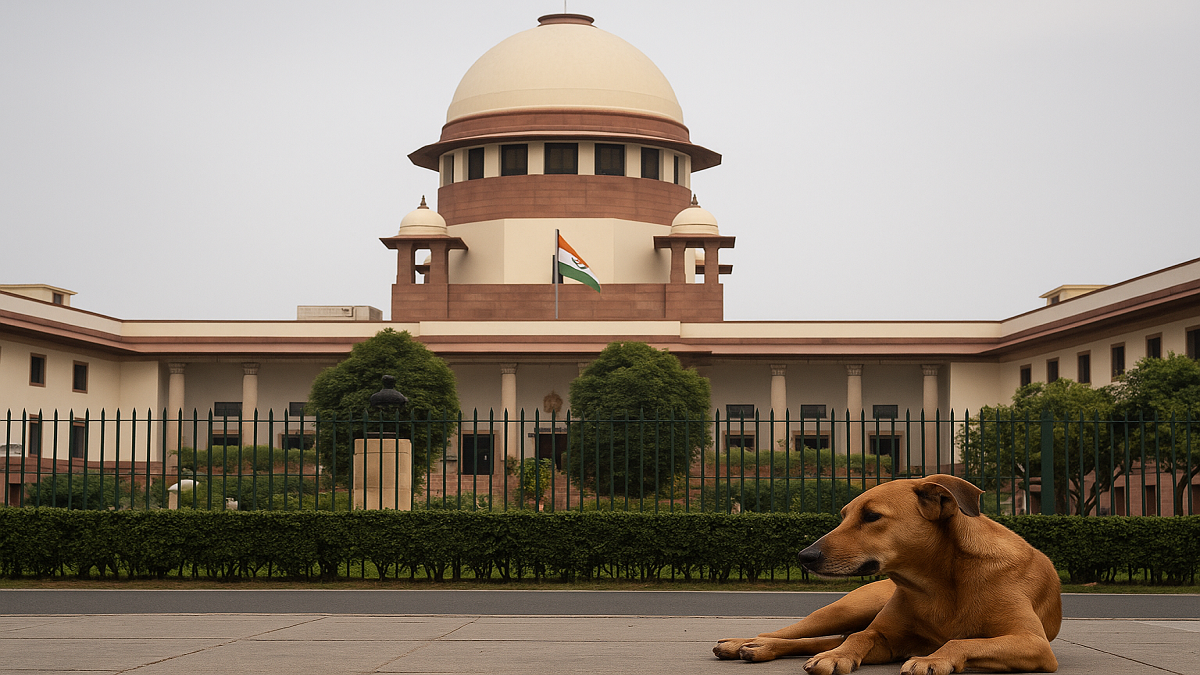
A recent example is the Supreme Court’s action on the stray dogs menace in Delhi-NCR, where it took suo moto action after reading about children being attacked. This article explains the concept using this case as a practical example, perfect for exam aspirants.
What is Suo Moto Cognizance?
Suo Moto is a Latin term that means “on its own motion.” In the Indian legal system, it means the court can begin legal proceedings by itself, without waiting for a person or group to approach it.
The Constitution supports this power under:
- Article 32, which gives the Supreme Court the authority to protect fundamental rights.
- Article 226, which gives similar power to High Courts.
This tool is most often used in cases related to public interest, human rights, environmental issues, or failures in government action.
Why and When Courts Use Suo Moto Powers
Courts typically use this power when:
- A serious public problem needs immediate attention.
- The people affected are too weak, poor, or unaware to approach the courts.
- There’s a need to hold public authorities accountable.
For example, during the COVID-19 lockdown, the Supreme Court took suo moto action to protect migrant workers. In earlier years, it has also used this power to handle pollution issues and custodial deaths.
The 2025 Street Dogs Case: A Real-Life Example
On July 28, 2025, the Supreme Court read a news article titled “City hounded by strays, kids pay price”, which described how stray dog attacks were increasing in Delhi and NCR, especially harming children.
Seeing the seriousness of the matter, the Court took suo moto cognizance and started a case on its own. By August 11, it passed a detailed order to tackle the crisis.
What the Supreme Court Ordered
The Court directed the Delhi government and municipal bodies to take the following actions:
- Catch and remove all stray dogs from Delhi-NCR within 8 weeks.
- Ensure dogs are vaccinated, sterilized, and kept in shelters, not released back on the streets.
- Set up a helpline within one week for dog bite complaints.
- Install CCTV cameras in all shelters to ensure proper treatment.
- Take legal action against anyone trying to obstruct the process.
The Court made it clear that protecting people—especially children—from dog attacks was a matter of public safety and came under the right to life under Article 21 of the Constitution.
Reactions and Controversy
While many citizens welcomed the order, it also sparked strong reactions. Animal welfare groups called the decision unscientific and inhumane. They argued that removing dogs from the streets entirely could lead to other problems and violates animal protection laws.
Protests broke out in Delhi, and some activists were detained for blocking the dog-catching drive. In response to these concerns, the Chief Justice of India said the court might review the decision if needed.
Why This Case Matters for Exam Aspirants
This case is important for students preparing for UPSC, Judiciary, or other competitive exams because:
- It is a real-time application of Suo Moto Cognizance.
- It links constitutional powers (Articles 32 and 21) with public policy and law enforcement.
- It shows how the court balances human safety with animal rights.
- It’s likely to appear in current affairs or legal awareness sections of exams.


 ECINet KYC Feature Explained: How Voters...
 BIRAC-BioNEST Incubation Centre Inaugura...
 E20 Petrol India 2026: Nationwide Rollou...