
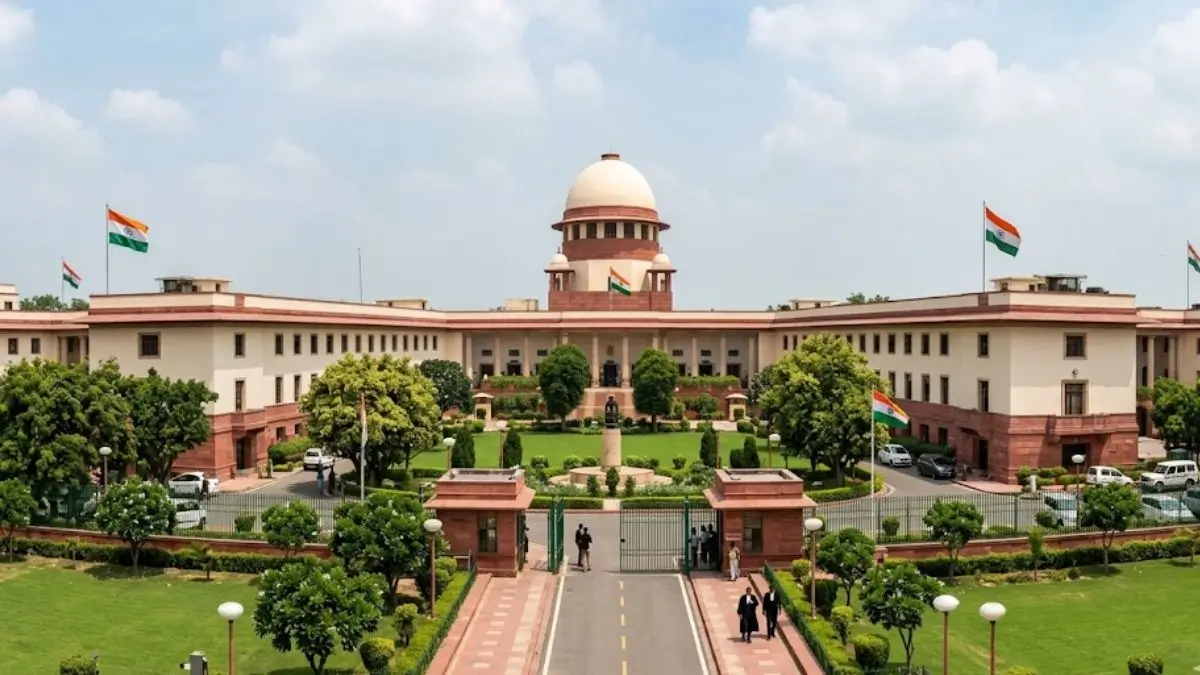
Honorable Supreme Court of India has ruled out that the right to vote and to contest elections are not fundamental rights but they are statutory rights and it governed by the law. This judgment was came on the April 11, 2026 and it during a case related to the cooperative society elections in State of Rajasthan. The Court also emphasized that these rights are exist only within the framework of the laws like the Representation of the People Acts and it can be subject to the conditions, qualifications and the disqualifications.
What is The Supreme Court Verdict?
A bench comprising the Justices BV Nagarathna and R Mahadevan have reiterated the well-established legal position that,
- The right to vote enables the participation in elections but is not the fundamental right which provide under the Constitution.
- The right to contest elections is the separate and it can be restricted via different eligibility conditions.
The Court has also clarified that both rights are purely statutory it means that they are created and regulated by laws passed by the Parliament or the state legislatures and they are not guaranteed under Part III (Fundamental Rights) of the Constitution of India.
Background of the Rajasthan Cooperative Societies Case
The ruling has been comes from the dispute involving the elections in District Milk Producers Cooperative Unions in Rajasthan. These unions have operated under the Rajasthan Co-operative Societies Act, 2001 which had established the three-tier system.
Key Issues in the Case
In the act there were certain bye-laws were framed to set the eligibility criteria for candidates which includes the,
- Minimum number of days of the milk supply
- Quantity of milk supplied
- Operational status of societies
- And the audit compliance standards
So with this some cooperative societies have challenged these rules in the Rajasthan High Court and argued that that they were unfair and exceeded the legal provisions.
In the 2015 a single judge has struck down the bye-laws and in 2022 a division bench upheld the decision which taken earlier.
However the Supreme Court has overturned the High Court justification and stated that these bye-laws are merely set eligibility conditions and were legally valid.
Why the Supreme Court Upheld the Bye-Laws
The apex court has observed that this bye-laws do not amount to the disqualifications but it simply define eligibility and they are not violate the constitutional principles like equality. Also said the courts should not interfere in the internal matters of the cooperative societies unless there is clear illegality.
The court also noted that cooperative societies are generally not considered ‘State’ under Article 12 of the Constitution.
Therefore their internal election matters typically not fall under the judicial review via Article 226 by writ jurisdiction.
Statutory Nature of Electoral Rights
The Court have also highlighted that electoral rights from laws such as the,
- Representation of the People Act, 1950
- Representation of the People Act, 1951
These laws define that the,
- Who can vote (on the basis of age, citizenship, registration)
- Who can contest elections
- Also the grounds for the disqualification (like the criminal record, corrupt practices, etc.)
Difference Between Fundamental Rights and Statutory Rights
| Aspect | Details |
| Fundamental Rights | They are guaranteed by the Constitution of India under the Part III It are cannot be easily restricted Directly enforceable in the Supreme court or High Court |
| Statutory Rights | This rights are created by legislation Can be modified or restricted by the law They exist only within the legal framework |
Question
According to Article 12 of Indian Constitution, which of the following are included in the definition of ‘state’?
1. Gram Panchayat
2. Life Insurance Corporation
3. State Legislature
4. Political Parties
5. Judicial proceedings of the Supreme Court
A. 1, 2 and 3 only
B. 1, 3 and 5 only
C. 2, 3 and 4 only
D. 1, 2, 3, 4 and 5


 Patent Applications in India Jump 30.2% ...
 No more cash at toll plazas: India shift...
 First Life-Size Statue of Swami Vivekana...











