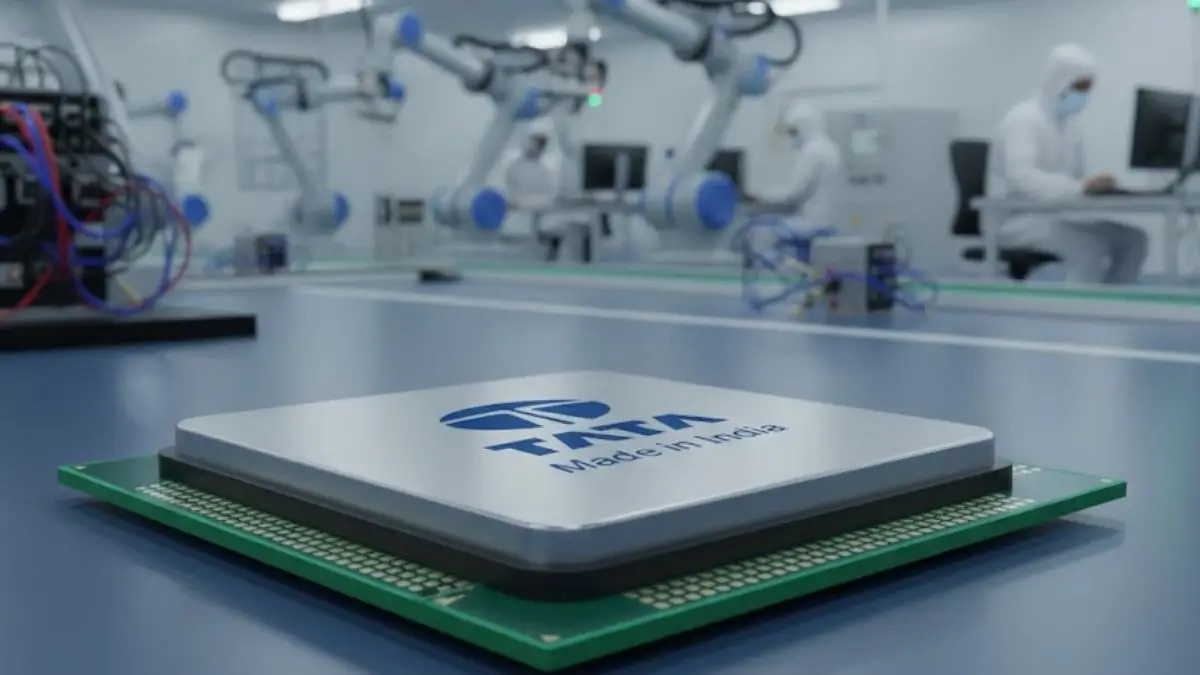
In a landmark development for India’s semiconductor ambitions, Tata Electronics and Intel Corporation have signed a Memorandum of Understanding (MoU) to explore chip manufacturing and packaging collaboration in India. The MoU focuses on leveraging Tata’s upcoming facilities in Dholera, Gujarat, and Guwahati, Assam, to potentially produce and package Intel’s semiconductor products for the Indian market.
This partnership aims to accelerate the growth of India’s semiconductor value chain, particularly as the country eyes a stronger role in the global chip supply network amid geopolitical shifts and rising AI-related demand.
Key Components of the MoU
The agreement outlines several areas of potential collaboration,
- Manufacturing Intel chips at Tata’s chip fabrication unit in Dholera, which is currently under construction.
- Packaging and testing (OSAT) of Intel products at Tata’s Guwahati facility, also under development.
- Joint initiatives in advanced packaging technologies in India.
- Collaboration to scale AI-based personal computer (PC) solutions for consumer and enterprise markets in India.
These initiatives aim to create a robust semiconductor and AI technology ecosystem in India that supports both domestic demand and international supply chain resilience.
Industry Leaders Speak on the Collaboration
N Chandrasekaran, Chairman of Tata Sons, emphasized the transformative potential of this partnership:
- “Together, we will drive an expanded technology ecosystem and deliver leading semiconductors and systems solutions, positioning us well to capture the large and growing AI opportunity.”
Lip-Bu Tan, the newly appointed CEO of Intel Corporation, echoed this vision, stating:
- “We see this as a tremendous opportunity to collaborate with Tata to rapidly scale in one of the world’s fastest-growing compute markets, fuelled by rising PC demand and rapid AI adoption across India.”
Tan is currently visiting India and is expected to meet Prime Minister Narendra Modi and Union IT Minister Ashwini Vaishnaw, signaling the strategic weight of the collaboration.
Context: Tata’s Semiconductor Projects in India
Tata Electronics is leading India’s push into semiconductors with two major facilities,
Dholera Fab (Gujarat):
- Approved under the India Semiconductor Mission (ISM) on 29 February 2024
- Expected operational start: by 2027
- Projected employment: around 2,000 people
- India’s first chip fabrication facility with government approval
Guwahati OSAT Unit (Assam):
- Focused on Outsourced Semiconductor Assembly and Testing (OSAT)
- Will support chip packaging and final product readiness
- Aims to enhance India’s downstream semiconductor capabilities
These projects are central to India’s efforts to build a self-reliant and export-ready semiconductor manufacturing base, supported by government subsidies, partnerships, and private sector leadership.
What Is OSAT and Advanced Packaging?
OSAT (Outsourced Semiconductor Assembly and Testing) refers to the final stages of chip production where silicon wafers are cut, packaged, and tested before use in electronic devices. Advanced packaging involves integrating multiple chips into a single package, enabling higher performance and smaller form factors, especially important for AI and high-compute applications.
These are critical downstream functions in the semiconductor supply chain and key for developing end-to-end chip manufacturing capabilities.
Key Takeaways
- Tata Electronics and Intel have signed an MoU to explore chip fabrication and packaging in India.
- Tata’s upcoming Dholera fab and Guwahati OSAT facility are central to this collaboration.
- The partnership includes potential collaboration on advanced packaging and AI PC development for Indian markets.
- The Dholera plant is India’s first government-approved chip fab, expected to be operational by 2027.
- Intel’s CEO Lip-Bu Tan is in India and is expected to meet key government leaders to further this initiative.


 Wipro Launches AI Hub at GIFT City: What...
 Shantanu Narayen to Step Down as Adobe C...
 Deloitte Opens ConnectSafe Cyber Securit...