
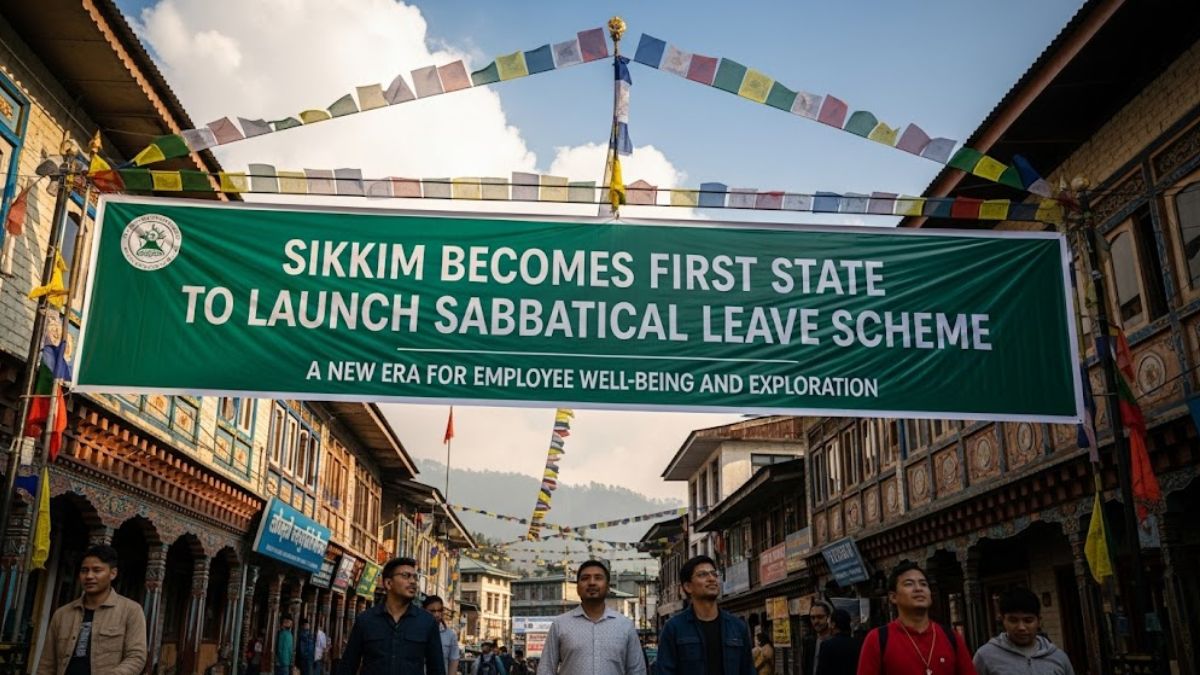
In a pioneering move, Sikkim has become the first state in India to introduce a Sabbatical Leave Scheme for government employees, offering them a unique opportunity for personal and professional development while retaining job security. This progressive policy is aimed at improving workforce well-being, career growth, and administrative efficiency in the state’s governance system.
Key Features of the Sabbatical Leave Scheme
Launched in August 2023, the scheme applies to regular state government employees who have served at least five years continuously. Under the policy, employees can avail of sabbatical leave ranging from 365 days to a maximum of 1,080 days.
- Employees will receive 50% of their basic pay during the leave period.
- Seniority is preserved, ensuring smooth continuity in their service records.
- The government retains the right to recall employees with a one-month notice, if required.
- This balance between flexibility for employees and safeguards for the government makes the scheme a model for employee-friendly governance.
Eligibility for Temporary Employees
Interestingly, the scheme also covers temporary employees, making it inclusive. Those with six months of continuous service are eligible to apply for sabbatical leave under the same conditions as regular employees, further broadening the scope of the initiative.
Recent Reforms in the Scheme
To enhance efficiency, the government has decentralized the approval process,
- Group A & B Employees: Approval authority lies with the Secretary of the Personnel Department.
- Group C & D Employees (including temporary staff): Leave approval is now under the purview of the Heads of Departments.
- This delegation of authority is expected to streamline the process, reduce bureaucratic delays, and accelerate decision-making.
Significance of the Initiative
By allowing employees extended leave without compromising their job security, Sikkim’s Sabbatical Leave Scheme addresses both employee well-being and institutional stability. It not only promotes continuous learning, skill enhancement, and personal growth but also strengthens good governance practices.


 Shree Jagannath International Airport in...
 Gujarat HC Bans AI in Courtroom Decision...
 Blackbucks Make a Comeback in Chhattisga...











