
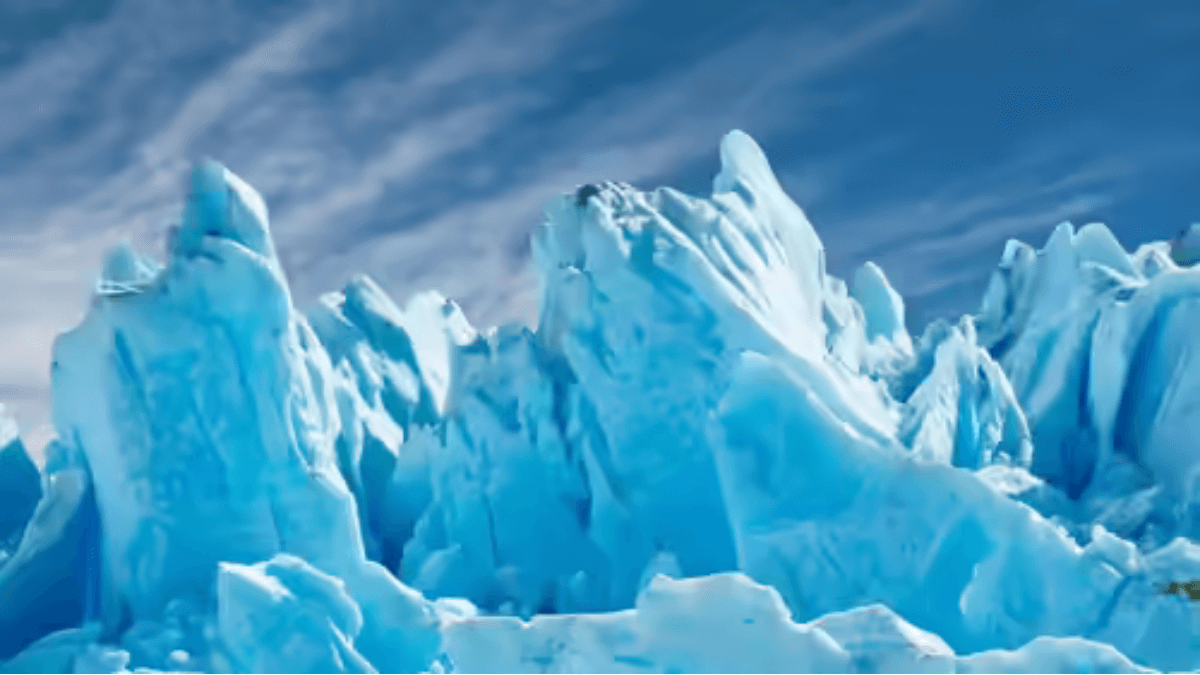
Glaciers are giant rivers of ice that slowly move across land and mountains. They are not only beautiful natural wonders but also store most of the world’s fresh water. Some glaciers are so huge that they cover areas larger than entire countries. Knowing about the biggest glaciers in the world helps us understand their importance for nature, weather, and human life.
Top-5 Biggest Glaciers in the World by 2025
Seller Glacier, located in Antarctic Mainland, with an area of about 7018 square kilometers, stands as the biggest glacier of the world, followed by Thurston Island Glacier No. 1 and Alexander Island Glacier No. 1.
Here is the list of top-5 biggest glaciers in the world by 2025:
| Rank | Name | Region Name | Area (sq. km) | Year |
| 1. | Seller Glacier | Antarctic Mainland | 7018 | 2002 |
| 2. | Thurston Island Glacier No. 1 | Antarctic and Subantarctic Islands | 5261 | 1972 |
| 3. | Alexander Island Glacier No. 1 | Antarctic and Subantarctic Islands | 4766 | 1997 |
| 4. | Alexander Island Glacier No. 2 | Antarctic and Subantarctic Islands | 3980 | 1997 |
| 5. | Mercator Ice Piedmont | Antarctic Mainland | 3499 | 2002 |
Seller Glacier, World’s Biggest Glacier
- Location: Thurston Island, Antarctica
- Size: Around 7,018 square km
- Named after: John Seller, an English hydrographer and compass maker
This is the largest glacier in the world. It is part of the Antarctic Peninsula Ice Body and plays an important role in the study of climate change and ice flow.
Thurston Glacier
- Location: Thurston Island, Ellsworth Mountains, Antarctica
- Size: 5,261 sq. km
- Named After: W. Harris Thurston, a textile manufacturer
Thurston Glacier is the third-largest in Antarctica. It is part of the continent’s massive ice sheet and plays a major role in regulating sea level changes.
Alexander Island Glacier No. 1
- Location: Alexander Island, Antarctica
- Size: 4,766 sq. km
One of the world’s largest glaciers, it feeds into the Bach and Wilkins Ice Shelves. This glacier contributes heavily to the Bellingshausen Sea ice mass and was discovered during a Russian expedition.
Alexander Island Glacier No. 2
- Location: Alexander Island, Antarctica
- Size: 3,980 sq. km
This glacier is part of a large Antarctic ice network. Scientists use it to monitor ice-sheet changes and study how the ocean and atmosphere affect glaciers.
Mercator Ice Piedmont
- Location: Alexander Island, Antarctica
- Size: 3,499 sq km
- Named After: Gerardus Mercator, a Flemish geographer and mathematician
This glacier spreads widely at the base of mountains, forming an ice piedmont. It is sensitive to regional climate conditions and is one of the largest glaciers on mainland Antarctica.


 What is the Old Name of Punjab? Check He...
 GK Quiz on Strait of Hormuz, Questions a...
 Which Countries Border the Strait of Hor...











