
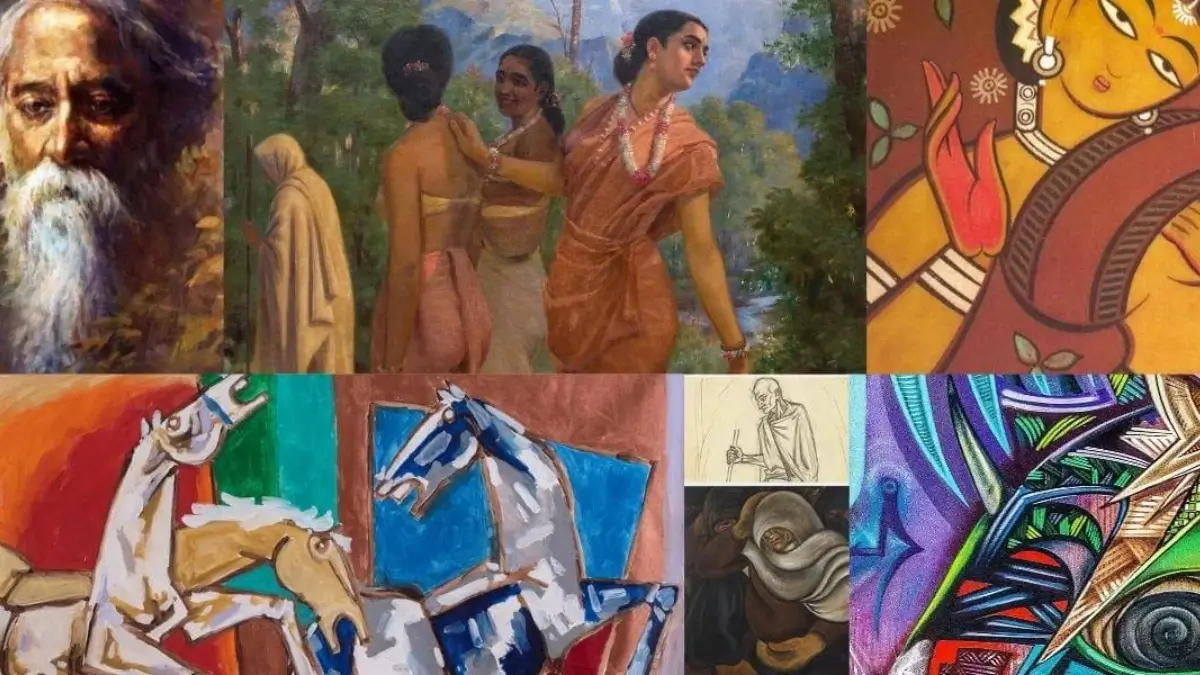
India has a long and colorful history of art, filled with creativity and imagination. From ancient cave paintings to modern abstract styles, Indian artists have always expressed emotions, stories, and culture through their work. Over time, many painters have gained worldwide fame for their talent, making India a respected name in the world of art.
Top-5 Famous Painters of India
India has produced many talented painters whose artworks reflect the country’s rich culture and creativity. From traditional themes to modern styles, these artists have shaped Indian art with their imagination and skill.
Here’s a look at the top five famous painters of India and their remarkable contributions:
- Raja Ravi Varma
- Amrita Sher Gill
- Jamini Roy
- Abanindranath Tagore
- Nandalal Bose
Raja Ravi Varma
Raja Ravi Varma is one of India’s most celebrated painters, often called the Father of Modern Indian Art. He is best known for blending European artistic techniques with Indian cultural themes.
His paintings brought Hindu gods and goddesses like Saraswati, Lakshmi, and Shakuntala to life in a realistic, human form. This made mythological figures more relatable to the common people.
Ravi Varma was also a visionary — he used printing technology to make affordable copies (oleographs) of his paintings. This step made art accessible to everyone and marked a turning point in Indian visual culture.
Amrita Sher-Gil
Amrita Sher-Gil is remembered as one of India’s most talented and influential artists. She was among the first to blend Indian traditions with Western art styles, creating a new identity for modern Indian art.
Her paintings often depicted the lives and emotions of Indian women and rural people. Works like Three Women and Bride’s Toilet beautifully show the struggles and dignity of everyday life.
Though her career was short, Amrita Sher-Gil’s impact was huge — she opened doors for women in Indian art and gave painting a strong emotional and social voice.
Jamini Roy
Jamini Roy broke away from Western artistic styles to focus on India’s folk traditions. Inspired by Bengal’s Kalighat paintings, he developed a simple yet striking style using bold lines, bright natural colors, and flat forms.
His subjects often included village life, festivals, and devotional themes like Mother and Child or Three Pujarins. Roy’s art celebrated the beauty of simplicity and Indian culture, earning him recognition as a national treasure.
Abanindranath Tagore
Abanindranath Tagore played a major role in reviving Indian traditional art during the British era. He strongly believed that Indian art should reflect its own culture and spirituality, not imitate Western styles.
His famous painting Bharat Mata (Mother India) became a symbol of national pride during India’s freedom struggle. Abanindranath’s gentle brushwork and use of soft colors reflected both Indian values and patriotism, making his art timeless and inspiring.
Nandalal Bose
A student of Abanindranath Tagore, Nandalal Bose was deeply connected to India’s freedom movement and cultural revival. His art beautifully depicted rural life, Indian traditions, and the strength of ordinary people.
Some of his well-known works include Bapuji, Saraswati, and Haripura Posters, which portrayed India’s vibrant spirit. H also designed decorations for India’s first Independence Day in 1947, leaving a mark on the nation’s history.
Nandalal Bose’s art was simple yet powerful — it celebrated India’s soul and identity through colors and creativity.


 Who is known as the Father of Mobile Pho...
 Which is the Highest Airport in the Worl...
 Which Country is the Largest Exporter of...











