
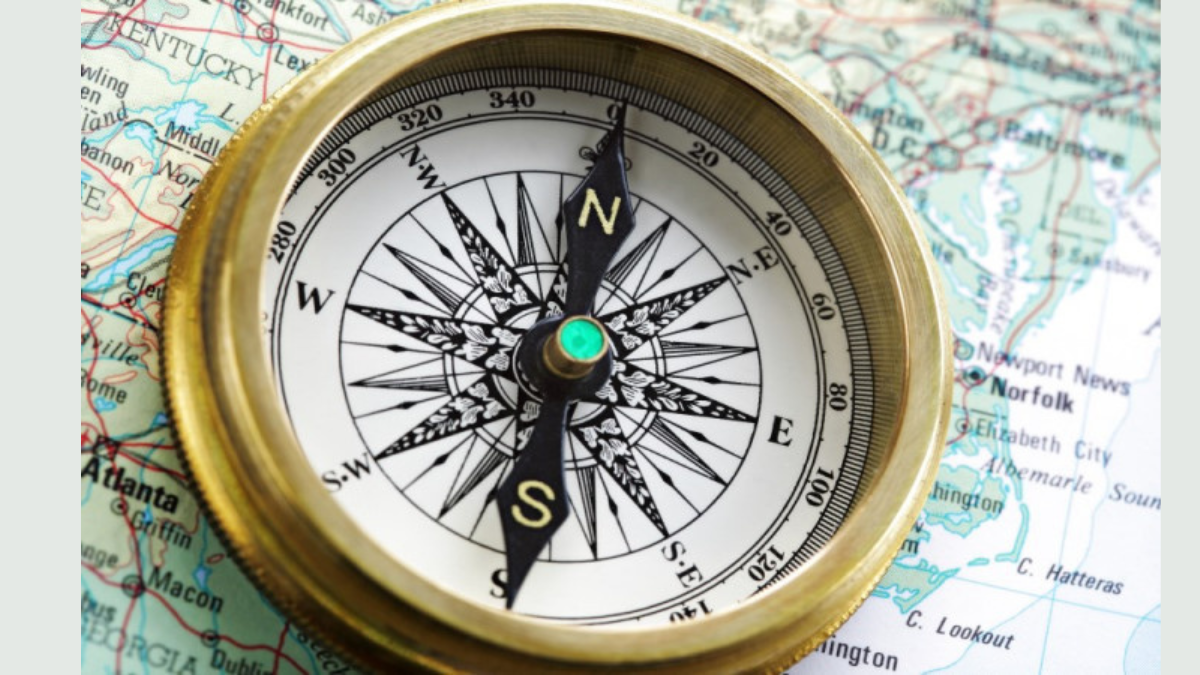
Magnetic compasses have guided travelers, sailors, and explorers for centuries by pointing toward Earth’s magnetic north. However, there are some unique places where compasses stop working properly. Strange magnetic fields, underground minerals, or natural forces disturb their accuracy, making navigation tricky. From mysterious oceans to icy poles and vast deserts, these spots have puzzled people for years. Let’s explore seven fascinating places where magnetic compasses fail to work.
Top-7 Places Where Magnetic Compasses Stop Working
Magnetic compasses have been one of the oldest tools for navigation, helping sailors, travelers, and explorers find their way by pointing north. But interestingly, there are some rare spots on Earth where compasses refuse to work correctly. In these locations, natural forces, minerals, or weak magnetic fields confuse compass needles, making them spin, dip, or point in the wrong direction.
Here is the list of top-7 places where magnetic compasses stop working:
- Magnetic Poles
- Bermuda Triangle
- Kursk Magnetic Anomaly, Russia
- Churchill Magnetic Anomaly, Canada
- South Atlantic Anomaly
- Kerguelen Plateau
- Indian Ocean Magnetic Anomaly
Magnetic Poles
Location: Near the North and South Magnetic Poles
At the magnetic poles, Earth’s magnetic field runs almost vertically instead of horizontally. This makes compass needles dip downwards instead of pointing north. Because of this, the needle often spins or points randomly, making navigation almost impossible.
Bermuda Triangle
Location: North Atlantic Ocean (between Miami, Bermuda, and Puerto Rico)
The Bermuda Triangle is famous for its mysterious stories, and one of them is compass failure. Scientists believe this happens because of unusual magnetic variations in the region, possibly linked to mineral deposits under the ocean. Compasses here often give wrong readings, confusing sailors and pilots.
Kursk Magnetic Anomaly, Russia
Location: Kursk region, Russia
The Kursk area is home to one of the world’s largest iron ore deposits. The massive amount of iron underground creates such a strong local magnetic pull that it can overpower Earth’s natural field. As a result, compasses here don’t point north but get pulled off in different directions.
Churchill Magnetic Anomaly, Canada
Location: Churchill, Manitoba, Canada
In this region, large deposits of iron-rich minerals lie underground. These minerals create local magnetic fields strong enough to interfere with compasses. Travelers here often find their compass needles shaking or pointing incorrectly, making reliable navigation very difficult.
South Atlantic Anomaly
Location: Over the South Atlantic Ocean, near South America
Unlike other anomalies caused by minerals, the South Atlantic Anomaly is due to the weakening of Earth’s magnetic field in this region. This weak field not only makes compass readings unstable but also affects satellites and electronic signals passing through the area.
Kerguelen Plateau
Location: Southern Indian Ocean, near Antarctica
This huge underwater volcanic plateau has unusual magnetic properties. The rocks and minerals here differ from those in nearby regions, causing local disturbances in Earth’s magnetic field. As a result, compasses behave strangely when passing through this area.
Indian Ocean Magnetic Anomaly
Location: Certain parts of the Indian Ocean
The floor of the Indian Ocean contains magnetic minerals that distort Earth’s field. These variations cause compasses to become unreliable, giving false directions. For sailors and explorers, this can make navigation very challenging.


 Weekly Current Affairs One Liners (30th ...
 Who is known as the Father of Mobile Pho...
 Which is the Highest Airport in the Worl...











