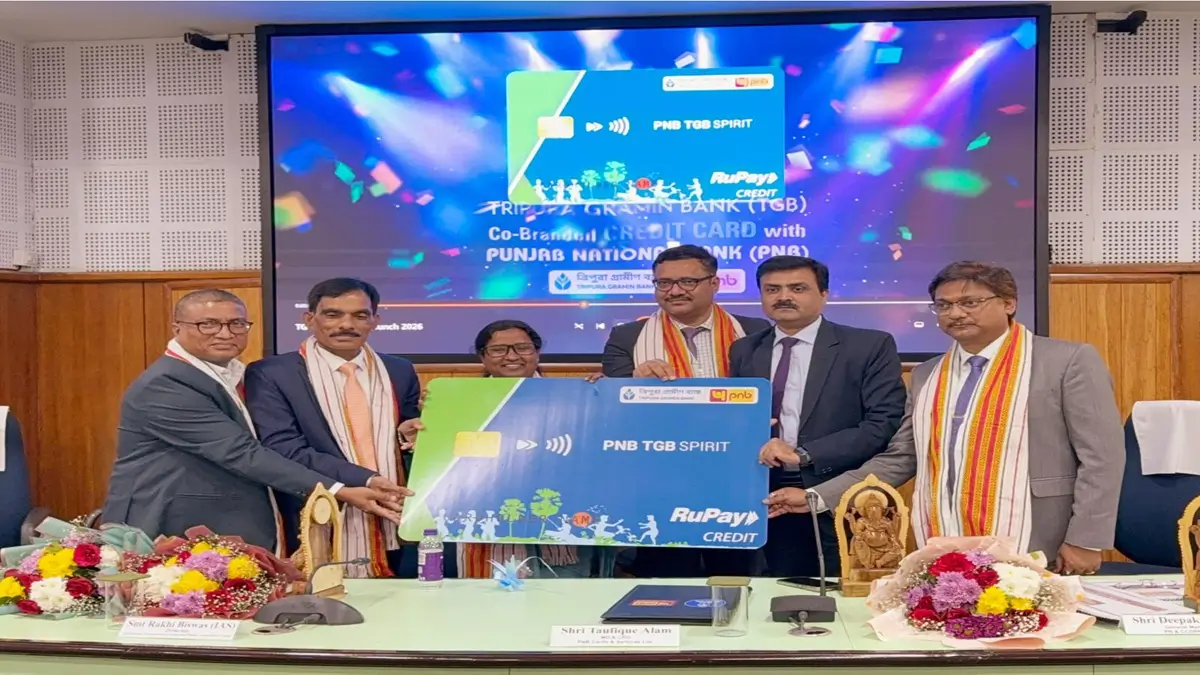
In a landmark achievement marking its Golden Jubilee (50-year) milestone, Tripura Gramin Bank (TGB) has launched India’s first Regional Rural Bank (RRB) co-branded RuPay credit card in collaboration with its sponsor bank, Punjab National Bank (PNB). This historic launch, which took place in February 2026 at Agartala, Tripura, represents a watershed moment in India’s rural banking sector, demonstrating how traditional RRBs are evolving to meet the financial needs of rural and semi-urban communities in the digital age.
The achievement is particularly significant as it positions TGB as a trailblazer among all RRBs across India and among the eight PNB-sponsored RRBs, setting new benchmarks for financial inclusion and digital banking accessibility in rural India. The co-branded card, powered by the RuPay network and developed jointly by TGB, PNB, and PNB Cards & Services Limited, represents a convergence of rural banking expertise, national banking infrastructure, and India’s homegrown payment network.
The Significance of This Launch
A Historic First for RRBs
The launch of a co-branded RuPay credit card by an RRB is a historic first for several reasons:
Rural Banking Evolution: For decades, RRBs have primarily offered basic banking services focused on deposits and loans. The introduction of credit cards represents a significant evolution in RRB service offerings, bringing them into alignment with modern banking practices and customer expectations.
Digital Financial Inclusion: By partnering with a national payment network and digital banking infrastructure, TGB is extending sophisticated financial tools to customers in rural and semi-urban areas who have traditionally had limited access to such products.
RuPay Ecosystem Strengthening: This launch strengthens the domestic RuPay payment ecosystem by bringing rural and semi-urban customers into the network, expanding RuPay’s reach beyond urban and metro markets.
Regional Rural Banking Leadership: TGB’s initiative positions RRBs as innovators and modernizers, not relics of an earlier banking era, capable of adapting to contemporary financial needs while maintaining their core mission of rural development.
Timing and Golden Jubilee Significance
The timing of this launch during TGB’s 50-year Golden Jubilee is particularly meaningful:
Institutional Maturity: After five decades of operation, TGB has developed the institutional maturity, operational capacity, and customer relationships necessary to successfully launch and manage a sophisticated financial product like a credit card.
Organizational Transformation: The launch demonstrates TGB’s commitment to transforming and modernizing itself for the next phase of its existence, rather than remaining static or declining.
Community Trust: Fifty years of continuous service in Tripura has built deep trust and relationships with customers, providing a strong foundation for introducing new products and services.
Celebrating Progress: The Golden Jubilee provides an appropriate moment to celebrate not just past achievements but also future aspirations and modernization efforts.
Understanding Tripura Gramin Bank
History and Mission
Tripura Gramin Bank, like all RRBs in India, was established with a specific mandate to serve the banking and credit needs of rural areas, with focus on agriculture, trade, commerce, and small industries in rural areas. RRBs were created as a special category of banks to bridge the gap between the banking needs of rural communities and the operational constraints of commercial banks in providing services in geographically dispersed, low-density rural areas.
With 50 years of continuous operation in Tripura, TGB has:
- Built an extensive branch network across rural and semi-urban areas of Tripura
- Developed deep understanding of local economic conditions, agricultural patterns, and business ecosystems
- Established trusted relationships with rural communities and entrepreneurs
- Accumulated experience in rural credit assessment and risk management
- Contributed significantly to agricultural and rural economic development
PNB Sponsorship Relationship
As one of eight RRBs sponsored by Punjab National Bank, TGB operates within a framework of support and oversight:
Sponsor Bank Relationship: PNB, as TGB’s sponsor bank, provides regulatory oversight, capacity building support, and access to PNB’s technological and operational infrastructure.
Network Access: The sponsorship relationship provides TGB with access to PNB’s broader banking network and technology platforms, facilitating modernization and expansion of services.
Technical Support: PNB provides technical assistance and guidance for implementing modern banking products and services, as evidenced by collaboration on this RuPay credit card launch.
Strategic Partnership: The co-branded card represents a deepening of the PNB-TGB partnership, with both institutions collaborating to serve customers better.
The Co-Branded RuPay Credit Card: Product Overview
Product Architecture and Development
The TGB-PNB Co-branded RuPay Credit Card represents a collaborative product development effort:
Joint Development: The card was developed by Tripura Gramin Bank, Punjab National Bank, and PNB Cards & Services Limited, ensuring that the product reflects: – TGB’s understanding of rural and semi-urban customer needs – PNB’s expertise in credit card products and customer management – PNB Cards & Services’ technical and operational capabilities in card issuance and management
RuPay Network Integration: By utilizing the RuPay network—India’s homegrown payment system—the card supports the government’s vision of reducing dependence on international payment networks while providing domestic alternatives.
Security and Compliance: The collaborative development ensures that the card meets all regulatory requirements, security standards, and compliance norms established by the Reserve Bank of India and National Payments Corporation of India (NPCI).
Key Features and Capabilities
Collaborative Network
RuPay Powered: The card operates on the RuPay network, India’s indigenous card payment system developed by NPCI. RuPay’s advantages include:
- Domestic Control: Unlike international payment networks, RuPay is fully controlled and operated within India, reducing dependence on foreign payment infrastructure
- Cost Efficiency: RuPay’s pricing structure is often more favorable than international networks, potentially enabling better pricing for issuers and customers
- Growing Acceptance: RuPay’s acceptance network has expanded dramatically, now covering millions of merchants across India and several countries internationally
- Government Backing: RuPay represents India’s commitment to financial sovereignty and domestic payment infrastructure
Collaborative Partnerships: The card brings together the complementary strengths of three financial institutions:
- TGB: Rural banking expertise, local knowledge, customer relationships in rural and semi-urban Tripura
- PNB: National banking infrastructure, credit card expertise, technology platforms, brand recognition
- PNB Cards & Services Limited: Specialized expertise in card issuance, management, processing, and customer support
This collaborative approach ensures the product combines the best of all three institutions’ capabilities.
Digital Access and Modern Banking
Secure Modern Credit Facilities: The card provides rural and semi-urban customers with secure, modern credit facilities previously accessible primarily to urban customers. This represents:
- Digital Inclusion: Rural customers gain access to digital payment infrastructure and credit products equivalent to urban counterparts
- Financial Inclusion: Customers in areas with limited banking infrastructure gain access to modern banking services
- Empowerment: Rural entrepreneurs, farmers, and small business owners can access credit and payment tools necessary for business expansion and development
RuPay Ecosystem Integration: By issuing RuPay credit cards, TGB integrates rural customers into India’s domestic payment ecosystem, ensuring:
- Seamless transactions within India
- Protection of data and financial information within domestic systems
- Reduced foreign exchange costs for cross-border transactions when using RuPay
- Support for India’s financial sovereignty and self-reliance initiatives
Modern Technology Access: The card provides rural customers with: – Digital credit facilities accessible through modern banking channels – Integration with digital banking platforms and mobile banking apps – Access to online shopping, e-commerce, and digital services – Participation in India’s growing digital economy
Seamless Transactions
Convenient Payments: The card enables a range of transaction types essential for modern life:
- Bill Payments: Utilities, insurance, subscriptions, and other recurring payments
- Shopping: Physical retail, e-commerce, and online marketplaces
- Travel: Transportation, accommodation, and travel-related expenses
- Daily Needs: Food, fuel, healthcare, and everyday consumption
Wide Acceptance: RuPay’s expanding merchant network ensures cards are accepted at:
- Retail stores and shopping centers
- Fuel stations and transportation services
- Healthcare providers and pharmacies
- Restaurants and hospitality establishments
- E-commerce platforms and online services
- Government offices and public sector establishments
Contactless Capabilities: Modern RuPay cards include contactless (tap and pay) functionality, enabling: – Quick, hygienic transactions (particularly important post-pandemic) – Reduced transaction times in high-volume retail environments – Enhanced payment convenience and customer experience
RRBs in India: Evolution and Modernization
Historical Context
Regional Rural Banks were established in India in 1975 as a three-tier banking structure (with commercial banks and cooperative banks) to serve rural credit and banking needs. Key characteristics include:
Targeted Service Area: Each RRB serves a specific geographic region, typically a district or part of a state, allowing development of specialized knowledge of local conditions.
Rural Focus: RRBs focus primarily on agricultural credit, rural trade and commerce, and small industries, areas where commercial banks had limited presence.
Government Backing: RRBs operate with support from sponsor commercial banks and the Reserve Bank of India, providing stability and regulatory oversight.
Regulatory Framework: RRBs operate under specific regulatory guidelines designed to balance profitability with social objectives.
Evolution and Modernization Challenges
For much of their history, RRBs operated primarily as traditional deposit-taking and lending institutions. However, they faced several challenges:
Limited Service Offerings: RRBs traditionally offered basic services—deposits, loans, and remittances—limiting their appeal to modernizing rural customers.
Technology Gaps: Many RRBs lagged in technology adoption, limiting their ability to compete with modernizing commercial banks and digital-first fintech companies.
Urban Migration: As rural youth migrated to cities, rural banking customer bases were aging, requiring RRBs to adapt to serve evolving customer needs.
Competition: Rising competition from commercial banks and digital payment platforms threatened RRB relevance and growth.
Modernization Trajectory
In recent years, RRBs have begun significant modernization efforts:
Digital Infrastructure: Implementation of core banking systems, mobile banking apps, and digital payment integration.
Product Expansion: Introduction of insurance products, mutual funds, and other financial services beyond traditional banking.
Technology Adoption: ATM networks, mobile banking, online banking, and integration with digital payment systems.
Customer Experience: Modernization of branches, staff training, and customer service delivery.
Strategic Partnerships: Collaborations with commercial banks, fintech companies, and payment networks to access modern products and services.
TGB’s launch of the RuPay credit card represents the logical extension of this modernization trajectory, bringing a sophisticated financial product to rural customers.
RuPay: India’s Homegrown Payment Network
Overview and Vision
RuPay is India’s indigenous card payment system developed by the National Payments Corporation of India (NPCI). Launched in 2012, RuPay represents India’s commitment to:
Financial Sovereignty: Reducing dependence on foreign payment networks (Visa, Mastercard) and developing domestic alternatives.
Payment System Independence: Building India’s own card payment infrastructure, technology, and standards.
Cost Efficiency: Enabling lower transaction costs through a domestically controlled network.
Innovation: Developing payment solutions tailored to Indian market conditions and customer needs.
RuPay’s Growth and Expansion
Since its launch in 2012, RuPay has experienced remarkable growth:
Card Issuance: Billions of RuPay debit cards have been issued, particularly through government programs like Jan Dhan Yojana.
Merchant Acceptance: RuPay acceptance has expanded from thousands to millions of merchants across India.
International Expansion: RuPay has expanded to several countries, including Japan, Singapore, Malaysia, and others, building international acceptance.
Product Evolution: RuPay has expanded from debit cards to credit cards, prepaid cards, and other payment instruments.
Technology Leadership: RuPay has pioneered features like contactless payments, QR code-based payments, and other modern payment technologies.
Why RuPay for This Credit Card?
The choice of RuPay for TGB’s credit card is strategic:
Domestic Alternative: Using RuPay positions TGB as supporting India’s payment system sovereignty and independence.
Cost Benefits: RuPay’s fee structure can provide better economics for both the issuer and customer.
Rural Focus Alignment: RuPay’s strong presence in rural areas through Jan Dhan Yojana aligns with TGB’s rural banking mission.
Government Support: RuPay benefits from government backing and policy support, providing stability and growth prospects.
Differentiation: While Visa and Mastercard dominate international markets, RuPay offers differentiation and alignment with India-first positioning.
Target Customers and Use Cases
Primary Customer Base
The TGB-PNB RuPay credit card targets several customer segments in rural and semi-urban Tripura:
Rural Entrepreneurs and Traders: Small business owners, retailers, and traders who need credit facilities and payment flexibility for inventory purchase, business expansion, and operational cash flow.
Farmers and Agricultural Professionals: Agricultural entrepreneurs and professionals requiring credit for farm operations, equipment purchase, and input acquisition.
Semi-Urban Professionals: Salaried employees in semi-urban areas seeking credit facilities for consumption, education, or business purposes.
Aspiring Consumers: Customers in rural and semi-urban areas aspiring to participate in modern digital commerce and e-commerce platforms.
Students and Youth: Young people in rural areas seeking credit for education, entrepreneurship, and digital participation.
Primary Use Cases
Agricultural Finance: Farmers can use credit lines for seasonal input purchases, equipment acquisition, and operational funding.
Inventory Financing: Traders and retailers can use credit for inventory purchase and working capital management.
E-Commerce and Online Shopping: Customers can use cards for online shopping, digital services, and e-commerce platforms.
Digital Payments: Customers can use cards for contactless payments, bill payments, and digital transactions.
Emergency Credit: During seasonal cash flow challenges or unexpected expenses, the card provides emergency credit lines.
Education and Skill Development: Students and youth can use credit for educational expenses and skill development courses.
Broader Implications and Impact
For Rural Banking Sector
This launch has implications extending beyond TGB:
RRB Modernization Model: TGB’s success in launching a credit card provides a model for other RRBs to follow, potentially accelerating modernization across the RRB sector.
Competitive Positioning: Demonstrates that RRBs can compete with commercial banks in offering modern products, strengthening their market position.
Customer Relevance: Shows RRBs can address contemporary customer needs, not just traditional banking services.
Strategic Partnerships: Demonstrates benefits of collaborative partnerships between RRBs, sponsor banks, and specialized service providers.
For RuPay Ecosystem
The launch expands RuPay’s reach:
Rural Penetration: Brings RuPay credit cards to rural customers who traditionally had limited access to credit card products.
Network Strengthening: Expands RuPay’s merchant acceptance and transaction volume in rural areas.
Ecosystem Development: Contributes to developing a complete RuPay ecosystem for credit and payment products.
Government Objectives: Supports government objectives of financial inclusion and domestic payment system development.
For Rural Financial Inclusion
More broadly, this launch advances rural financial inclusion:
Product Accessibility: Brings sophisticated financial products to customers in geographically underserved areas.
Digital Inclusion: Provides digital payment tools to rural communities, supporting digital economy participation.
Economic Empowerment: Enables rural entrepreneurs and businesses to access credit and payment infrastructure necessary for growth.
Reduced Inequality: Narrows gaps between rural and urban customers in terms of financial product access.
Inclusive Growth: Supports inclusive economic development by providing financial tools necessary for rural business and entrepreneurship.
Implementation and Rollout
Product Availability
The co-branded RuPay credit card is being rolled out through:
TGB Branch Network: Cards available through TGB’s existing branch network across Tripura.
Digital Channels: Online application and issuance through TGB’s digital banking platform.
Partner Support: Support from PNB and PNB Cards & Services Limited for customer support and card management.
Customer Support and Service
Multi-Channel Support: Customers receive support through: – TGB branches and staff – Digital banking platforms and mobile apps – Customer service centers – 24×7 customer support helplines
Training and Awareness: TGB and PNB are conducting training and awareness programs to help customers understand and use the card effectively.
Regulatory Compliance: All products and services comply with RBI regulations, consumer protection guidelines, and applicable laws.
Challenges and Opportunities
Challenges in Rural Credit Cards
Customer Awareness: Rural customers may have limited familiarity with credit cards, requiring extensive education and support.
Credit Assessment: Assessing creditworthiness in rural areas with limited formal financial history requires specialized expertise.
Usage Patterns: Rural customers’ transaction patterns may differ from urban customers, requiring product customization.
Infrastructure Gaps: Limited digital infrastructure in some rural areas may constrain card usage.
Affordability: Pricing must balance sustainability with affordability for rural customers.
Opportunities for Growth
Expanding Customer Base: Millions of rural customers remain unserved by credit card products, representing significant growth opportunity.
Digital Growth: As rural digital penetration increases, demand for digital payment tools will grow.
Cross-selling: Credit card customers provide opportunities for cross-selling insurance, investments, and other financial products.
Ecosystem Development: Success can catalyze broader development of rural financial ecosystems and product offerings.
Social Impact: Can support rural entrepreneurship and economic development while generating financial returns.
Regulatory and Policy Environment
RBI Support for RRB Modernization
The Reserve Bank of India has been supportive of RRB modernization:
Technology Investment: RBI has encouraged RRBs to invest in technology infrastructure and digital banking.
Product Diversification: RBI has permitted RRBs to expand beyond traditional lending into insurance, wealth management, and other services.
Digital Payments: RBI has supported RRB participation in digital payment systems including RuPay.
Regulatory Flexibility: RBI has provided regulatory flexibility to enable RRBs to innovate while maintaining prudential standards.
Government Support for RuPay
The government has actively supported RuPay development:
Policy Support: Government policies favor domestic payment networks over international alternatives.
Financial Inclusion Programs: Government programs like Jan Dhan Yojana have been leveraged to distribute RuPay debit cards widely.
International Expansion: Government has supported RuPay’s expansion to other countries.
Payment System Development: Government supports development of India’s broader payment infrastructure and financial systems.


 RBI Plans to Make TReDS Registration Eas...
 World Bank Raises India's FY27 Growth Fo...
 BoB Launches AI-based 'bob SAMVAD' Platf...