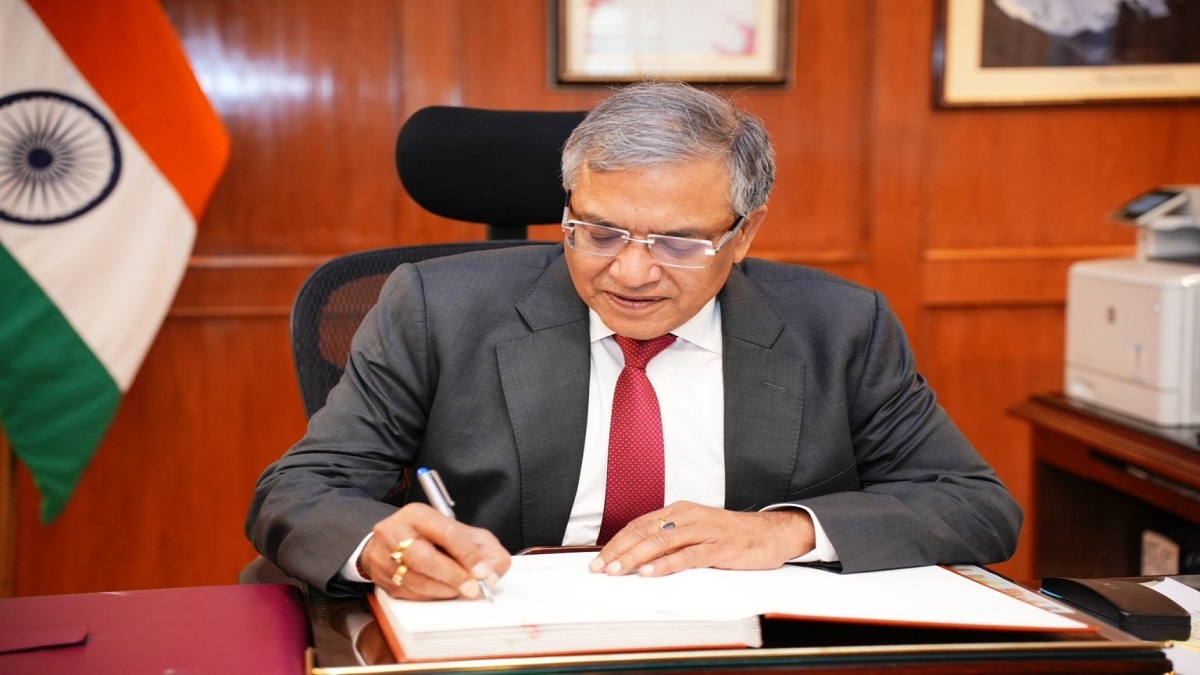
The Chief Election Commissioner (CEC) plays a crucial role in safeguarding the integrity of India’s democratic process. As the head of the Election Commission of India (ECI), the CEC oversees free and fair elections. Amid recent political controversies and allegations of electoral irregularities, interest has surged in understanding the legal and constitutional mechanisms that govern the removal of the CEC—a process intentionally made difficult to uphold institutional independence.
Constitutional Safeguard: Article 324 & Removal Mechanics
The Constitution of India provides robust protection to the CEC under Article 324(5), ensuring that their removal is as difficult and rare as that of a Supreme Court judge. This constitutional provision ensures that:
- The CEC can only be removed for proven misbehaviour or incapacity.
- A motion must be passed in both Houses of Parliament with a two-thirds majority of members present and voting.
- An inquiry may be initiated to establish grounds.
- The President of India must act on the Parliament’s recommendation, without any discretionary power.
This framework is designed to prevent arbitrary dismissal and protect the CEC from political pressures. Notably, no Chief Election Commissioner has been removed since the establishment of the ECI, which highlights the rarity and gravity of such an action.
2023 Act: Appointment & Removal Under the Law
The Chief Election Commissioner and Other Election Commissioners Act, 2023 updated the procedural framework governing the Election Commission. This law replaced the earlier 1991 Act and brought several changes:
- Appointment Process: The CEC and Election Commissioners are now appointed by the President based on the recommendation of a Selection Committee consisting of the Prime Minister, Leader of Opposition in the Lok Sabha, and a Union Cabinet Minister.
- A Search Committee led by the Cabinet Secretary shortlists qualified candidates for the Selection Committee’s consideration.
- Eligibility: Candidates must have held senior government positions equivalent to the rank of Secretary and possess election management experience.
- Tenure: Commissioners serve for six years or until 65 years of age, whichever is earlier. Reappointment is prohibited.
- Salary & Status: The 2023 law equates the CEC’s salary with that of a Cabinet Secretary, which is a step down from the earlier equivalence with Supreme Court judges.
- Removal of ECs: Unlike the CEC, other Election Commissioners can be removed only on the recommendation of the CEC, a provision that has drawn criticism.
Current Political Dynamics
The removal process has recently drawn political attention. Opposition parties have raised concerns over the impartiality of the current Election Commission and have discussed the possibility of initiating a motion to remove the CEC. Allegations of bias, electoral manipulation, and voter list discrepancies have been central to these criticisms.
There is also discontent regarding the exclusion of the Chief Justice of India from the selection committee under the 2023 Act. Previously, court interventions had emphasized judicial presence in appointments to ensure neutrality, and this legislative change is viewed by critics as a step backward.
Furthermore, the Act does not restrict post-retirement government appointments for CECs and ECs, raising questions about the long-term neutrality of officials. These concerns have led to calls for judicial review of the Act, and petitions are pending in the Supreme Court.
Why It Matters for Exams
This topic is highly relevant for competitive exams and civil services preparation because it encompasses:
- Constitutional provisions regarding checks and balances.
- The structure and independence of constitutional bodies.
- Recent legal developments and political debates affecting governance.
- Precedent-setting legislation like the 2023 Act.
Understanding this topic enables aspirants to grasp the dynamics between law, politics, and democratic institutions—a vital area in general studies papers and interviews.

 Shah Rukh Khan Debuts in Hurun Global Ri...
 A Tribe With No Word for "Time"? Inside ...
 NIM–JIM&WS Team Successfully Summits...