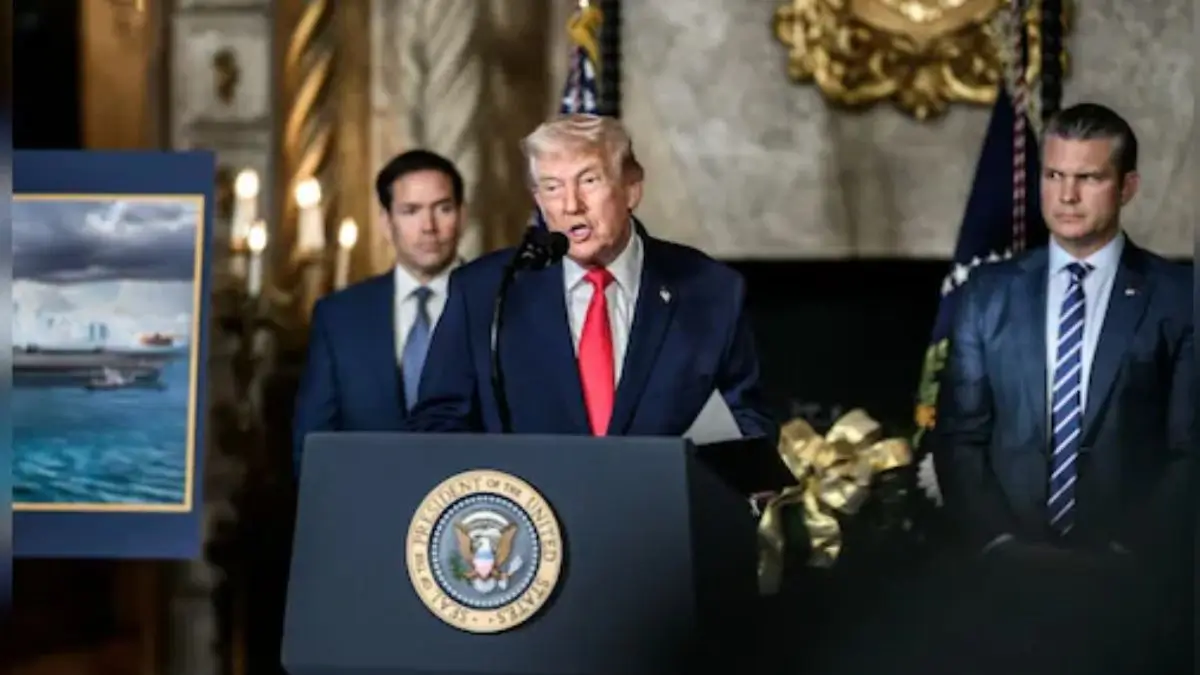
US President Donald Trump has announced that Washington will take control of Venezuela’s oil sector after the capture of President Nicolás Maduro. The move aims to revive Venezuela’s broken oil industry using American companies. Though immediate price shocks are unlikely, the decision could have long-term effects on global energy markets and countries like India.
Why in the News?
The US has announced control over Venezuela’s oil sector, signalling possible large-scale revival of its oil production and a shift in global energy dynamics.
Context: US Announcement on Venezuela’s Oil
- This move follows political upheaval and years of sanctions on Venezuela’s energy sector.
- US plans to involve major American oil companies.
- Objective is to repair ageing oil infrastructure.
- Venezuela currently produces far below its capacity.
- The plan could increase oil exports in the future.
- Implementation, if successful, will take several years.
Background: Venezuela’s Oil Potential
- Venezuela holds enormous oil reserves but produces very little.
- Largest proven oil reserves globally (300+ billion barrels).
- Accounts for less than 1% of global oil production.
- Production hit by sanctions, underinvestment, and economic crisis.
- Once a major exporter, now marginal in global markets.
- Oil sector dominated by state firm PDVSA.
Significance for Global Energy Markets
- Increased Venezuelan oil could reshape long-term supply trends.
- Short-term oil prices likely remain stable due to oversupply.
- Long-term impact may push prices downward.
- Global markets could benefit from diversified supply.
- Requires heavy investment and time to realise output gains.
- Could reduce pressure on OPEC and other producers.
Impact on India’s Energy Interests
- India could benefit if sanctions are eased in future.
- India imports over 88% of its crude oil needs.
- Currently, no Venezuelan crude is imported by India.
- Sanctions-free Venezuelan oil could diversify India’s suppliers.
- Indian firms may regain investment opportunities.
- Lower global prices would ease India’s import bill.
India-Specific Investments and ONGC
- Indian investments in Venezuela remain stuck under sanctions.
- ONGC Videsh has stakes in two oil projects.
- Over $500 million in dividends are pending.
- US approval needed under the “Chevron model”.
- Sanctions restrict dollar use and banking access.
- Policy shift could unlock these investments.
Oil and Global Politics
- Oil remains a strategic geopolitical resource.
- Control over oil affects diplomacy, trade, and security.
- Sanctions often limit production and investment.
- Energy supply changes influence inflation and growth.
- Import-dependent nations closely track oil developments.
- Stability in oil markets is crucial for global economies.
About Venezuela
- Recent Developments: Reports of military activity and explosions near Caracas; information should be verified with reliable sources.
- Location: Situated on the northern coast of South America.
- Boundaries: In East With Guyana, In South With Brazil. In West & Southwest With Colombia
- North: Caribbean Sea & Atlantic Ocean.
- Capital: Caracas.
Q. Which country holds the world’s largest proven oil reserves?
A. Saudi Arabia
B. Russia
C. Venezuela
D. United States


 UK Sets Strict Screen Time Rules for Kid...
 Japan's 275 kmph Cargo Bullet Train: Wor...
 Balendra Shah Sworn In As Nepal’s Younge...