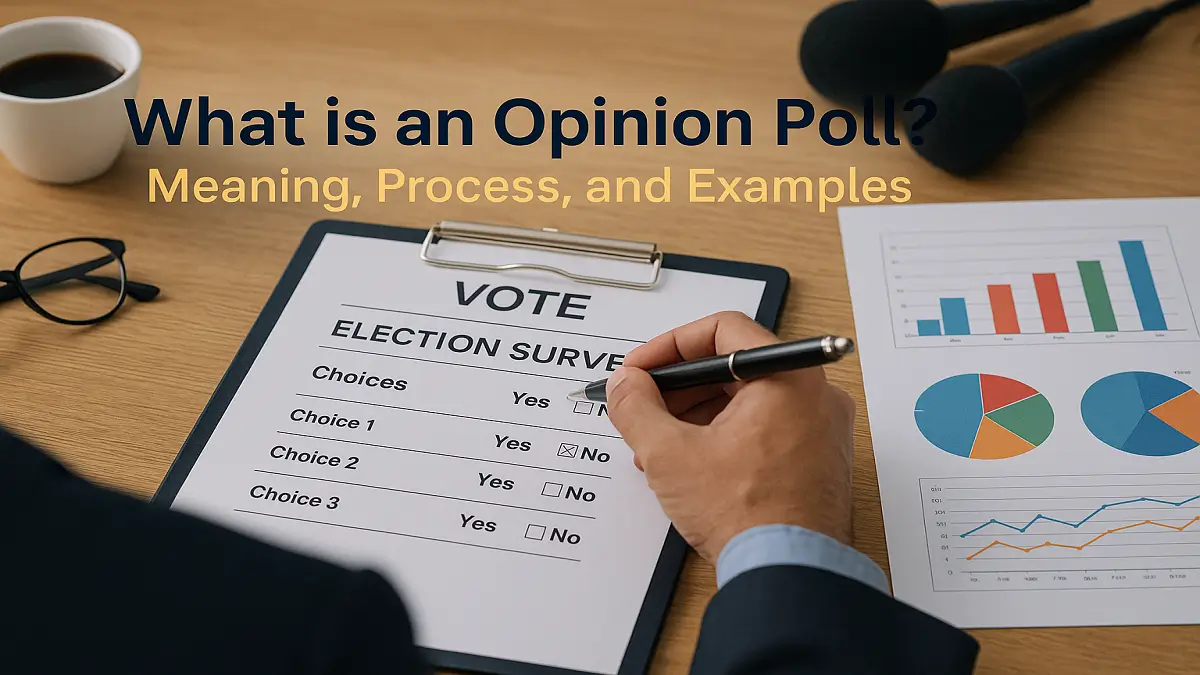
Every election season, we often see news channels flashing numbers predicting which political party might win. These figures, splashed across screens and newspapers, come from Opinion Polls — a popular method used to measure public opinion before people actually cast their votes.
In simple terms, an Opinion Poll is like taking the temperature of the electorate to understand which way the political wind is blowing. It gives an early idea of what voters are thinking, but not necessarily what they will finally do.
Opinion Polls have become an important part of modern democracies. They help shape campaign strategies, public debates, and even influence undecided voters — making them an essential element of political analysis.
Meaning of Opinion Poll
An Opinion Poll is a pre-election survey conducted to find out which party or candidate people intend to vote for. It reflects the intentions, expectations, and moods of voters during the election campaign.
Unlike actual results, which show what voters did, Opinion Polls provide a snapshot of public sentiment before the voting happens. The main goal is to gauge the level of support for political parties and candidates, and to see how voters’ opinions might be shifting over time.
These polls are particularly useful for understanding public perception, identifying key election issues, and tracking voter satisfaction with the current government.
How Is an Opinion Poll Conducted?
Opinion Polls are conducted by research organizations, polling agencies, or media houses using scientific sampling techniques. Since it is impossible to ask every voter in the country, pollsters select a representative sample — a smaller group that accurately reflects the diversity of the overall population.
Common methods used include:
- Telephone Interviews: Randomly calling citizens to record their opinions.
- Online Surveys: Collecting responses through verified online platforms.
- Face-to-Face Interviews: Approaching voters in public areas like markets or bus stops.
Once data is collected, it is carefully analyzed and weighted to reflect the broader population. The results are then presented as percentages, showing how much support each party or leader currently holds.
Example
Let’s take a simple example. Suppose elections are scheduled next month. A popular news channel surveys 1,000 voters and asks:
- “If elections were held today, which party would you vote for?”
- “Do you approve of the current government’s performance?”
If 45% say they support Party A, 35% Party B, and 20% remain undecided, it shows the current voting intention. However, these numbers can still change before the actual polling day, depending on campaign events, debates, or public issues.
Purpose and Importance of Opinion Polls
Opinion Polls serve many important purposes in a democracy:
- Gauge Public Sentiment: They help understand which political party or leader currently enjoys public support.
- Guide Political Campaigns: Parties use the data to fine-tune speeches, promises, and campaign messages.
- Inform the Public: Poll results help voters see national trends and understand the broader political landscape.
- Promote Accountability: When governments see a drop in support, it pushes them to address public concerns.
However, Opinion Polls are not always accurate. People may change their minds before voting day, or give socially acceptable answers rather than honest ones. That’s why most countries, including India, have rules and restrictions on when such polls can be published — especially close to election day.


 Jewar Airport Opens: 10 Key Facts About ...
 India’s Unemployment Rate Falls to 6.5% ...
 India To Establishes First Port of Refug...