
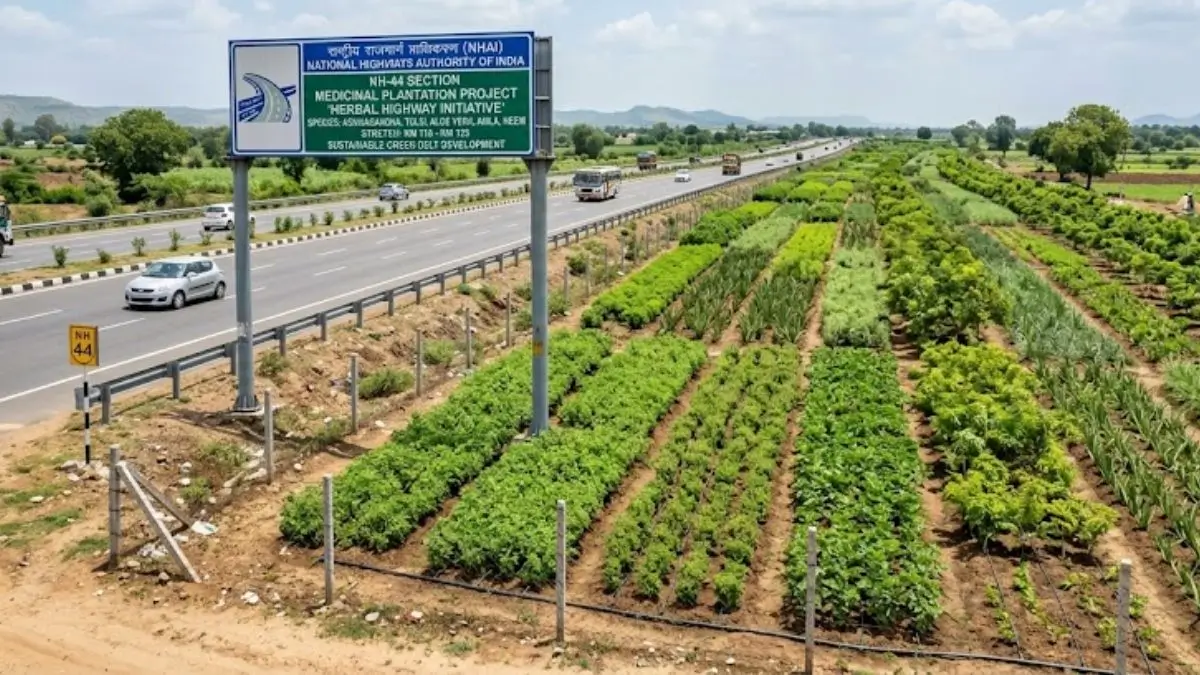
The National Highways Authority of India (NHAI) has launched the innovative which named as the ‘Arogya Van’ initiative. This project will focuses on to planting the medicinal trees along the national highways to enhance biodiversity and sustainability. This initiative not just only strengthens roadside ecology but it also promotes awareness of the India’s traditional medicinal systems like Ayurveda, By doing this this will be turning highways into the living green corridors that benefit both nature and people.
Arogya Van: Key Highlights of the Initiative
The ‘Arogya Van’ project marks the shift from the conventional plantation drives to a more thematic and knowledge-driven approach. Instead of just focusing on greenery the focus is on the medicinal plants with ecological and cultural value.
In the first phase NHAI has planned the plantation across 17 land parcels covering 62.8 hectares. Nearly 67,462 medicinal trees will be planted across the diffrent states such as Madhya Pradesh, Gujarat, Tamil Nadu, Maharashtra and others. This wide geographic spread o plantation ensure the initiative adapts to diverse the agro-climatic conditions.
The plantation will include 36 medicinal species and it carefully selected based on their adaptability and benefits.
Some key species include the,
- Neem – It is known for antibacterial properties.
- Amla – Rich source of Vitamin C and immunity booster for helath.
- Jamun – Useful for the diabetes controls
- Imli (Tamarind) – Had a good digestive benefits
- Gular and Maulsari – Traditional medicinal uses
Strategic Locations to Maximize Impact
NHAI has also strategically identified locations where these plantations can create the maximum visibility and ecological benefit. Priority areas for this includes the toll plazas, interchanges, cloverleaf junctions and the wayside amenities.
This approach will ensures that travelers who regularly interact with these green spaces and it will indirectly spreading the awareness about India’s medicinal plant heritage. It also helps to create micro-habitats for birds, pollinators and small fauna and this will be improving ecological balance along highways.
Additionally around the 188 hectares of vacant land have been allotted for the future plantation specially during the monsoon season which improve the plant survival rates significantly.
Boosting Biodiversity and Ecosystem Resilience
One of the main objectives of the Arogya Van initiative is to restore the ecological balance along highways. This traditional plantations often focused on to aesthetics but this initiative will emphasizes on to the functional biodiversity.
Medicinal plants contribute,
- To supporting pollinators like bees and butterflies.
- Also to providing shelter to birds and small animals.
- Enhancing the soil quality and micro-ecosystems
This will leads to stronger ecosystem resilience and making the highways not just transport corridors but also to make ecological lifelines.
Question
Q. Which of the following best describes the primary objective of the ‘Arogya Van’ initiative?
A. Increasing highway toll revenue
B. Promoting medicinal tourism exclusively
C. Enhancing biodiversity using medicinal plant species
D. Replacing all existing roadside plantations


 Operation HimSetu: Army Completes High R...
 India Withdraws Its Plan to Host COP33 S...
 IIM Rohtak Wins BIMTECH's 'Hermes' Dialo...











