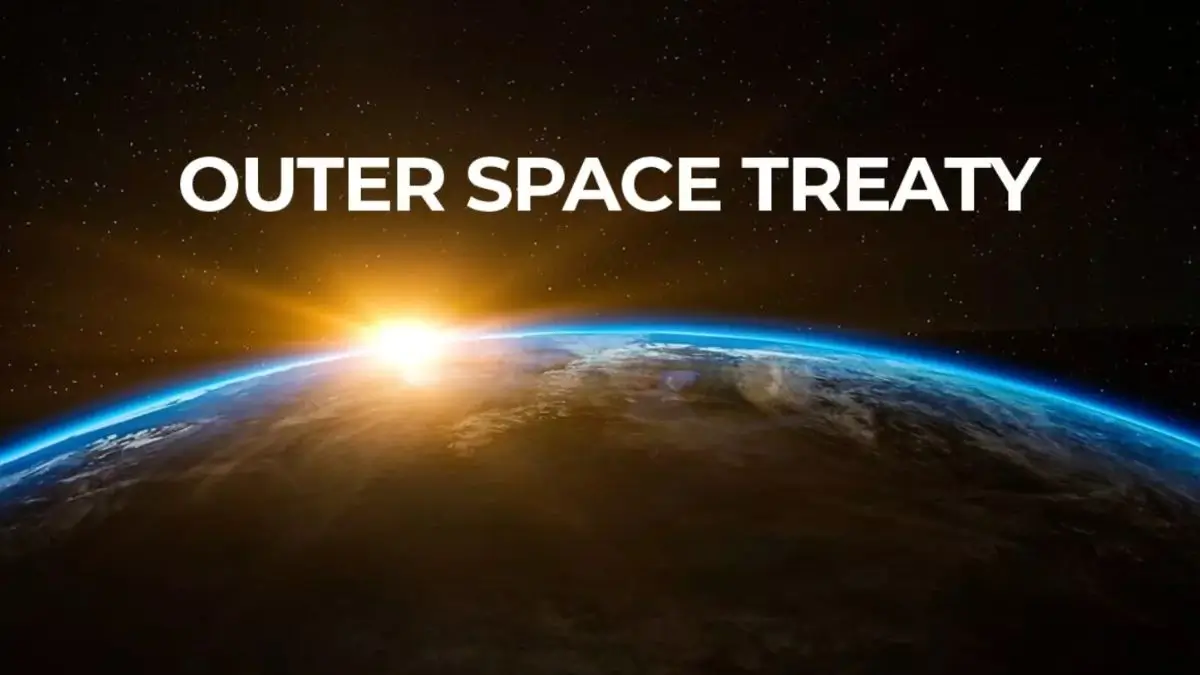
The Outer Space Treaty is the foundation of the international space law which was signed in the year 1967. This treaty has to ensure that the outer space remains the peaceful and accessible to all humanity. When the Cold War ‘Space Race’ was intensifying the global leaders have agreed on to the framework of the prevent the space to become the new battlefield. Currently even in 2026 this treaty also continues to guide the both government missions and private space companies.
Historical Background Behind The Treaty Formation
During the 1960s, competition between the United States and the Soviet Union raised the fears that space could be militarized.
To avoid the conflict beyond Earth several nations came together to the prevent the weaponization of space and also to promote peaceful exploration.
With this also ensure the space remains a shared global resource for everyone.
This have led to the signing of the treaty in January 1967 in these major powers including the US, UK and Soviet Union are part of it.
Core Principles of the Outer Space Treaty
The treaty is built on the several key principles that act as the ‘rules of the road’ for the space activities.
1. Space for All Humanity
Outer space is considered as the province of all mankind which means that the exploration must benefit the every country and not just a few powerful nations.
2. No Ownership of Celestial Bodies
Any countries cannot claim the sovereignty over the Moon, Mars or any celestial body. In simply words no nation can own the space territory.
3. Ban on Weapons of Mass Destruction (WMDs)
The treaty also strictly prohibits the placing nuclear weapons or WMDs in orbit or on the celestial bodies. This ensures that the space remains free from large scale of military threats.
4. Peaceful Use of Space
The Moon and other celestial bodies must be used only for the peaceful purposes and it banning the military bases and weapon testing on to the space.
Member Nations and Global Participation
As of now in 2026 the treaty has over 115 member countries which are including the major space powers such as,
- India
- China
- Japan
- Members of the European Space Agency
Also the new space nations like the UAE and several African and South American countries have also joined and it reflects to explore the space.
Why the Treaty is Still Relevant Today
Despite it was formed nearly six decades old the treaty is more relevant than in the new modern development.
Private companies like SpaceX and Blue Origin are expanding the space activities which is raising the new legal and ethical questions.
While nations cannot own celestial bodies but questions remain can companies own the several resources mined from space? This is one of the biggest unresolved issues remain today.
The thousands of satellites in orbit have created the space debris and increased the chances of the collisions.
The treaty’s clause on avoiding contamination is now being used to push for the stricter regulations.
Several Projects like lunar bases and space stations rely on the treaty to ensure the peaceful cooperation and also the no military conflict on the Moon.
Existing Global Space Framework
The treaty is part also part of the broader system which is managed by the United Nations Office for Outer Space Affairs and the Committee on the Peaceful Uses of Outer Space.
Other key agreements include,
- Rescue Agreement (1968) – Astronaut safety
- Liability Convention (1972) – Damage responsibility
- Registration Convention (1976) – Tracking space objects
- Moon Agreement (1979) – Governance of lunar activities
India is a signatory to all the major treaties but has not ratified the Moon Agreement.
Challenges and Need for Updates
While the treaty laid a strong foundation several new challenges are emerging as the,
- Commercialization of space
- Militarization through the advanced technologies
- Competition for the lunar and asteroid resources
Several experts believe the treaty may need some modern updates to address 21st-century reality and become more inclusive for the all countries.


 Meet MAI-Transcribe-1: Microsoft’s Fast,...
 What Is Mission Mitra? ISRO’s New Experi...
 NASA's Artemis II Mission Begins: First ...