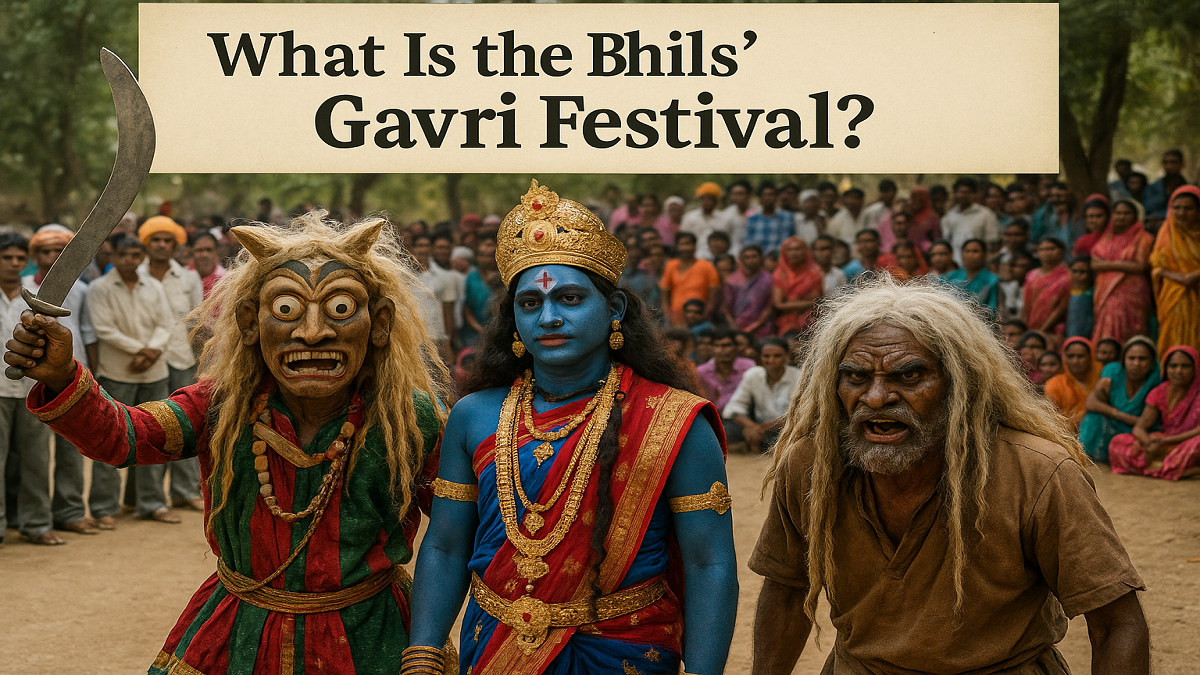
The Bhil community of Mewar in Rajasthan carries a rich cultural legacy that finds its most vibrant expression in the Gavri Festival. This 40-day ritual celebration is not only a form of devotion to their deity Gorkhiya Mata but also a living tradition that blends dance-dramas, songs, and spiritual rites. In 2025, for the first time, this colourful heritage was showcased to a broader audience through a photo exhibition at the India International Centre Art Gallery. The event celebrated the oral literature and cultural heritage of the Bhils, offering the public a rare glimpse into one of India’s most unique tribal festivals.
Origins and Timing of Gavri Festival
The Gavri Festival begins after the full moon night of Raksha Bandhan in August. It is held in honour of Goddess Parvati, whom the Bhils lovingly regard as their sister. The celebrations are deeply rooted in spiritual belief and communal unity. For over a month, Bhil troupes travel from village to village in Udaipur and neighbouring districts, performing khels—traditional dance-dramas that combine religious devotion with cultural storytelling.
Spiritual and Social Significance
The festival is both a spiritual pilgrimage and a social gathering.
- Religious Devotion: The performances are dedicated to Gorkhiya Mata, a deity revered as a protector and spiritual guide of the Bhil people.
- Cultural Identity: Through the enactment of rituals, songs, and stories, the Bhils reaffirm their tribal identity, beliefs, and worldview.
- Community Bonding: The festival unites villages, with each performance drawing people from all walks of life to participate, watch, and celebrate.
Performance, Parody, and Social Commentary
The Gavri performances create a carnivalesque atmosphere filled with dance, satire, and humour.
- Challenging Hierarchies: The plays often mock caste and class systems, using parody to question authority figures—from kings to gods.
- Gender Roles: In this patriarchal society, male actors play female characters, introducing rare moments of gender fluidity and role reversal.
- Elevated Status: During the festival, the Bhil performers are treated as gods, a striking contrast to their marginalised status in everyday life.
Themes in Gavri Dance-Dramas
The Gavri plays explore both spiritual and historical narratives.
- Connection to Nature: Popular performances like ‘Badliya Hindwa’ highlight the Bhils’ relationship with nature, underscoring the importance of environmental balance.
- Historical Resistance: Stories such as ‘Bhilurana’ depict the Bhil struggle against invaders, including the Mughals and the British East India Company.
- Moral and Cultural Lessons: Each play concludes with salutations to the goddess and warnings against harming nature or violating Bhil sovereignty.
Preserving Culture Through Gavri
The Gavri Festival is not just an annual celebration—it is a repository of oral history, folk literature, and tribal values. Through its songs, dances, and storytelling, the festival:
- Preserves Bhil language and traditions
- Passes down historical memory to younger generations
- Strengthens community pride and solidarity
Gavri’s Growing Recognition
In 2025, the photo exhibition at the India International Centre Art Gallery brought the festival to national attention. By documenting rituals, costumes, and performances, it allowed people outside Rajasthan to appreciate the cultural richness of the Bhils. This recognition is an important step towards safeguarding tribal heritage in an era of rapid modernisation.


 Raja Ravi Varma Painting Breaks Records ...
 Shah Rukh Khan Debuts in Hurun Global Ri...
 A Tribe With No Word for "Time"? Inside ...