
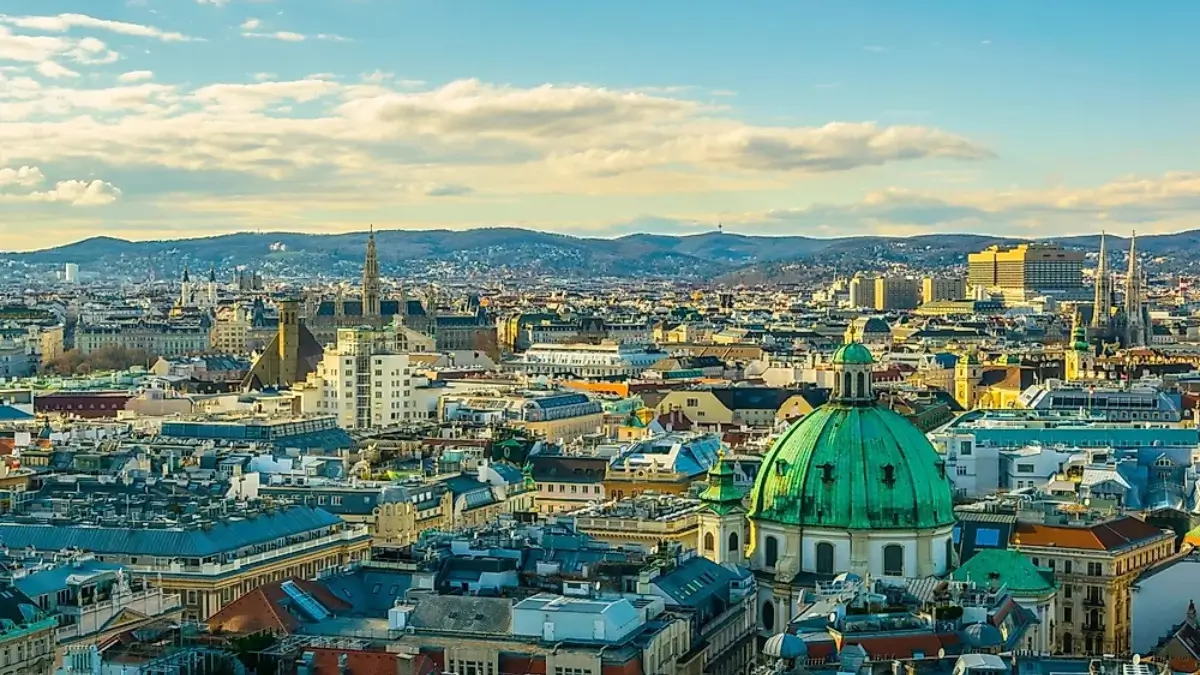
Austria is a beautiful European country known for its rich history, culture, and scenic landscapes. It is famous for its classical music, royal palaces, and snowy mountains that attract people from around the world. The country’s capital city plays a major role in politics, art, and education, making it one of the most admired cities in Europe.
Capital of Austria
The capital of Austria is Vienna. It is the largest city in the country and serves as the heart of its government, economy, and culture. Vienna is admired across the world for its stunning architecture, clean environment, and lively traditions.
Situated in the eastern part of Austria, Vienna enjoys a scenic setting on the banks of the Danube River, making it both a beautiful and strategic location for trade and travel in Europe.
History of Austria’s Capital
Vienna’s story goes back hundreds of years. It became a major center during the Habsburg Monarchy, when it served as the seat of powerful emperors and kings. Later, it was the capital of the Austro-Hungarian Empire, one of Europe’s greatest empires.
Even after the empire ended in 1918, Vienna remained Austria’s proud capital. Many of its magnificent buildings, such as Schönbrunn Palace and Hofburg Palace, still remind visitors of its royal past and cultural richness.
Where is Vienna Located?
Vienna lies in eastern Austria, close to the borders with Slovakia and Hungary. Its position along the Danube River helped it become a key center for trade, art, and cultural exchange throughout history.
The city’s layout is a mix of historic landmarks and modern architecture, with styles ranging from Gothic cathedrals to Baroque palaces and modern glass buildings — showing how Vienna blends tradition and progress perfectly.
Cultural Significance of Vienna
Vienna is often called the “City of Music” because it has inspired some of the world’s greatest composers. Famous names like Mozart, Beethoven, and Johann Strauss created timeless masterpieces here.
Music continues to be an important part of life in Vienna. The city hosts world-class performances at the Vienna State Opera and concerts by the Vienna Philharmonic Orchestra. Apart from music, Vienna is also rich in art, literature, and theatre, making it a true cultural capital of Europe.
Vienna’s Global Role
Vienna is not only important to Austria but also plays a major role in international affairs. It hosts several global organizations, including:
- The United Nations Office at Vienna (UNOV)
- The Organization of Petroleum Exporting Countries (OPEC)
- The International Atomic Energy Agency (IAEA)
These institutions make Vienna a global center for diplomacy, peace, and international cooperation.
Famous Landmarks in Vienna
Vienna’s architecture and attractions reflect its glorious past. Some must-see landmarks include:
- Schönbrunn Palace – The former summer home of the Habsburgs
- Hofburg Palace – The imperial winter residence
- St. Stephen’s Cathedral – A masterpiece of Gothic architecture
- Belvedere Palace – Known for its art collections and stunning gardens
- Vienna State Opera – A world-famous symbol of classical music


 Which is the Most Consumed Beverage in t...
 Which is the Only Continent with No Tree...
 Which River is known as the National Riv...











