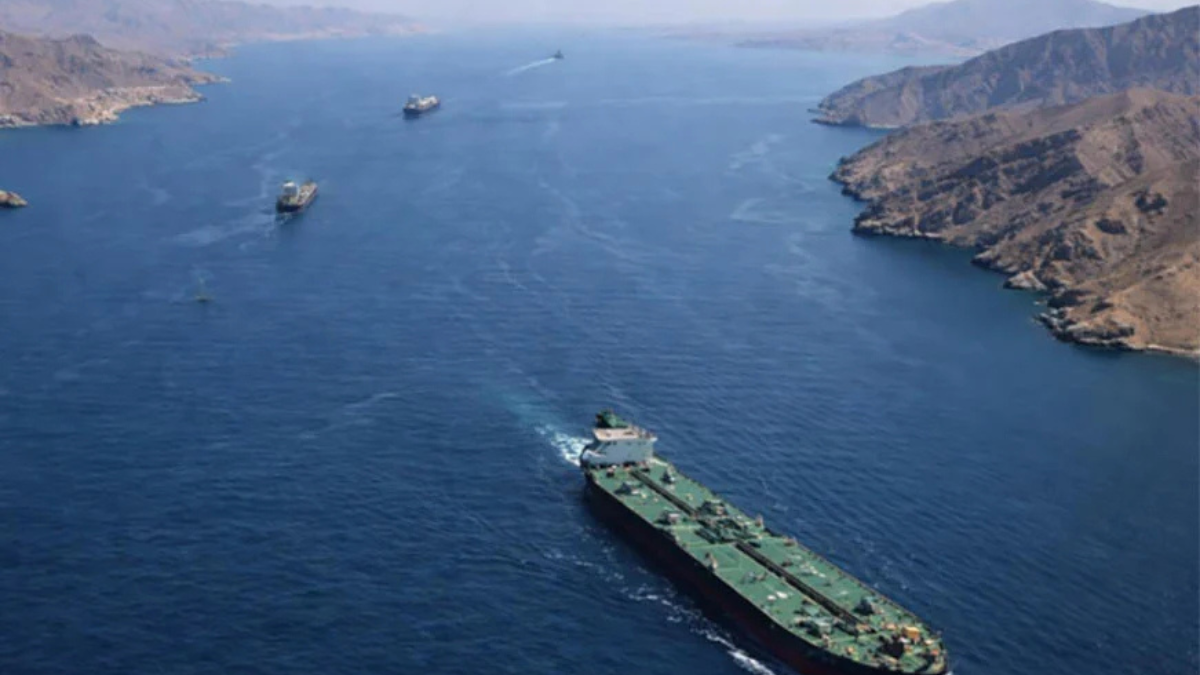
Did you know that a very narrow waterway in the Middle East plays a huge role in the global energy supply? Every day, massive oil tankers pass through this route, carrying crude oil to different parts of the world. Because of its location and heavy shipping traffic, it has become one of the most strategically important sea passages on the planet.
This important route connects the oil-rich countries of the Persian Gulf with the open waters of the Arabian Sea and the wider Indian Ocean. It serves as a gateway for international trade and energy transport, making it vital for many economies that depend on imported oil.
Many countries closely watch activities in this region because any disruption here can affect global oil prices and international trade. Even small tensions or conflicts in the area can quickly become a matter of global concern due to its importance for shipping and energy security.
The region around this waterway is also known for its strategic location, busy shipping lanes, and geopolitical significance. Understanding its map, location, key facts, and role in oil transportation helps explain why it remains one of the most discussed maritime routes in the world.
What is the Strait of Hormuz?
The Strait of Hormuz is a narrow natural sea passage that connects the Persian Gulf to the Gulf of Oman and eventually the Arabian Sea. It acts as the only maritime exit for several oil-producing countries located around the Persian Gulf.
Countries such as Saudi Arabia, Kuwait, Qatar, Iraq and the United Arab Emirates depend heavily on this route to export oil and natural gas to the rest of the world.
Because it is the only sea route from the Persian Gulf to international waters, the Strait of Hormuz is often described as the most important energy chokepoint in the world.
Where is the Strait of Hormuz Located?
Geographically, the Strait of Hormuz lies between Iran in the north and the Musandam Peninsula of Oman and the United Arab Emirates in the south.
It connects three important water bodies:
- Persian Gulf
- Gulf of Oman
- Arabian Sea (part of the Indian Ocean)
This location makes it a crucial link between the oil-rich Gulf region and global markets.
Physical Features and Navigation
Although extremely important for shipping, the strait is relatively narrow.
- Width: At its narrowest point, the waterway is about 33 km (21 miles) wide.
- Shipping Lanes: Ships use a Traffic Separation Scheme, which creates separate lanes for incoming and outgoing vessels. Each lane is about 2 miles wide with a buffer zone in between.
- Depth: The waterway is deep enough to allow very large tankers, including Ultra Large Crude Carriers (ULCCs), to pass safely.
Despite these features, the limited space makes the area vulnerable to accidents, military activity, or blockades.
Why the Strait of Hormuz is So Important?
The Strait of Hormuz is vital for global energy supply and international trade.
Global Oil Transportation
Roughly 20–21 million barrels of oil pass through the strait every day, representing about one-fifth of global oil consumption.
Major LNG Route
Around 20% of the world’s liquefied natural gas (LNG) shipments also move through this passage, especially exports from Qatar, one of the largest LNG producers.
Key Route for Gulf Producers
The strait serves as the main export channel for major Gulf energy producers including:
- Saudi Arabia
- Iraq
- Kuwait
- Qatar
- United Arab Emirates
Dependence of Asian Economies
More than 80% of the oil passing through the strait goes to Asian countries, especially:
- China
- India
- Japan
- South Korea
Because of this heavy reliance, any disruption directly impacts these economies.
Rising Tensions and Recent Developments
Recent geopolitical tensions have increased concerns about the safety of the Strait of Hormuz. Military activity in the region has led to fears of blockades, naval mines, and attacks on commercial vessels.
Reports in March 2026 suggested intensified maritime operations involving Iranian naval forces and responses from the United States Central Command (CENTCOM). Such developments have raised the risk for ships traveling through the area.
As a result, many shipping companies have become cautious, and insurance costs for vessels entering the region have increased sharply.
Impact on Global Shipping and Trade
The uncertainty in the Strait of Hormuz has already affected global shipping operations.
Major international shipping companies have paused or reduced cargo movement to several Gulf countries. This includes routes to major exporters such as Saudi Arabia and the UAE.
Some ships have started rerouting around the Cape of Good Hope in southern Africa instead of using Middle Eastern routes. While safer, this option adds 10–14 extra days to travel time and increases shipping costs significantly.
Possible Effects on Global Energy Prices
If the strait becomes completely blocked, the global oil market could face serious supply shortages.
Energy experts believe that oil prices could increase sharply because:
- Around 20% of global oil supply moves through this passage.
- Alternative routes and pipelines cannot carry the same volume.
- Demand for fuel remains high in major economies.
Higher oil prices would increase transportation and production costs worldwide, which could lead to higher inflation.
Impact on India and Asian Economies
Countries in Asia are especially vulnerable to disruptions in the Strait of Hormuz.
For example, India imports a large portion of its crude oil from Gulf nations, making the route extremely important for its energy security. Any long-term disruption could result in:
- Higher fuel prices
- Increased import costs
- Pressure on national currencies
Governments may need to rely on strategic petroleum reserves or seek alternative suppliers such as Russia.
Limited Alternative Routes
Some pipelines exist to bypass the Strait of Hormuz, such as Saudi Arabia’s East-West Pipeline and the Abu Dhabi Crude Oil Pipeline. However, these routes can transport only a small portion of the oil normally shipped through the strait.
Experts estimate that only about 4.2 million barrels per day can be redirected through these pipelines—far less than the 20 million barrels usually transported by sea.
This lack of alternatives makes the strait extremely difficult to replace.
What would Happen If the Strait Closed Completely?
A full closure of the Strait of Hormuz could trigger several global consequences.
- Energy Market Shock: Oil and natural gas prices could rise rapidly due to reduced supply.
- Global Trade Disruptions: Shipping delays and higher freight costs could affect industries worldwide.
- Economic Pressure on Importing Countries: Energy-dependent economies in Asia and Europe would face higher costs.
- Supply Chain Problems: Besides oil, the strait also carries chemicals and fertilizers, which are essential for agriculture and manufacturing.


 Which is the Smallest Island in the Worl...
 Which Country is the Largest Producer of...
 Which Beverage is known as the Queen of ...