
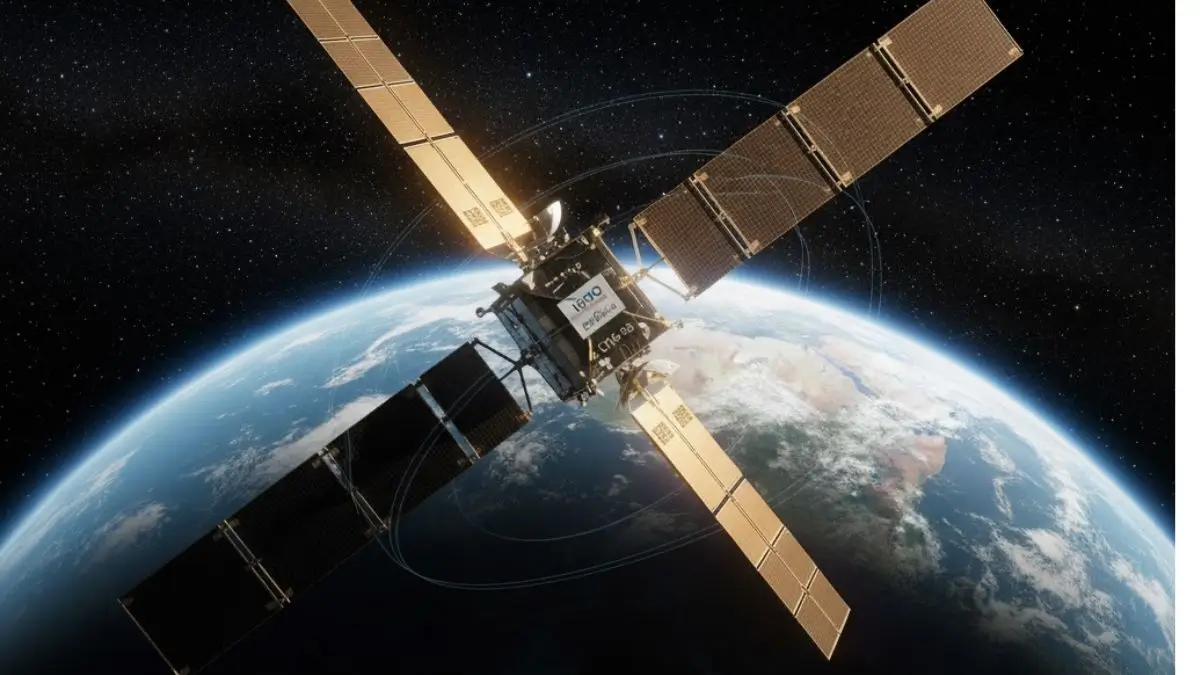
India is set for another space milestone as the Indian Space Research Organisation (ISRO) prepares to launch CMS-03, its heaviest communication satellite, on November 2, 2025. The launch will take place from the Satish Dhawan Space Centre, Sriharikota, using the LVM3-M5 launch vehicle, which earlier powered India’s historic Chandrayaan-3 moon mission.
The mission signifies ISRO’s growing prowess in high-capacity space communications, targeting improved coverage across India and surrounding oceanic zones.
What Is CMS-03?
CMS-03 is a multi-band communication satellite designed to provide robust, high-throughput services across a wide oceanic region and the entire Indian landmass.
- Weight: Approximately 4,400 kg, making it the heaviest communication satellite launched from Indian soil
- Orbit: To be placed in Geosynchronous Transfer Orbit (GTO)
- Objective: Enhance digital communication, satellite internet, and maritime connectivity
This makes CMS-03 a significant leap in national communication infrastructure, potentially improving television, telemedicine, education, and emergency services coverage.
LVM3-M5: ISRO’s Powerhouse Launcher
The LVM3 (Launch Vehicle Mark-3), also known as GSLV Mk III, is ISRO’s most powerful rocket, capable of carrying heavy payloads to GTO and beyond.
Key Highlights,
- This launch marks the 5th operational flight of the LVM3 (hence, LVM3-M5)
- Previously used in Chandrayaan-3, which made India the first nation to land near the lunar south pole
- Known for its high reliability and capacity for heavier payloads, a critical requirement for global satellite communication missions
The fully integrated launch vehicle was moved to the launch pad on October 26, with final pre-launch procedures underway.
Strategic Importance
- Enhances India’s satellite communication network and maritime connectivity
- Boosts disaster response capabilities across remote and coastal regions
- Reinforces India’s space independence in launching heavy-duty satellites from its own soil
Technological Milestone
- Launching a 4,400 kg satellite to GTO from Indian territory marks a new technological benchmark for ISRO
- Prepares India for future satellite constellations and deep space communications
Comparison with Previous Missions
| Mission | Satellite/Objective | Launcher | Notable Achievement |
| Chandrayaan-3 | Lunar exploration (Moon south pole) | LVM3 | First to land near lunar south pole |
| CMS-03 (2025) | Communication services | LVM3-M5 | Heaviest communication satellite from India |
| CMS-01 & CMS-02 | Predecessors in communication series | PSLV | Lower payloads, smaller regional coverage |
ISRO’s Expanding Capabilities
With this launch, ISRO not only showcases its technological leap in heavy satellite deployment but also strengthens its global profile in,
- Satellite broadband and communications
- Space-based disaster management systems
- Support for Digital India and Blue Economy sectors
It also complements India’s goals for expanding satellite navigation and space-based internet access.
Key Takeaways
- Launch Date: November 2, 2025
- Satellite Name: CMS-03
- Vehicle: LVM3-M5 (5th operational flight)
- Weight: Approx. 4,400 kg — ISRO’s heaviest comm satellite to date
- Launch Site: Sriharikota, Andhra Pradesh
- Significance: Boosts maritime, digital, and emergency communication infrastructure
- Previous Mission: Chandrayaan-3 used the same LVM3 vehicle


 $1.63 Billion IPL Deal! Kal Somani Buys ...
 India Open 2026 Final: Anahat Singh Defe...
 Sahibzada Farhan Wins ICC Player of the ...











