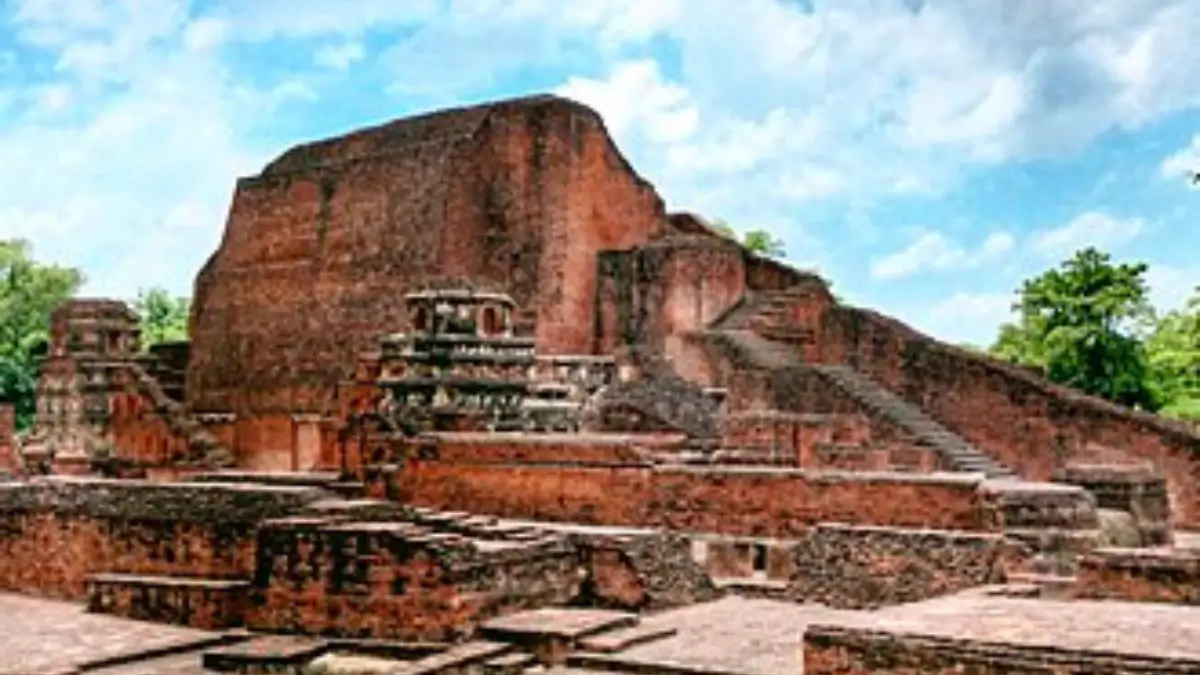
Bihar is a state in India with a very old and rich history. It has been home to great kings, ancient learning centers, and important cultural and religious movements. Many travelers and scholars have been drawn to this land because of its historical importance. People are often curious about its ancient identity and how it was known in the past.
The Early Kingdoms of Bihar
In ancient times, Bihar was not a single region but a collection of powerful kingdoms. Each area had its own name and importance:
- Videha (Mithila): This was the northern part of Bihar. It was famous for its culture and learning.
- Magadha: The southern region was known as Magadha. It became the center of major empires like the Mauryas and Guptas.
- Anga: The eastern region, around modern Bhagalpur, was called Anga.
These kingdoms made Bihar one of the most important regions in ancient India.
Why the Name Magadha was Important?
For many centuries, the name Magadha was used for most of this land. It was the heart of Indian power. Kings of Magadha built large cities, armies, and trade routes. The famous city of Pataliputra (now Patna) was the capital and one of the largest cities in the world at that time. Magadha played a big role in the spread of Buddhism and Jainism, two world religions born in this region.
The Birth of the Name Bihar
The modern name “Bihar” comes from the word “Vihara”, which means a Buddhist monastery or place where monks lived. Bihar had many Buddhist monasteries, especially around Odantapuri (near today’s Bihar Sharif).
When Persian and Turkic invaders came to India in the 12th century, they noticed the large number of monasteries and started calling the region “Bihar”. Over time, this name became widely used.
Official Recognition of Bihar
The British officially created the province of Bihar on March 22, 1912. Before that, Bihar was part of the Bengal Presidency. After this date, “Bihar” became the formal and permanent name of the region we know today.
Other Ancient Names of Bihar
Bihar was known by different names in different areas:
- Magadha: The southern heartland of empires.
- Mithila or Videha: Northern cultural region.
- Anga: Eastern region near Bhagalpur.
All these names show how Bihar was an important and diverse land in ancient times.
The Old Name of Patna
Patna, Bihar’s capital, also has a fascinating history of names:
- Pataliputra: The most famous ancient name, during the Maurya and Gupta empires.
- Pataligrama: A small fort that existed before Pataliputra.
- Kusumapura (City of Flowers) and Pushpapura: Names reflecting its beauty.
- Palibothra: The name used by Greek historians.
- Azimabad: A brief name during the Mughal period, given by Prince Azim-us-Shan.
Finally, the city became known as Patna, which remains its name today.
Fascinating Facts About Ancient Bihar
- Vaishali in northern Bihar was one of the world’s first democracies with an elected assembly.
- Aryabhata, the great mathematician, proposed that the Earth rotates on its axis and calculated π accurately.
- Nalanda University was a huge learning center with a nine-storey library and 10,000 students.
- The Barabar Caves have a unique echo effect due to polished granite walls.
- Bihar contributed to the concept of zero and decimal numbers, forming the base of modern mathematics.
- The Mahabodhi Temple in Bodh Gaya has stood since the 5th century.
- Ancient artisans created strong iron and bronze statues, many of which survive today.


 Which Country is the Largest Coal Produc...
 Which Lake is known as the Lake Above th...
 How many International Airports are ther...