
Did you know that beneath the ocean floor lies one of the most valuable energy treasures on Earth? Natural gas is a key fuel used for electricity, cooking, and industries, and some regions of the world hold massive reserves of it.
Across the globe, many countries explore and produce natural gas to meet growing energy needs. These reserves are often found deep underground or under the sea, requiring advanced technology to extract them safely.
Among these, one particular gas field stands out for its extraordinary size and importance. It has played a major role in shaping the energy economy of nearby regions and continues to be a vital source of fuel.
This enormous natural gas reserve is shared between nations and has helped transform desert landscapes into global energy hubs. Its discovery changed the way the world looks at natural gas resources.
What is Natural Gas and How is it Formed?
Natural gas is mainly made up of methane, a simple hydrocarbon. It is formed over millions of years from the remains of tiny plants and animals that lived in ancient oceans. When these organisms died, they settled at the bottom and were buried under layers of sand and mud.
Over time, heat and pressure transformed this organic material into natural gas. The gas then moved through porous rocks and got trapped under a hard layer called cap rock, forming large underground reservoirs.
Which is the Largest Natural Gas Field in the World?
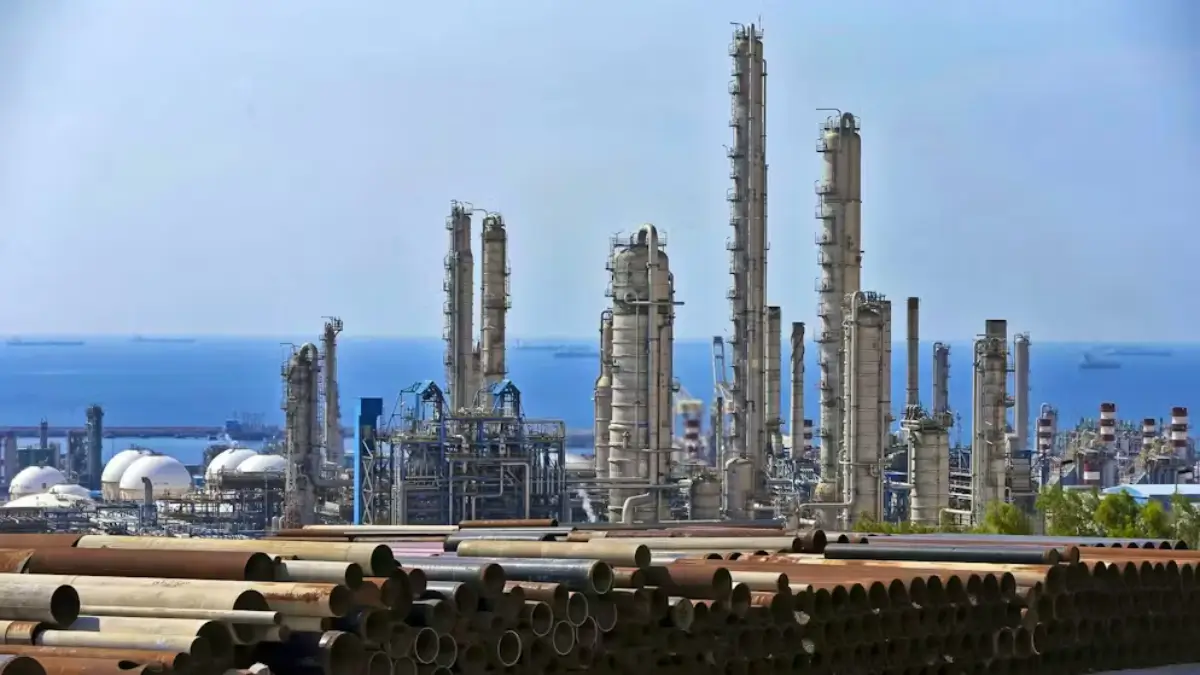
The world’s largest natural gas field is the South Pars / North Dome Gas Field. It is located deep under the Persian Gulf and is shared by Iran and Qatar.
This field is extremely important because it holds nearly 19% of the world’s known natural gas reserves, making it the largest single gas reservoir on Earth.
Key Features of the Largest Gas Field
The South Pars / North Dome field is enormous in size and resources. It covers an area of about 9,700 square kilometres, which is similar to the size of a small country.
It is estimated to contain around 1,800 trillion cubic feet of natural gas, along with large quantities of natural gas condensate. The gas lies nearly 3,000 meters below the seabed, making extraction complex and technology-driven.
Iran and Qatar: Sharing the Same Resource
Although it is one continuous gas field, both Iran and Qatar control different parts of it. Iran calls its section South Pars, while Qatar refers to its portion as North Dome or North Field.
Qatar focuses mainly on exporting gas in liquefied form (LNG), while Iran uses most of its share for domestic energy needs like electricity and heating.
Importance of the Field in Global Energy
This gas field plays a major role in meeting global energy demand. Qatar is one of the world’s top exporters of LNG and supplies gas to countries such as India, China, Japan, and South Korea.
Because of its huge reserves, this field alone can support global energy needs for many years. Any disruption in this region can impact gas prices and supply across the world.
When was it Discovered?
The discovery of this giant gas field happened in stages. The Qatar side was first identified in 1971 by international oil companies. Later, in 1990, Iran discovered that the same reservoir extended into its territory.
This discovery changed the Middle East into one of the most important energy hubs in the world.
Where Exactly is it Located?
The field lies offshore in the Persian Gulf between Iran and Qatar. It is entirely underwater, so extraction is done using offshore drilling platforms.
Pipelines are used to transport the gas from the seabed to processing plants on land, where it is either used domestically or converted into LNG for export.
Top-5 Largest Natural Gas Fields in the World
Apart from South Pars / North Dome, there are several other massive gas fields across the globe:
- Urengoy Gas Field – The largest onshore gas field in the world
- Yamburg Gas Field – Another major field in Siberia
- Hassi R’Mel Gas Field – The biggest in Africa
- Galkynysh Gas Field – One of the newest super-giant fields
Why Natural Gas Matters Today?
Natural gas is often called a “bridge fuel” because it produces fewer emissions than coal and oil. It helps countries move towards cleaner energy while still meeting growing energy demands.
With increasing industrial growth and population, the demand for natural gas continues to rise, making large reserves like South Pars / North Dome extremely valuable.


 What is the Old Name of Punjab? Check He...
 GK Quiz on Strait of Hormuz, Questions a...
 Which Countries Border the Strait of Hor...











