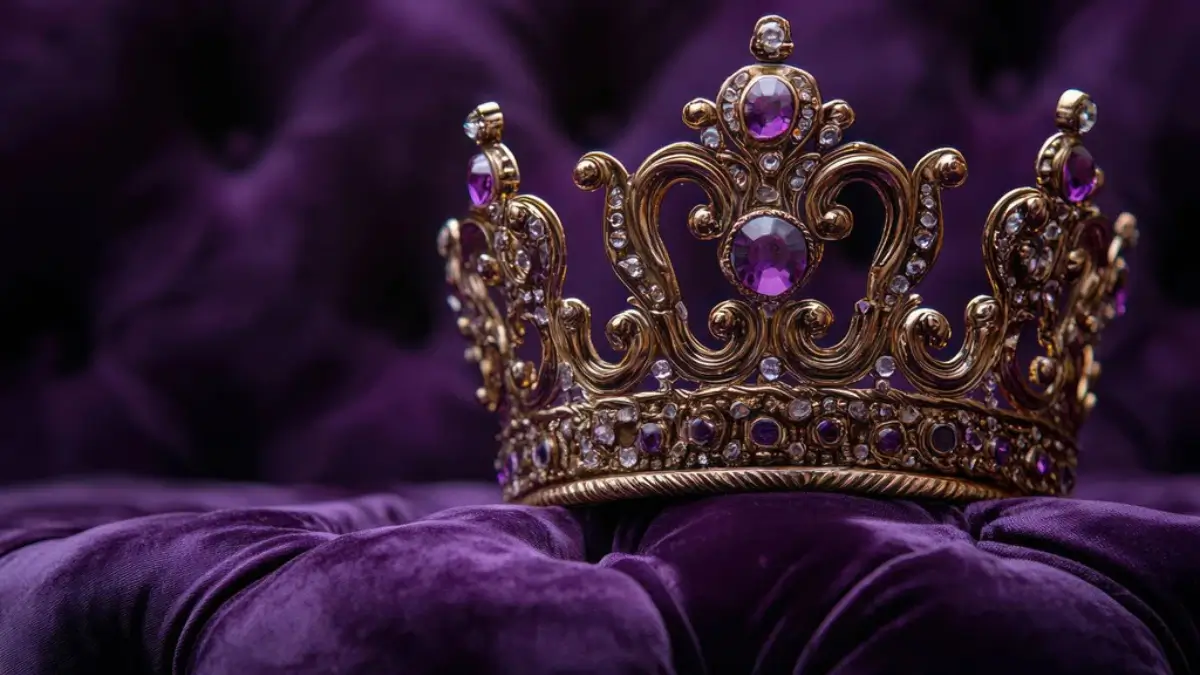
Many colours in the world have special meanings and are linked with different feelings, cultures, and traditions. Some colours remind us of love, some of peace, and others of power. There is one particular colour that has been closely connected with kings, queens, and noble families for hundreds of years. This colour became a strong symbol of wealth, respect, and high status in society.
Which Colour is known as the Colour of Royalty?
The colour known as the “Colour of Royalty” is Purple. Long ago, this colour became a symbol of luxury and high status because its dye was extremely rare and expensive. The most famous shade was called Tyrian Purple, which came from tiny sea snails found near the Mediterranean Sea.
The Story of Tyrian Purple
Tyrian Purple was not made in an easy way. To produce even a small amount of dye, workers had to collect thousands of Murex sea snails. The dye came from a special gland inside the snails. This long and difficult process made the colour more costly than gold. Because of this, only the richest and most powerful people could afford it.
A Colour Controlled by Law
In ancient Rome and Byzantium, the colour Purple was so important that laws were created to control its use. Only emperors and top officials could wear clothing dyed with Tyrian Purple. Ordinary people were strictly banned from using it, and in some periods, breaking this rule could even lead to death. This made the colour a strong symbol of supreme authority.
Born to the Purple
In the Byzantine Empire, royal children born inside a special purple-decorated room were described as “born to the purple.” This phrase meant they were true heirs to the throne and had royal blood from birth. The colour was not just fashion — it represented power, dignity, and rightful rule.
Why the Colour was So Special?
The natural dye contained a rare chemical called 6,6′-dibromoindigo, which made the shade deep and long-lasting. Unlike many colours that faded over time, Tyrian Purple grew richer with age. This unique quality made it even more precious.
Purple in Religion and Culture
Over time, Purple also became important in religion. In the Catholic Church, it is used during Advent and Lent, representing prayer, reflection, and preparation. Today, Purple is still linked with wisdom, imagination, spirituality, and creativity.
A Rare Sight on Flags
Purple remains one of the least used colours on national flags. Only a few countries — such as Dominica and Nicaragua — include it in their flag designs, reminding us of its long history as a rare and special shade.
Fun Facts About Purple
- Its dye once cost more than gold
- The process had a strong, unpleasant smell
- Some Roman rulers punished Purple-wearing commoners
- The first synthetic purple dye was discovered in 1856
- It symbolizes mystery, luxury, and wisdom
Why Purple Still Feels Royal Today?
Although the dye is no longer rare, the history behind it still influences how we see the colour. Purple continues to be linked with royalty, elegance, power, and high status. From royal robes to luxury branding, the legacy of Tyrian Purple proudly lives on.


 What is National Investigation Agency? C...
 Which State is the Largest Petroleum Pro...
 Largest Crude Oil Supplier Countries to ...