
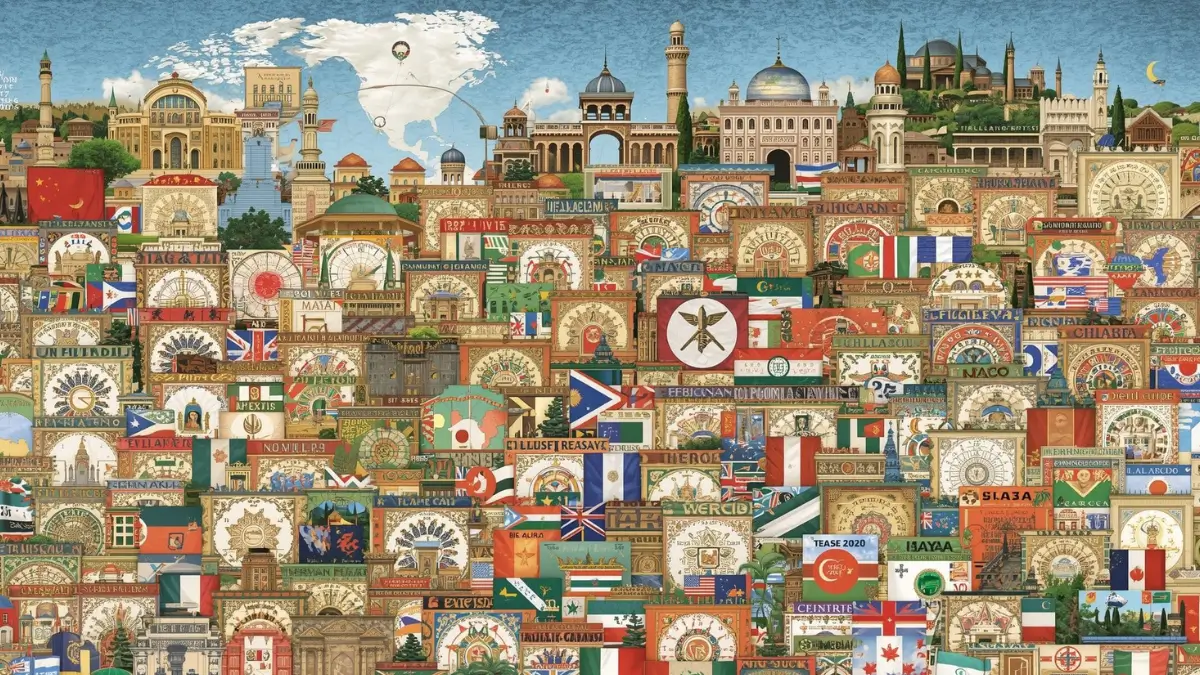
Did you know that calendars are not the same everywhere in the world? Different countries follow different systems to measure days, months, and years. These calendars are often linked to culture, religion, and history.
In most parts of the world, people follow the Gregorian calendar for daily life, business, and international communication. However, some countries also keep their traditional calendars alive.
These traditional calendars are used for festivals, religious events, and cultural celebrations. They help people stay connected with their ancient traditions and customs.
Interestingly, there is a country in the world that officially uses two different calendars at the same time. One calendar is used for government and modern purposes, while the other is used for cultural and traditional activities.
This unique practice shows how modern systems and ancient traditions can exist together in one nation. It also makes that country quite special in the way it manages time.
Country that Officially Uses Two Calendars
The country that officially uses two calendars is Ethiopia. The nation follows its traditional Ethiopian Calendar for domestic matters while also using the Gregorian Calendar for global communication.
The Ethiopian calendar governs local administration, cultural events, and religious observances. Meanwhile, the Gregorian calendar helps the country coordinate with the rest of the world in areas such as trade, diplomacy, and international travel.
Location of the Dual-Calendar Country
Ethiopia is located in the Horn of Africa, in the eastern part of the African continent. It shares borders with countries such as Eritrea, Sudan, South Sudan, Kenya, and Somalia.
Ethiopia is one of the oldest continuously existing nations in the world. Its long and independent history allowed many ancient traditions, including its calendar system, to remain in official use.
Why Ethiopia Uses Two Calendars?
The use of two calendars in Ethiopia is mainly due to historical and cultural reasons.
The Ethiopian calendar was developed based on ancient Christian calculations regarding the birth of Jesus Christ. These calculations differ slightly from those used in the Gregorian calendar.
To maintain its cultural heritage and religious traditions, Ethiopia continues to use its own calendar for local purposes. However, to stay connected with the international community, it also follows the Gregorian calendar for global communication.
Structure of the Ethiopian Calendar
The Ethiopian Calendar has a unique structure compared with most modern calendars.
The calendar contains 13 months in a year. Twelve of these months have 30 days each, while the final month is a short month consisting of five days in a normal year and six days in a leap year.
Another interesting feature is that the Ethiopian calendar is about seven to eight years behind the Gregorian Calendar. This difference exists because the two systems calculate historical events differently.
Interesting Facts About Ethiopia’s Calendar System
- One of the Oldest Calendars Still in Use: The Ethiopian Calendar has roots in ancient Christian traditions and remains one of the oldest calendar systems still used officially.
- A Year With 13 Months: Unlike the Gregorian Calendar, which has 12 months, the Ethiopian calendar includes 13 months, making it unique among modern national calendars.
- Different New Year Date: The Ethiopian New Year, called Enkutatash, usually falls in September according to the Gregorian calendar.
- Strong Cultural Significance: The calendar is closely connected with the traditions of the Ethiopian Orthodox Tewahedo Church, which plays an important role in Ethiopian culture.
Global Importance of the Dual-Calendar System
The calendar system of Ethiopia is a remarkable example of how traditional heritage and modern global systems can exist together.
By keeping its indigenous calendar while also using the international standard, Ethiopia successfully balances cultural preservation and global cooperation.


 Who is known as the Father of Scientific...
 Which River is known as the River of Lif...
 Who is known as the King of the Deccan?











