
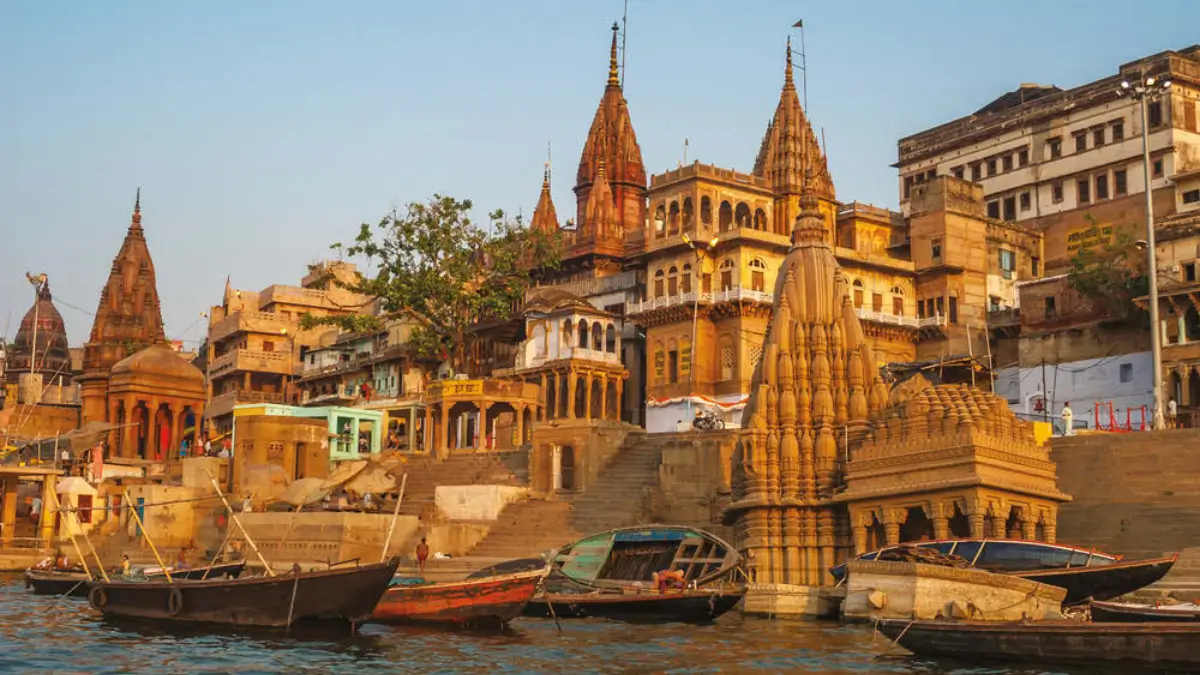
India is often called the land of spirituality, where faith, traditions, and culture come together in a unique way. Every state in India has its own importance, but there is one state that stands out for its deep religious roots, sacred rivers, holy cities, and centuries-old temples. This state is often described as the heart of spiritual India.
Spiritual Capital of India
India is known worldwide as the land of faith, traditions, and divine experiences. Among its many sacred places, one city has always been regarded as the heart of spirituality—Varanasi. Also called Kashi or Banaras, this city in Uttar Pradesh is often described as the Spiritual Capital of India. Let’s explore why Varanasi enjoys this unique title.
Varanasi, A City of Divine Origins
Varanasi is believed to be founded by Lord Shiva, making it a city of divine creation. The word Kashi means “the city of light,” symbolizing knowledge, purity, and liberation. Ancient texts like the Rigveda, Mahabharata, and Skanda Purana mention Kashi as a sacred place where human life connects directly with the divine.
For over 3,000 years, it has remained a center of pilgrimage, learning, and spiritual awakening, attracting saints, philosophers, and seekers from all over the world.
The Sacred River Ganga
The River Ganga is the lifeline of Varanasi. Hindus believe that bathing in its waters purifies the soul and leads to moksha (freedom from the cycle of birth and death).
- Famous ghats like Dashashwamedh, Assi, and Manikarnika are constantly alive with prayers, rituals, and ceremonies.
- The evening Ganga Aarti, with glowing lamps, devotional chants, and music, is one of the most mesmerizing sights, symbolizing the bond between people and divinity.
Temples that Define the City
The city is dotted with thousands of temples, but the most revered is the Kashi Vishwanath Temple, dedicated to Lord Shiva. It is one of the twelve Jyotirlingas and is considered the spiritual heart of the city.
Other important temples include:
- Sankat Mochan Hanuman Temple
- Durga Temple
- Annapurna Temple
These holy places reflect the city’s deep-rooted spiritual energy and diversity of faith.
Varanasi and Moksha
One of the strongest reasons Varanasi is called the Spiritual Capital of India is its link with moksha. It is believed that dying or being cremated here ensures the liberation of the soul. The Manikarnika and Harishchandra Ghats are among the most sacred cremation sites, where rituals have continued for centuries without interruption.
A Centre of Knowledge and Culture
Spirituality in Varanasi is not limited to prayers and rituals. The city has been a major centre of education, philosophy, music, and art.
- Ancient gurukuls flourished here, and today, Banaras Hindu University (BHU) continues this tradition as one of India’s leading institutions for learning.
- Varanasi has also shaped Indian classical music and is home to legendary musicians and scholars.
- Festivals like Dev Deepawali, Maha Shivratri, and Ganga Mahotsav showcase its rich cultural spirit.
A Global Pilgrimage Destination
Every year, millions of pilgrims, tourists, scholars, and seekers visit Varanasi. They come not only to witness ancient rituals but also to experience the essence of India’s spirituality. This blend of sacred traditions and cultural richness makes Varanasi one of the most visited spiritual destinations in the world.


 Which Place is known as the Onion Hub of...
 RBI Plans to Make TReDS Registration Eas...
 KreditBee Joins Unicorn Club After Raisi...











