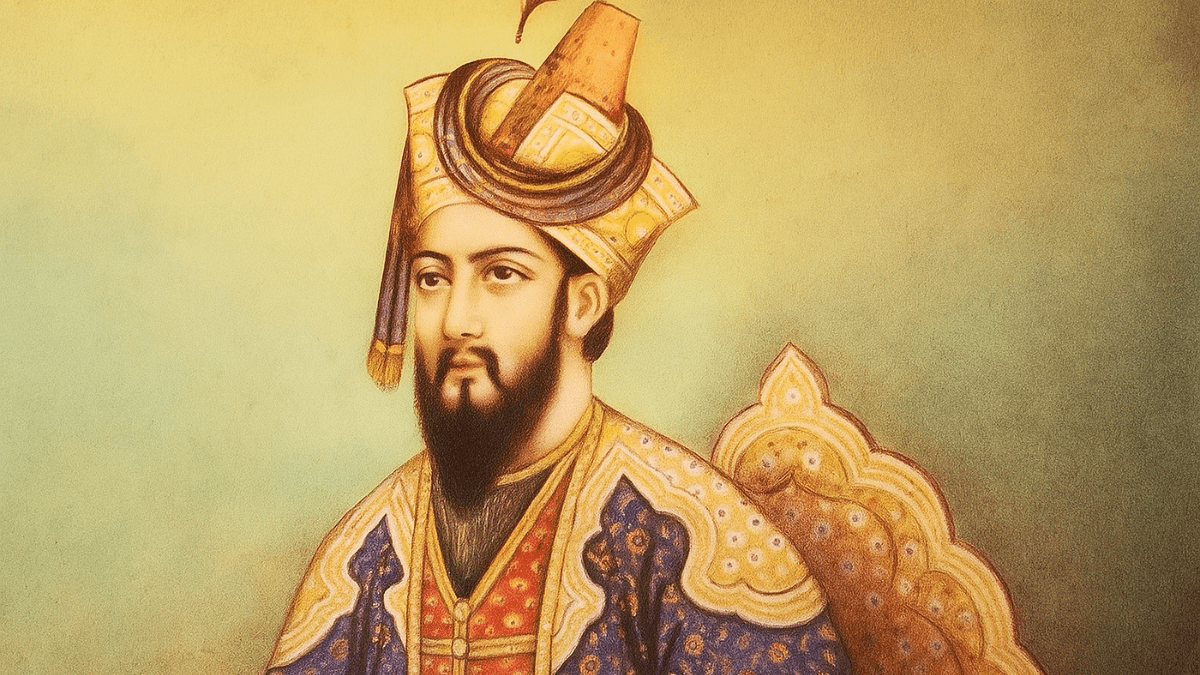
Indian history is full of brave kings and warriors who left a strong mark through their courage, leadership, and victories in battle. Among them, one ruler became so powerful and successful in expanding his empire that people began comparing him with Alexander the Great. This earned him a unique title in history, remembered even today as a symbol of strength, strategy, and fearless ambition.
Alexander of India
The Indian king known as the Alexander of India was Alauddin Khalji, the second ruler of the Khalji dynasty. He proudly called himself “Sikandar-i-Sani”, meaning Second Alexander, because of his vast military conquests and ambition to rule like Alexander the Great. Alauddin strengthened the Delhi Sultanate with reforms, expanded his empire through successful campaigns, and protected India from Mongol invasions, making him one of the most powerful medieval rulers.
Why did he Called as the Alexander of India?
Alauddin Khalji’s dream was not only to rule India but to extend his empire as far as possible. Inspired by Alexander the Great, he started referring to himself as the “Second Alexander.”
- He had successfully conquered regions like Gujarat, Ranthambore, Chittoor, Malwa, and Jalore.
- His victories gave him confidence to imagine global domination.
- He even issued coins bearing the title Sikandar-i-Sani, symbolizing his ambition to be remembered as a world conqueror.
Achievements and Reforms of Alauddin Khalji
Alauddin Khalji was not only a conqueror but also a reformer:
- Military Strength: He built a strong army that defended India against repeated Mongol invasions, protecting the Delhi Sultanate.
- Economic Reforms: He introduced strict price control measures and new revenue policies to stabilize the economy and control inflation.
- Administrative Changes: His rule brought discipline and efficiency to governance, making the Sultanate stronger and more secure.
Early Life and Rise to Power
- Alauddin Khalji was the nephew and son-in-law of Jalaluddin Khalji, the founder of the dynasty.
- Initially, he served as Amir-i-Tuzuk (Master of Ceremonies) and was later appointed governor of Kara and Awadh.
- In 1296, after a successful expedition to Devagiri, Alauddin gained immense wealth and used it to strengthen his position.
- He eventually revolted against Jalaluddin and took control of the Delhi Sultanate, marking the beginning of his powerful reign.
His Last Days and Succession
In his final years, Alauddin’s health declined, and he relied heavily on his commander Malik Kafur to manage the empire. After his death in 1316, his son Shihabuddin was briefly placed on the throne, but real power lay with Malik Kafur. Later, Alauddin’s elder son Qutbuddin Mubarak Shah seized power and became the next ruler of the Khalji dynasty.


 Who is known as the Father of Mobile Pho...
 Which is the Highest Airport in the Worl...
 Which Country is the Largest Exporter of...