
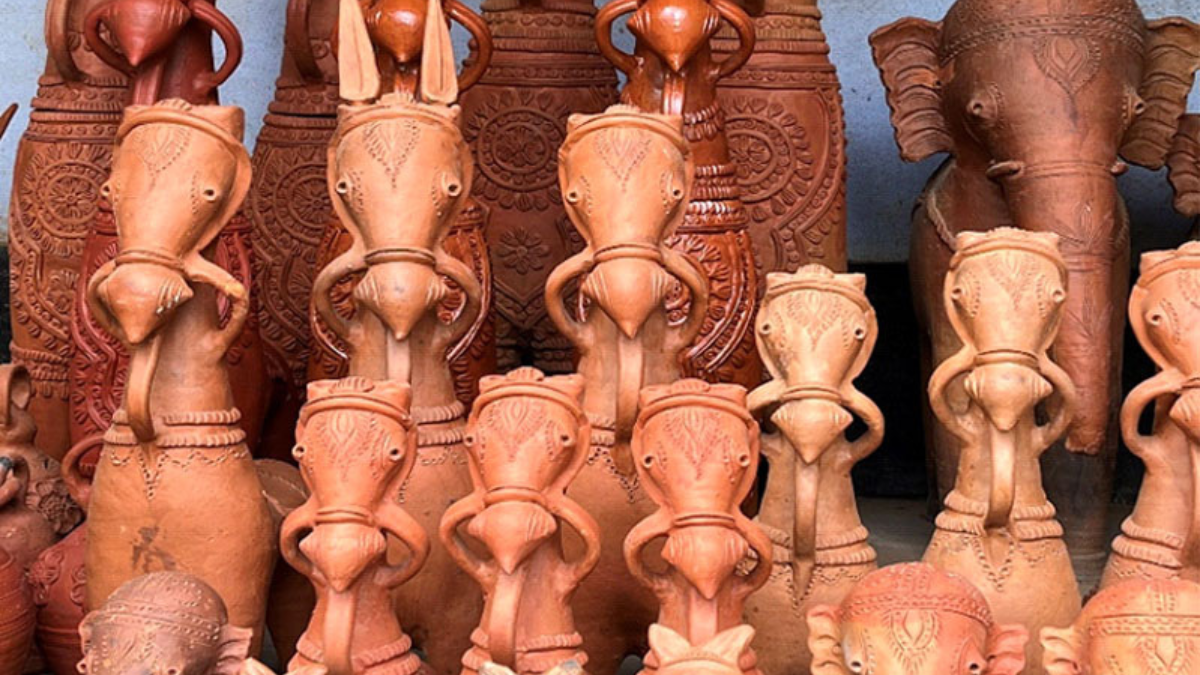
India is a land of diverse art forms and traditional crafts, each region showcasing its own unique style. Among these, terracotta stands out as one of the oldest and most beautiful forms of clay art. Across rural India, artisans have shaped terracotta into figures, animals, and deities. One particular village has gained worldwide fame for its specially crafted terracotta horses that reflect culture, faith, and creativity.
An Overview of India
India, officially known as the Republic of India, is a country in South Asia. It is the world’s most populous nation and the seventh-largest by area. Since independence in 1947, it has been the largest democracy. Surrounded by the Indian Ocean, Arabian Sea, and Bay of Bengal, India shares borders with Pakistan, China, Nepal, Bhutan, Bangladesh, and Myanmar, while lying close to Sri Lanka, Maldives, and Indonesia.
Number of Districts in India
India has about 787 districts as per the latest official count, though some sources mention nearly 800. These districts are spread across the country’s 28 states and 8 union territories, forming the basic units of administration.
Indian Village Famous for Terracotta Horses
Panchmura village in the Bankura district of West Bengal is world-famous for its beautiful terracotta horses, popularly known as Bankura Horses. These handcrafted long-necked terracotta figures have become a symbol of Indian folk art and handicrafts, representing both tradition and creativity.
The Pride of Panchmura, Bankura Horses
The Bankura horse is the most iconic terracotta creation from Panchmura. With its graceful long neck, pointed ears, and detailed body structure, the horse has been recognized as a symbol of rural Indian artistry.
In fact, it has also been adopted as a national symbol of Indian handicrafts, often seen in cultural exhibitions, museums, and craft fairs across India and abroad.
Historical and Cultural Importance
The tradition of terracotta craft in Panchmura dates back to the Malla dynasty (16th–18th century), when local rulers encouraged art and temple decoration. Terracotta was used not only for making horses but also for building temples, idols, and decorative panels.
The Bankura horse also carries religious significance, as it is often used as a ritual offering to local deities and village gods. Villagers believe these terracotta figures bring protection, prosperity, and blessings.
Beyond Horses
While the horse remains the most famous, artists of Panchmura also create:
- Terracotta elephants
- Decorative household items
- Wall hangings and idols of gods and goddesses
- Clay jewelry and ornamental pieces
This wide variety reflects the creativity and skill of Panchmura artisans.
Panchmura as a Cultural Heritage Hub
Panchmura is not just about terracotta—it is a place of rich cultural heritage. Influenced by the Malla dynasty and local traditions, the village holds a blend of history, folklore, and craftsmanship. Visitors often experience:
- Traditional fairs where artisans display their crafts
- Folk songs and dances that narrate local stories
- The warm hospitality of villagers who proudly showcase their art
Why Panchmura Terracotta is Unique?
What makes Panchmura terracotta special is:
- Distinctive design – the long neck and sharp features of the horses.
- Natural earthy look – crafted using local clay.
- Cultural symbolism – used in rituals and recognized nationally.
- Sustainability – eco-friendly and handmade without harmful chemicals.


 Which Country is the Largest Producer of...
 Which Beverage is known as the Queen of ...
 Which City of the World is known as the ...











