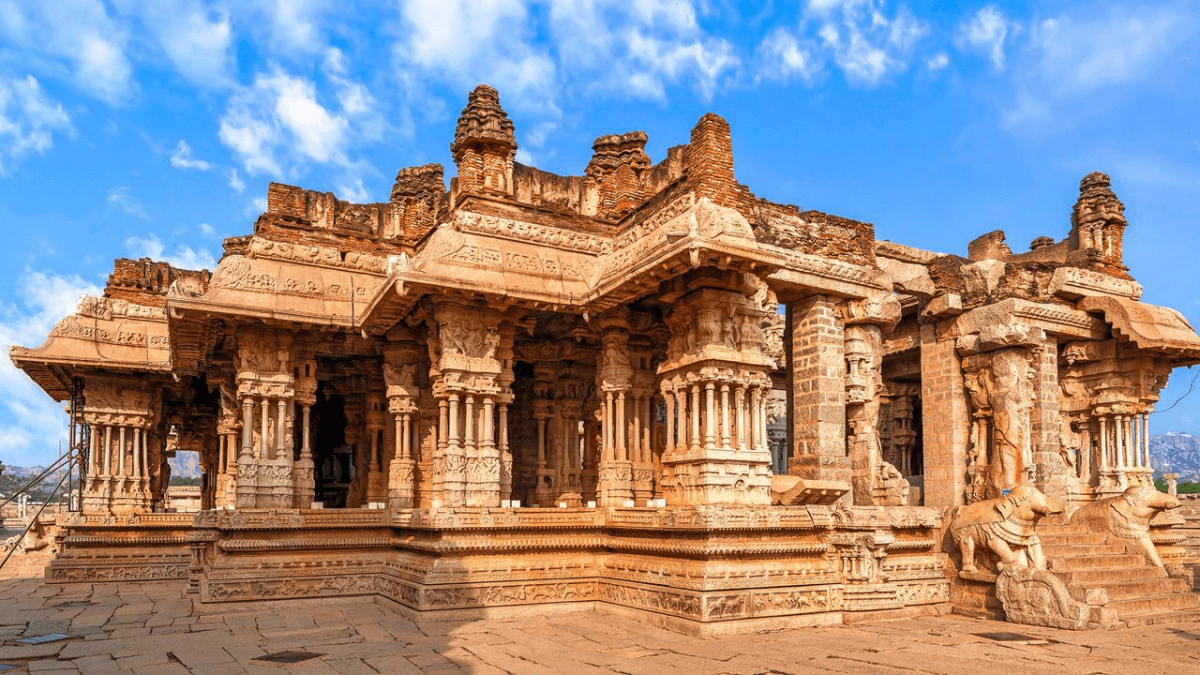
India is a land of wonders, where every region holds a piece of history, culture, and unique architecture. Among the countless temples spread across the country, one stands out for a truly fascinating feature—its stone pillars create musical sounds when gently tapped. This rare combination of art, science, and devotion has made the temple and the village around it famous worldwide, attracting tourists, historians, and music lovers alike.
An Overview of India
India, officially known as the Republic of India, is a country in South Asia. It is the seventh-largest nation by area and has been the world’s most populous country since 2023, as well as the largest democracy since independence in 1947. Surrounded by the Indian Ocean, Arabian Sea, and Bay of Bengal, it shares borders with Pakistan, China, Nepal, Bhutan, Bangladesh, and Myanmar, while lying close to Sri Lanka, Maldives, Thailand, and Indonesia through its islands.
Number of Districts in India
India has nearly 787 districts, though people often say “around 800.” The total keeps changing because new districts are formed from time to time to make administration easier and improve governance. Creating new districts helps in better local management, smoother delivery of public services, and addressing the needs of people more effectively across the country.
Indian Village Famous for the Music Pillars Temple
The village of Hampi in Karnataka is famous for the Musical Pillars Temple, also known as the Vitthala Temple. This UNESCO World Heritage Site is renowned for its 56 stone pillars that produce distinct musical sounds when gently tapped. The temple reflects the architectural brilliance of the Vijayanagara Empire, with its intricate carvings, unique acoustics, and cultural significance, making Hampi world-famous for this extraordinary historical and artistic marvel.
Location of the Temple
The Vitthala Temple lies close to the Tungabhadra River in the heart of Hampi. It is one of the most important landmarks of the Vijayanagara Empire, built during the 15th century.
Architecture of the Music Pillars
- The temple features 56 intricately carved granite pillars, often called the SaReGaMa pillars.
- Each pillar has a beautifully carved design and reflects the fine skills of Vijayanagara artisans.
- The temple complex also has a famous stone chariot, another architectural wonder.
Cultural Significance of the Music Pillars Temple
The Musical Pillars are not just about sound—they represent the artistic excellence, science, and devotion of the Vijayanagara Empire. They remain an enduring example of how culture and creativity blended in medieval India.


 Weekly Current Affairs One Liners (09th ...
 Health Ministry Grants Lifetime Validity...
 José Antonio Kast Rist Takes Oath as the...