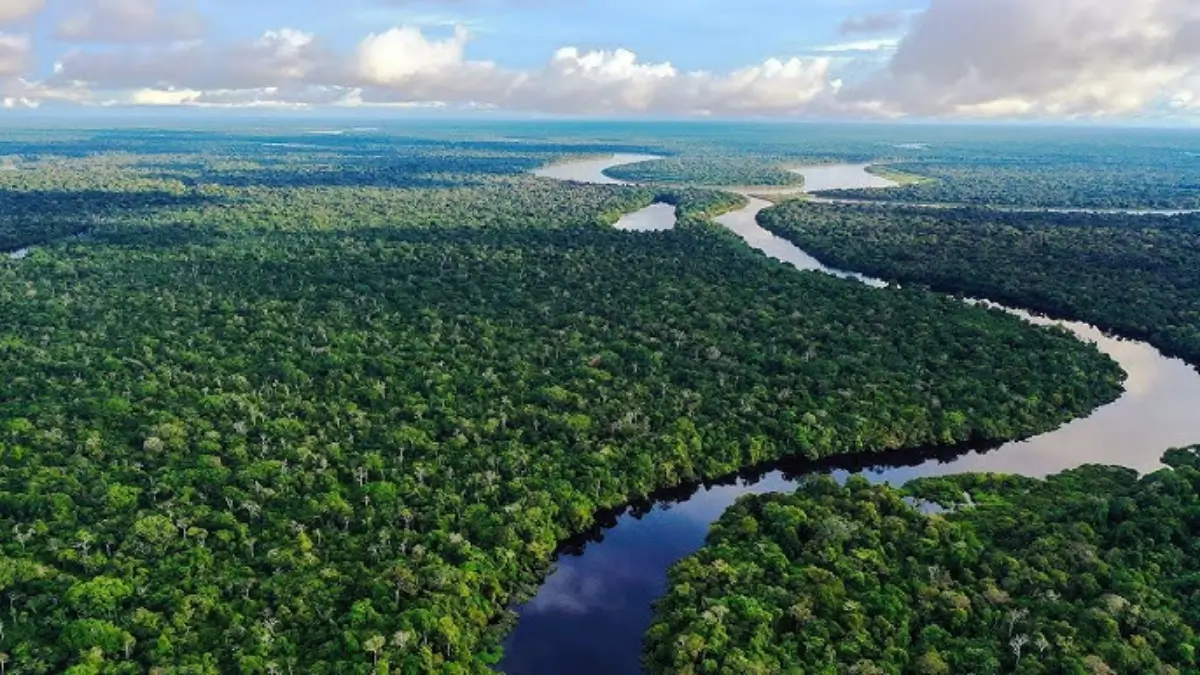
On Earth, rivers collect rainwater and melting snow from large surrounding areas, forming what is known as a drainage basin. Each major river system has its own basin, where smaller streams and tributaries join together to flow into one main river. These basins play a key role in storing water, supporting ecosystems, and shaping our planet’s geography.
World’s Largest Drainage Basin
The Amazon Basin in South America is the world’s largest drainage basin. It covers an area of about 7 million square kilometers and is drained by the Amazon River, the second-longest river in the world. The basin spreads across countries like Brazil, Peru, Colombia, Bolivia, Venezuela, Ecuador, and Guyana, and contains the rich and diverse Amazon Rainforest.
What is the Amazon Basin?
The Amazon Basin is the vast area drained by the Amazon River and its hundreds of tributaries. It spreads across about 7 million square kilometers (2.7 million square miles), making it the largest of all river basins on Earth.
The basin collects water from rainfall and streams, all of which flow into the mighty Amazon River — the second-longest river in the world after the Nile. The basin’s rivers and forests together hold about 20% of the world’s freshwater.
The Amazon Rainforest, The Heart of the Basin
At the center of this massive basin lies the Amazon Rainforest, often called the “Lungs of the Earth.” It produces a large share of the planet’s oxygen and absorbs enormous amounts of carbon dioxide.
The rainforest is home to:
- Over 30 million people, including many indigenous tribes.
- About 10% of all known plant and animal species on Earth.
Because of its unmatched biodiversity, the Amazon Basin is one of the most vital ecosystems for maintaining life on our planet.
Countries Covered by the Amazon Basin
The Amazon Basin extends across seven main South American countries, each contributing to its natural and cultural richness.
Brazil
About 60% of the Amazon Basin lies within Brazil, making it the largest contributor. The Amazon River flows mainly through Brazil before reaching the Atlantic Ocean. Cities like Manaus and Belém are key gateways to the rainforest.
Peru
Peru is known as the birthplace of the Amazon River. The river starts from the Andes Mountains, where the Marañón and Ucayali Rivers join to form the Amazon. Peru’s Amazon region is famous for its eco-tourism, native communities, and wildlife.
Colombia
In southern Colombia, the basin includes dense forests and winding tributaries like the Putumayo and Caquetá Rivers. Many indigenous people live here in harmony with nature, preserving age-old traditions.
Bolivia
Bolivia’s part of the basin includes the Madeira River, one of the largest tributaries of the Amazon. This region is known for its wetlands, floodplains, and rare species, serving as a natural bridge between the Andes and lowland forests.
Venezuela
Southern Venezuela also falls within the Amazon Basin. The Casiquiare Canal, located here, connects the Orinoco River with the Amazon River, creating a rare natural link between two major drainage systems.
Ecuador
Eastern Ecuador, known as the Ecuadorian Oriente, is part of the basin. It receives heavy rainfall and is covered with lush tropical forests. Several indigenous tribes such as the Huaorani and Shuar live here, protecting their ancestral lands.
Guyana
The Amazon Basin reaches its outer edge in Guyana, where tropical forests meet grassy savannas. Though its share is smaller, it is still ecologically important for migratory species and water regulation in the region.
Importance of the Amazon Basin
The Amazon Basin is not just a geographical wonder — it’s essential for life on Earth.
- Regulates the global climate by storing carbon and producing oxygen.
- Provides freshwater to millions of people and animals.
- Supports biodiversity by offering habitats to thousands of unique species.
- Sustains human life, especially indigenous communities that depend on its resources.


 Health Ministry Grants Lifetime Validity...
 José Antonio Kast Rist Takes Oath as the...
 Government Launched National Initiative ...