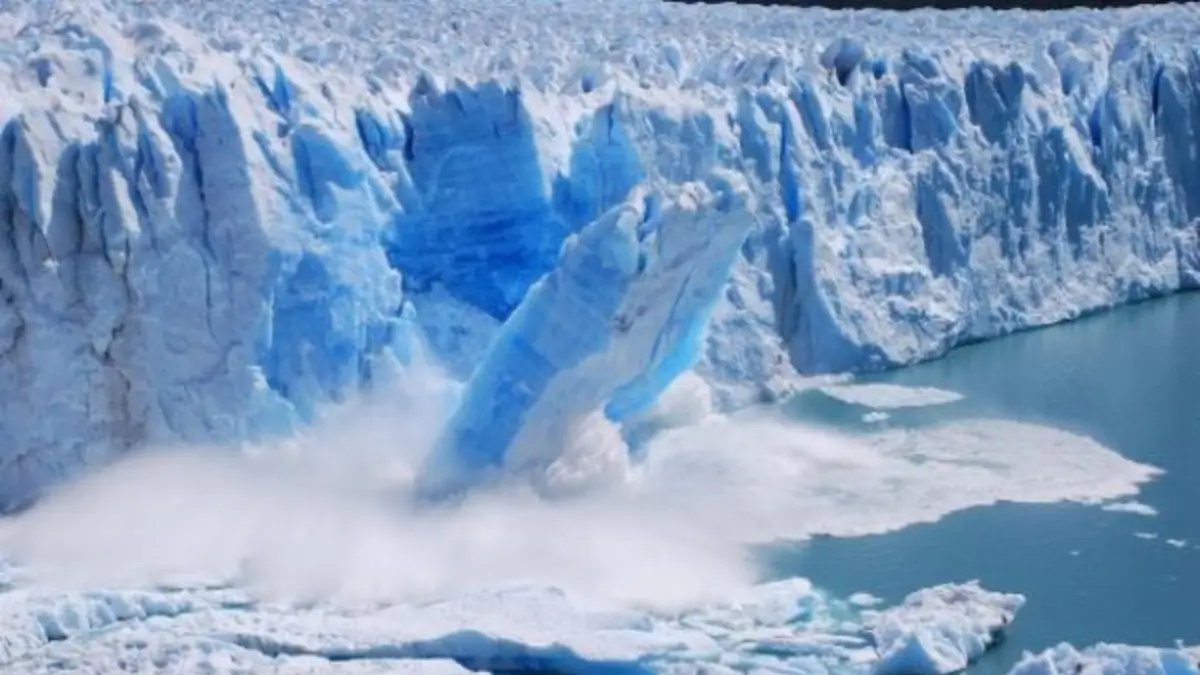
Glaciers are giant rivers of ice found in the coldest parts of the world. They form when snow stays for many years and slowly turns into thick ice. These icy bodies move very slowly and shape the land beneath them. Some glaciers are small and local, while others are extremely vast and stretch across hundreds of kilometres, making them truly remarkable natural wonders.
Largest Glacier in the World
The Lambert–Fisher Glacier is known as the largest glacier in the world. It is the longest glacier on Earth and also one of the thickest and widest. Because of its enormous size and the huge amount of ice it carries, scientists consider it the largest glacier system on the planet.
Why is the Lambert-Fisher called the Largest?
The Lambert–Fisher Glacier is called the largest glacier because of three main reasons: its length, width, and ice volume. It is about 400 kilometres long and can be up to 100 kilometres wide in some places. This glacier drains a very large area of ice from the interior of Antarctica, moving massive amounts of ice toward the ocean.
Location of the Lambert-Fisher Glacier
The Lambert–Fisher Glacier is located in East Antarctica. It begins deep inside the Antarctic Plateau and flows northward. Finally, it empties into the Amery Ice Shelf, which is one of the biggest ice shelves in Antarctica.
Formation of the Lambert-Fisher Glacier
This glacier was formed over millions of years. Heavy snowfall in Antarctica slowly built up layer upon layer of snow. Over time, the weight of the snow pressed it into solid ice. Extremely cold temperatures prevented the ice from melting, allowing the glacier to grow into one of the largest ice systems in the world.
Origin of the Name Lambert-Fisher Glacier
The glacier is named after Bruce Lambert, an Australian geologist who made important contributions to Antarctic research. The Fisher Glacier, which joins Lambert Glacier, is part of the same ice system. Together, they are known as the Lambert–Fisher Glacier system, showing their combined size and importance.
Importance of the Lambert-Fisher Glacier
The Lambert–Fisher Glacier plays a key role in controlling how ice moves from East Antarctica into the ocean. Scientists study this glacier to understand how ice sheets behave and how climate change may affect sea levels around the world. Any major change in this glacier could have global effects.
Interesting Facts About the Lambert-Fisher Glacier
- Longest Glacier on Earth: With a length of around 400 kilometres, the Lambert–Fisher Glacier is longer than any other glacier in the world.
- Drains a Huge Ice Area: It drains nearly 8% of the East Antarctic Ice Sheet, carrying an enormous amount of ice toward the sea.
- Feeds the Amery Ice Shelf: The glacier supplies ice to the Amery Ice Shelf, an important area for scientific research on polar climates.
- Located in Extreme Cold: The glacier lies on Antarctica, the coldest continent on Earth, where temperatures remain far below freezing throughout the year.
- Indicator of Climate Change: Scientists closely watch this glacier for changes in its speed, thickness, and flow, as these changes can signal the effects of global warming.
- Largest Glacier Outside Antarctica: Outside Antarctica, the Fedchenko Glacier in Tajikistan is the largest glacier. It is the longest glacier outside the polar regions and is an important source of water for Central Asia.
- Largest Glacier in India: In India, the Siachen Glacier is the largest glacier. Located in the eastern Karakoram range, it is also one of the highest and coldest glaciers in the world.


 Which is the Most Consumed Beverage in t...
 Which is the Only Continent with No Tree...
 Which River is known as the National Riv...