
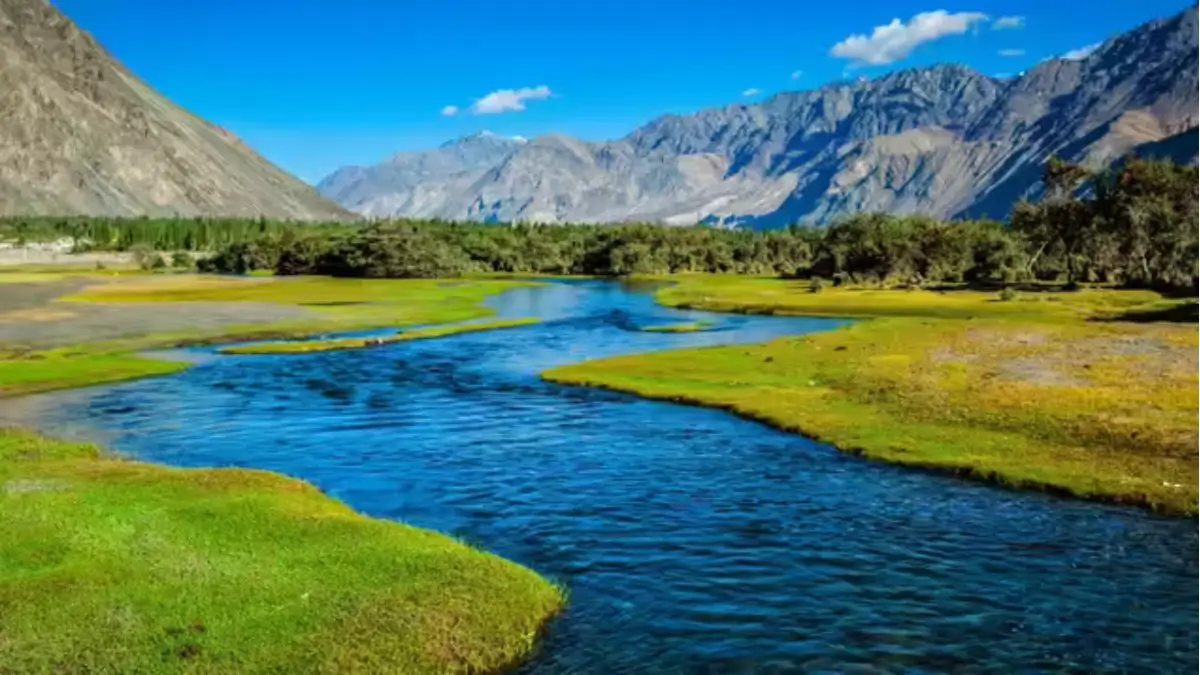
Rivers play a very important role in shaping the land and supporting life. The areas around rivers are often very fertile because rivers carry rich soil from the mountains and deposit it along their banks. These fertile lands are ideal for farming and have supported human civilizations for thousands of years. Many regions in India are known for their productive river valleys and abundant crops.
What is a River Valley?
A river valley is the land around a river. Rivers carry soil, sand, and minerals from the mountains and deposit it along their banks. This rich soil, called alluvium, makes the land fertile and suitable for growing crops. River valleys also provide water for irrigation and daily use.
The Most Fertile River Valley in India
The Indo-Gangetic Plain is the most fertile river valley in India. It is a large flat region formed by three major rivers: the Indus, Ganga, and Brahmaputra. These rivers have carried nutrient-rich soil from the Himalayas and spread it across this plain over millions of years.
Location and Extent of the Indo-Gangetic Plain
The Indo-Gangetic Plain stretches from the Sutlej River in the west to the Ganga Delta in the east, covering states like Punjab, Haryana, Uttar Pradesh, Bihar, and West Bengal. This vast plain has a gentle slope, making it easy for rivers to flow slowly and for farmers to irrigate their fields.
Why is the Indo-Gangetic Plain So Fertile?
- Rich Alluvial Soil: Rivers deposit fresh, nutrient-rich soil every year, especially in the newer areas called Khadar. Older soil areas are known as Bhangar, which also supports farming.
- Plenty of Water: Numerous rivers and a high groundwater level provide water for irrigation throughout the year.
- Flat Land: The flat terrain allows large-scale farming and easy construction of canals and roads.
- Favourable Climate: Adequate rainfall during the monsoon season ensures healthy crop growth.
Crops and Agriculture
Thanks to its fertile soil, the Indo-Gangetic Plain grows a wide variety of crops. Major crops include:
- Wheat
- Rice
- Sugarcane
- Pulses
- Vegetables and fruits
This makes the region India’s agricultural heartland, often called the “Granary of India.”
Special Features of the Indo-Gangetic Plain
- It has four main zones: Bhabar, Terai, Bhangar, and Khadar, each with unique soil and water characteristics.
- It supports about 40% of India’s population due to its productivity.
- Historic cities and ancient empires, like the Maurya and Gupta dynasties, grew here because of the fertile land.
- The eastern end forms the Sundarbans Delta, famous for its mangrove forests and Royal Bengal Tigers.


 Which is the Oldest Airlines in the Worl...
 Top-Countries with the Highest Water Qua...
 Which Country is the Largest Importer of...











