
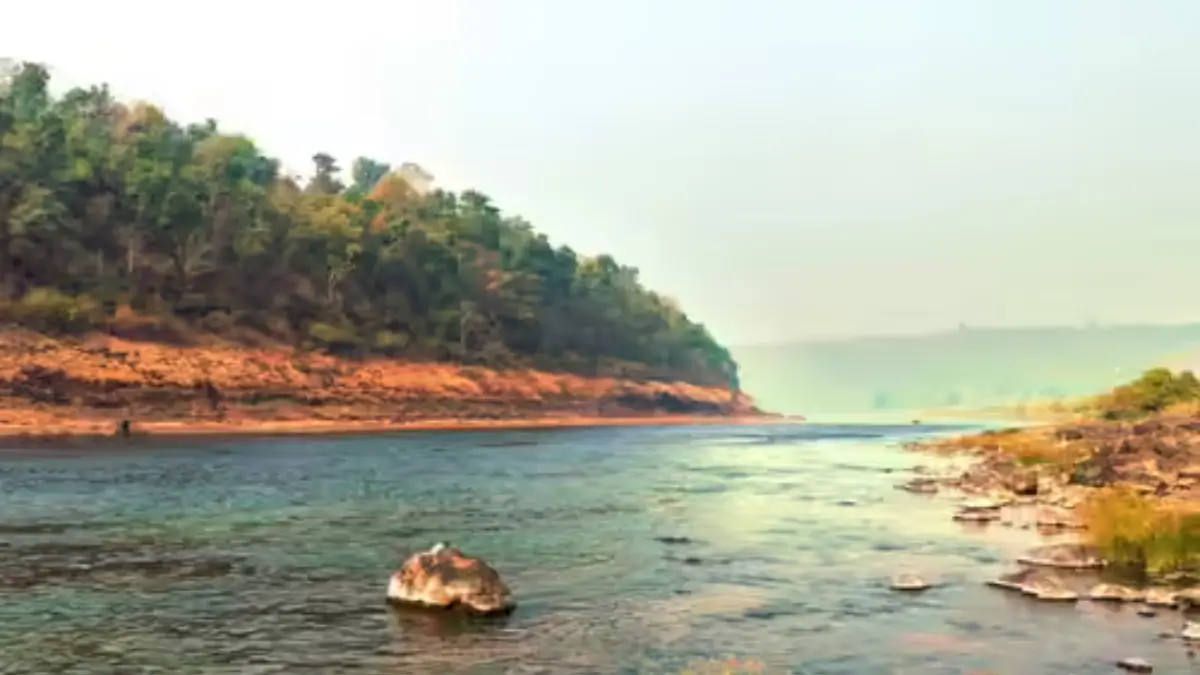
India’s landscape is shaped by its mighty rivers, which nurture life, culture, and civilization. Most of them flow eastward into the Bay of Bengal, but a few rare rivers defy this pattern and flow westward. Among them, the Narmada River stands out as India’s most important west-flowing river, creating scenic valleys, fertile lands, and sacred places throughout its journey.
Narmada River: The Only Major River That Flows from East to West
The Narmada River is the only major river in India that flows from east to west. It originates from the Amarkantak Hills in Madhya Pradesh, flowing westward across Maharashtra and Gujarat before meeting the Arabian Sea. This distinctive course makes the Narmada one of the most geographically unique and culturally revered rivers in the country.
Origin of the Narmada River
The Narmada River begins its sacred journey from the Amarkantak Hills, situated in the Anuppur district of Madhya Pradesh. This spot, lying at the meeting point of the Vindhya and Satpura mountain ranges, is considered holy by Hindus. Every year, thousands of devotees visit Amarkantak to worship and witness the birthplace of the Narmada River, believed to possess divine powers.
Narmada River Course and Direction of Flow
The Narmada River travels approximately 1,312 kilometers, cutting through rocky gorges, forests, and plains before reaching the Arabian Sea. Its westward flow is due to the rift valley formation between the Vindhya Range (north) and Satpura Range (south). This geological rift allows the river to naturally flow from east to west, making the Narmada one of India’s most scientifically fascinating rivers.
States Covered by the Narmada River
The Narmada River flows mainly through three Indian states, enriching their geography and livelihood:
- Madhya Pradesh: The Narmada flows through the heart of India, supporting agriculture and providing fertile plains.
- Maharashtra: It touches a few border regions, aiding irrigation and local farming.
- Gujarat: The river expands before merging into the Arabian Sea near Bharuch, through the Gulf of Khambhat.
Along its route, the Narmada sustains villages, farmlands, towns, and ecosystems, making it vital to millions of lives.
Natural Beauty Along the Narmada River
The Narmada Valley is renowned for its natural charm, featuring breathtaking landscapes and tourist attractions:
- Marble Rocks, Bhedaghat (Jabalpur): The Narmada flows between glittering marble cliffs, creating an enchanting view.
- Dhuandhar Waterfall: A majestic waterfall where the Narmada plunges down with thunderous force, producing misty vapors.
- Sardar Sarovar Dam: One of India’s largest dams, symbolizing development and water security.
These picturesque spots make the Narmada River both a spiritual destination and a nature lover’s paradise.
Religious Importance of the Narmada River
The Narmada River is revered as one of the seven holiest rivers in Hinduism, worshipped as Goddess Narmada Devi.
It is believed that bathing in the Narmada washes away sins and purifies the soul.
- The Narmada Parikrama is a famous spiritual pilgrimage where devotees walk along both banks without crossing the river.
- The river is mentioned in several Hindu scriptures, including the Puranas, symbolizing purity and divine power.
For countless devotees, the Narmada River is not just a source of water—it’s a living deity.
Economic and Agricultural Importance of the Narmada River
The Narmada River is often called the “Lifeline of Madhya Pradesh and Gujarat.” It sustains agriculture, industries, and communities across central India.
- Irrigation: The Narmada waters support major crops like wheat, cotton, and sugarcane.
- Hydropower: Dams such as Sardar Sarovar and Indira Sagar generate electricity for millions of people.
- Drinking Water: The river is a crucial source of potable water for towns and cities along its path.
The Narmada River plays a vital role in regional development, ensuring water security and energy supply.
Geological and Cultural Significance of the Narmada River
The Narmada Valley holds immense geological and archaeological importance. Scientists have discovered ancient fossils, prehistoric tools, and human remains, proving that early civilizations once thrived here. The river also acts as a natural boundary between North India and South India, dividing the northern plains from the Deccan Plateau. Thus, the Narmada River is not only sacred but also a significant chapter in India’s geological and cultural history.
Unique Features of the Narmada River
- The only major Indian river flowing from east to west.
- Forms a rift valley between the Vindhya and Satpura ranges.
- Empties into the Arabian Sea, unlike most rivers that flow to the Bay of Bengal.
- Supports multiple ecosystems and diverse wildlife.
- Holds religious, historical, and economic significance.
While other west-flowing rivers like the Tapi and Mahi exist, none equal the Narmada’s scale, beauty, and cultural depth.


 Who is known as the Father of Mobile Pho...
 Which is the Highest Airport in the Worl...
 Which Country is the Largest Exporter of...











