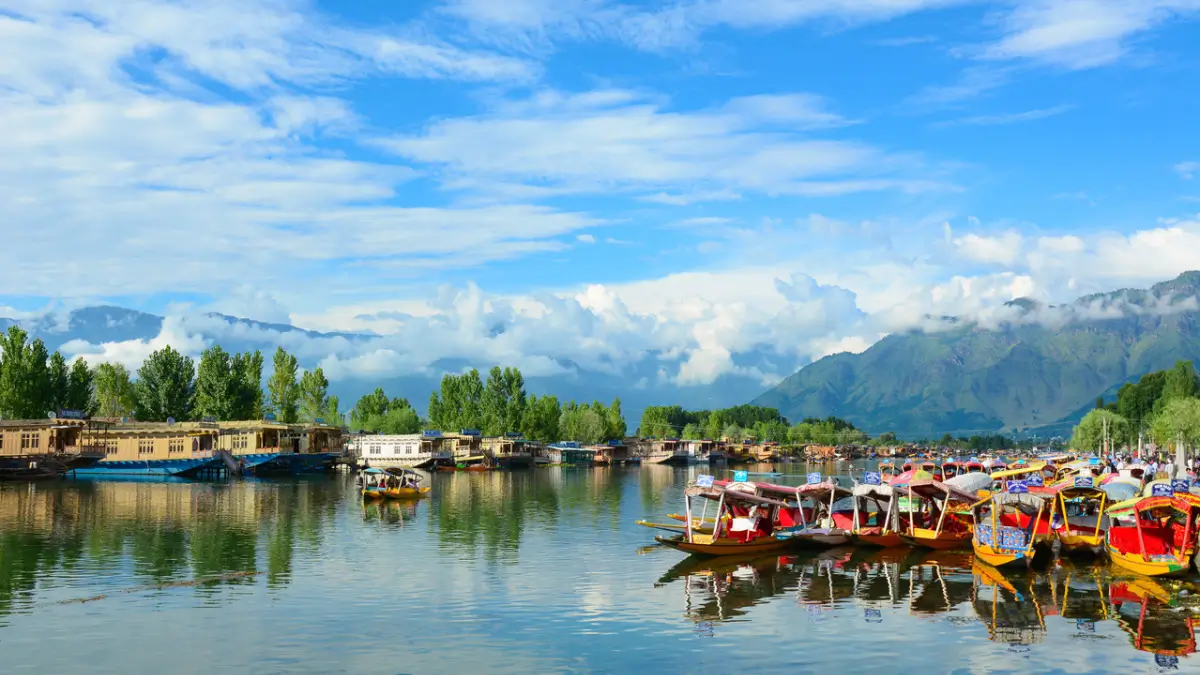
Kashmir is often called a paradise on earth because of its snowy mountains, fresh air, green valleys, and peaceful natural beauty. Among its many wonders, there is one famous lake that looks like a shining gem in the middle of the valley. This beautiful lake is known for its calm water, floating boats, colorful surroundings, and stunning views that attract visitors from all over the world.
Which Lake is known as the Jewel of Kashmir?
The lake that holds this beautiful title is Dal Lake. It is one of the most popular lakes in India and is seen as a symbol of Srinagar and the Kashmir Valley. Tourists from India and around the world visit this lake to enjoy its quiet beauty, houseboats, shikara rides, and refreshing surroundings.
Location of Dal Lake
Dal Lake is situated in Srinagar, the summer capital of Jammu and Kashmir. It lies near the Zabarwan mountain range and is close to famous places such as Nishat Bagh, Shalimar Bagh, and Hazratbal Shrine. Its location makes it one of the most photographed and celebrated lakes in the country.
Why is Dal Lake called the Jewel of Kashmir?
Dal Lake is called the Jewel of Kashmir because it adds a magical charm to the city of Srinagar. The calm water reflects the mountains, gardens, and sky, creating picture-perfect views. The beauty of the lake changes with every season, making it loved by visitors, writers, and artists. It also plays an important role in daily life, culture, and tourism in the valley.
Tourism and Local Economy
Dal Lake is one of the biggest tourist attractions in Kashmir. People enjoy staying in wooden houseboats, riding colourful shikaras, and visiting the floating market. Many families earn their livelihood through tourism, hospitality, handicrafts, and lake-based activities. Because of this, the lake supports thousands of people and is very important for the local economy.
Cultural and Historical Importance
Dal Lake has been connected with Kashmiri culture for hundreds of years. Mughal gardens built near the lake show the rich history of the region. The lake has also appeared in poems, songs, films, paintings, and stories. It is not just a water body but a part of Kashmir’s identity and heritage.
Floating Gardens and Natural Beauty
One of the most special features of Dal Lake is its floating gardens, locally called Raad. These gardens float on the water and are used to grow vegetables and plants. The lake is also home to fish, birds, and aquatic plants, making it an important natural ecosystem.
Scenic Surroundings
All around the lake you can see lovely Mughal gardens, parks, hotels, and tall mountains. These gardens were built by Mughal rulers and are known for their beautiful lawns and fountains. The views make the lake look like a painting.
Water Depth and Source
The average depth of Dal Lake is about 5 feet, while some parts can go as deep as 20 feet. The lake is fed mainly by the Jhelum River and other small streams.
A Major Tourist Attraction
Dal Lake is one of the biggest tourist highlights of Kashmir. Visitors enjoy boat rides, photography, shopping from floating markets, and staying in houseboats. The peaceful water and cool weather make it a perfect holiday spot.
Environmental Challenges
Over the years, the lake has faced pollution and eutrophication. To protect it, the government and local groups are working on cleaning and restoring the lake so that its beauty can remain for future generations.


 Where is the Strait of Hormuz Located?
 Best Airlines in the World 2026: Best Fu...
 Who Invented the QR Code? Check Here