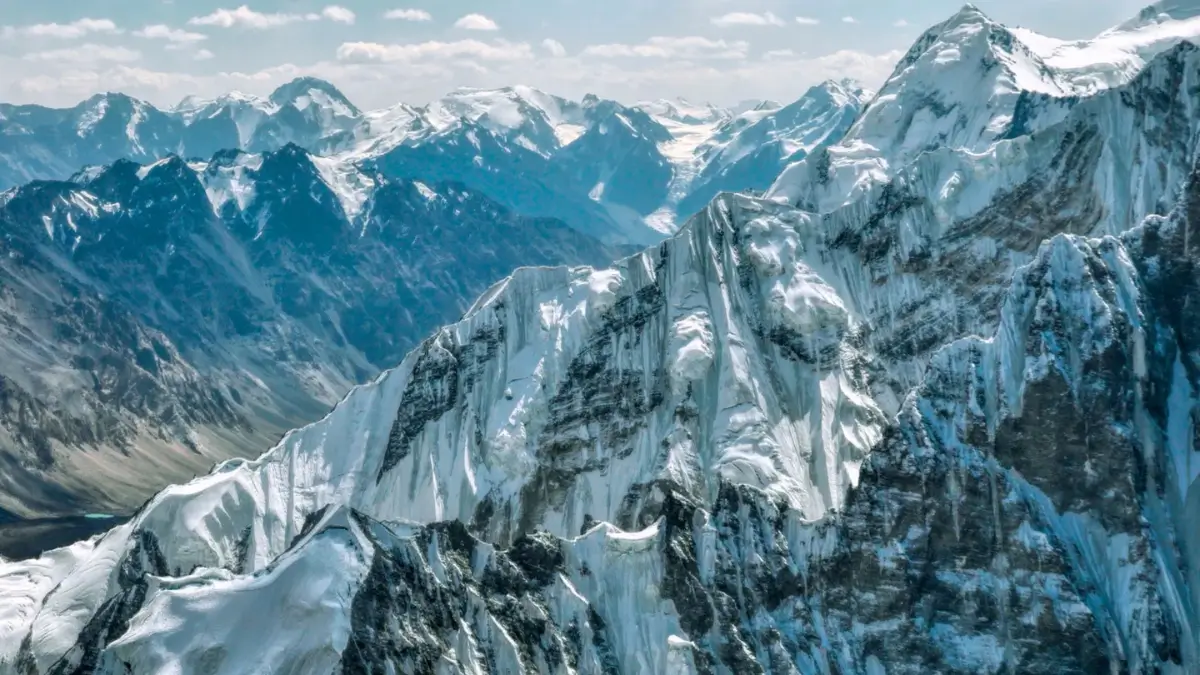
High mountains have always fascinated humans with their breathtaking beauty and extreme heights. These towering peaks often rise above the clouds, shaping weather patterns, giving birth to mighty rivers, and challenging even the most skilled climbers. Many of these regions are home to rare wildlife and ancient cultures. Among them, one mountain region is famously called the “Roof of the World.”
Which Mountain is Known as the Roof of the World?
High above the clouds, where snow-covered peaks touch the sky, lies a mountain region so vast and elevated that it is called the “Roof of the World.” This incredible title belongs to the Pamir Mountains, one of the most awe-inspiring highlands on Earth. Stretching across several Asian countries, the Pamirs are known for their stunning landscapes, rich history, and extreme altitude.
Why are the Pamir Mountains called the Roof of the World?
The Pamir Mountains are called the “Roof of the World” because they sit at the heart of Asia, connecting many of the world’s tallest mountain ranges. The Persian term “Bam-i-Duniya”, which translates to Roof of the World, perfectly describes their immense height and unique position.
The average elevation of the Pamir Plateau is over 4,000 meters (13,000 feet), and several peaks rise above 7,000 meters (23,000 feet). From these heights, the land seems to touch the sky, and the thin air makes it one of the most extreme environments on the planet.
Historically, travelers and explorers along the Silk Road used this title to describe the Pamirs, where ancient trade routes crossed through some of the world’s most challenging terrain.
Where are the Pamir Mountains Located?
The Pamirs are located in Central Asia, mainly in Tajikistan, and extend into Afghanistan, China, and Kyrgyzstan. Their central region lies within Tajikistan’s Gorno-Badakhshan Autonomous Province, one of the most mountainous areas on Earth.
This region serves as a natural crossroads linking South Asia, East Asia, and Central Asia. Key valleys, such as the Wakhan Corridor in Afghanistan and the Murghab Plateau in Tajikistan, are well-known for their breathtaking views and cultural diversity.
The Highest Peak of Pamir Range
The highest peak in the Pamir range is Ismoil Somoni Peak, which stands at 7,495 meters (24,590 feet) above sea level. Formerly known as Communism Peak, it was renamed to honor Ismoil Somoni, the founder of the first Persian Empire in Central Asia.
Other major peaks in the Pamirs include:
- Independence Peak – 7,134 meters
- Kaufman Peak – 6,723 meters
These towering summits dominate the landscape, making the Pamirs one of the most elevated and challenging regions on Earth.
Historical Meaning of ‘Roof of the World’
The title “Roof of the World” has been used for centuries. In ancient Persian and Central Asian writings, “Bam-i-Duniya” referred to a place where heaven and earth seemed to meet. During the 19th century, Western explorers adopted this phrase while mapping the region.
They were fascinated by the Pamirs’ extreme height, remoteness, and the way they connected multiple great mountain systems like the Himalayas, Karakoram, Hindu Kush, Kunlun, and Tian Shan. Because of this, the Pamir Plateau came to symbolize not only the physical high point of Asia but also the center of its geography.
Climate and Geography of the Pamirs
Life in the Pamirs is shaped by one of the most extreme climates on Earth. The region experiences long, freezing winters and short, cool summers. Temperatures can drop to -40°C, and some valleys remain covered with snow throughout the year.
One of the Pamirs’ most striking natural features is the Fedchenko Glacier, the largest glacier outside the polar regions, stretching more than 77 kilometers in length. Its icy rivers feed major waterways that flow across Asia, supporting life far beyond the mountains.
Interesting Facts About the Pamir Mountains
- Bam-i-Duniya – The Roof of the World: The Persian name “Bam-i-Duniya” beautifully expresses the Pamirs’ identity as one of the world’s highest inhabited regions.
- Meeting Point of Great Mountain Ranges: The Pamirs form the central hub where five major ranges — the Himalayas, Karakoram, Hindu Kush, Kunlun, and Tian Shan — meet.
- Home to the Fedchenko Glacier: At 77 kilometers long, the Fedchenko Glacier is the largest non-polar glacier in the world and a major freshwater source for Central Asia.
- Ancient Routes of the Silk Road: For thousands of years, the Pamirs served as part of the Silk Road, a trade route connecting the East and West through rugged passes and valleys.
- High-Altitude Settlements: Many Pamiri villages are among the highest inhabited places on Earth, where people live at altitudes above 3,500 meters.


 Which is the largest Coriander Producing...
 Which is the Most Consumed Beverage in t...
 Which is the Only Continent with No Tree...