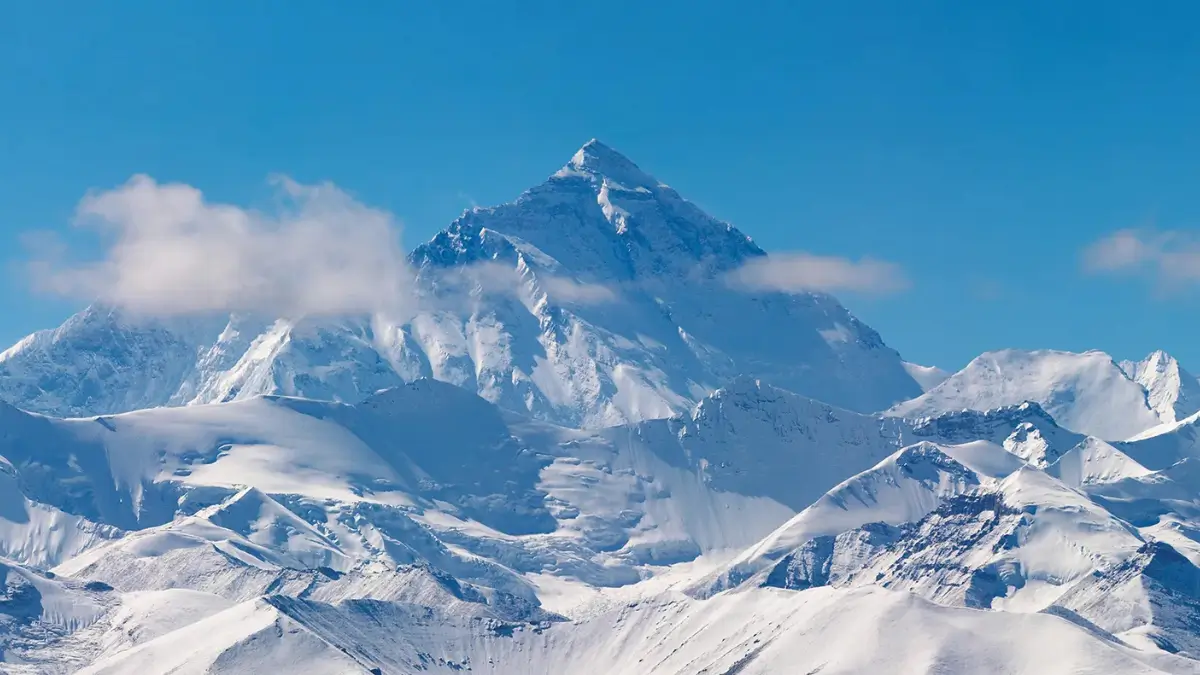
Ever wondered why winters in India feel cool but not extremely freezing? Nature has placed a giant wall in the north that protects the country from icy winds coming from Central Asia. Without this barrier, many parts of India would face much harsher cold like nearby northern regions.
During winter, cold air travels thousands of kilometres across open land. When it reaches the northern edge of the Indian subcontinent, it meets a very high natural obstacle. This obstacle slows down and blocks most of the freezing winds before they spread across the plains.
Because of this protection, cities in North India remain chilly but livable. Farmers grow crops, rivers keep flowing, and everyday life continues even in the cold season.
This natural shield also affects the monsoon. It keeps warm air inside the country and helps control rainfall patterns.
So, India’s climate is not only decided by seasons — a powerful mountain barrier quietly guards it every year.
The Mountain Range that Stops Cold Winds
The Himalayas block the cold winds in India. They form a long arc across the entire northern border of the country. These mountains stand like a giant shield between the Indian subcontinent and the icy lands of Central Asia and Siberia.
If these mountains did not exist, northern India would experience very harsh winters similar to Mongolia or northern China. Life and agriculture would become much more difficult.
How the Himalayas Protect Indian from Extreme Cold?
Cold winds from Central Asia move southward during winter. These winds are dry and freezing. When they reach the Himalayas, they cannot cross the high peaks.
Many Himalayan peaks rise above 6,000 to 8,000 metres. Because of this height, the air masses lose strength and remain trapped on the northern side. As a result:
- The Indo-Gangetic plains remain comparatively warmer
- Severe snowfall does not occur in most Indian plains
- Winter temperatures stay moderate
This natural protection makes India’s winter far milder than other regions at similar latitude.
Location and Spread of the Himalayan Range
The Himalayan range stretches about 2,400 kilometres from west to east.
It covers multiple countries:
- India
- Nepal
- Bhutan
- China (Tibet region)
Within India, the mountains pass through:
- Jammu & Kashmir and Ladakh
- Himachal Pradesh
- Uttarakhand
- Sikkim
- Arunachal Pradesh
They form a continuous northern boundary of the nation.
Influence of the Himalayas on India’s Climate
- Controls Winter Temperature: By blocking icy winds, the Himalayas prevent the plains from becoming freezing deserts. Cities like Delhi, Lucknow and Patna stay livable even in January.
- Helps in Rainfall Formation: Moist winds from the Indian Ocean hit the mountains and rise upward. The air cools and turns into rain. This process brings monsoon rainfall to most parts of India.
- Maintains Seasonal Balance: The Himalayas keep summers hot, winters moderate and seasons predictable — perfect for agriculture.
Role in the Indian Monsoon System
The Himalayas also control the monsoon. When southwest monsoon winds blow from the sea:
- They hit the mountains
- Air rises upward
- Cooling causes condensation
- Rainfall occurs across India
Without the Himalayas, most moisture would move into Central Asia, leaving India dry.
Source of Major Rivers
Many important rivers begin from Himalayan glaciers, such as:
- Ganga
- Yamuna
- Brahmaputra
- Indus
These rivers provide drinking water, irrigation and hydroelectric power to millions of people.
Interesting Facts About the Himalayas
- A Natural Climate Wall: They protect South Asia from Siberian cold waves.
- Warmer Than Same Latitude Regions: Northern India is warmer than places located at the same distance from the equator elsewhere in the world.
- Still Growing: The Himalayas are young fold mountains and continue to rise due to tectonic movement.
- Snow and Rain Generator: They cause snowfall in mountains and rainfall in plains — both essential for water supply.


 World Bank Projects India to Drive South...
 India Withdraws Its Plan to Host COP33 S...
 Deep Jariwala Appointed as US Governor's...