Did you know that every planet in our solar system has its own special features and sometimes even interesting nicknames? These names often come from the planet’s color, atmosphere, or unique characteristics that scientists observe from Earth.
When astronomers study planets through telescopes and space missions, they notice different shades and patterns on their surfaces. Some planets appear red, some bluish, and some have cloudy layers that create unique colors.
Because of these visual features, many planets have been given popular titles such as the “Red Planet” or the “Blue Planet.” These names make it easier for people to remember and learn about them.
In a similar way, one planet in our solar system is often associated with a green appearance due to certain features observed by scientists. This has led to it being popularly called the “Green Planet.”
In this article, we will explore which planet is known by this name and understand the reasons behind this interesting title.
Which Planet is known as the Green Planet?
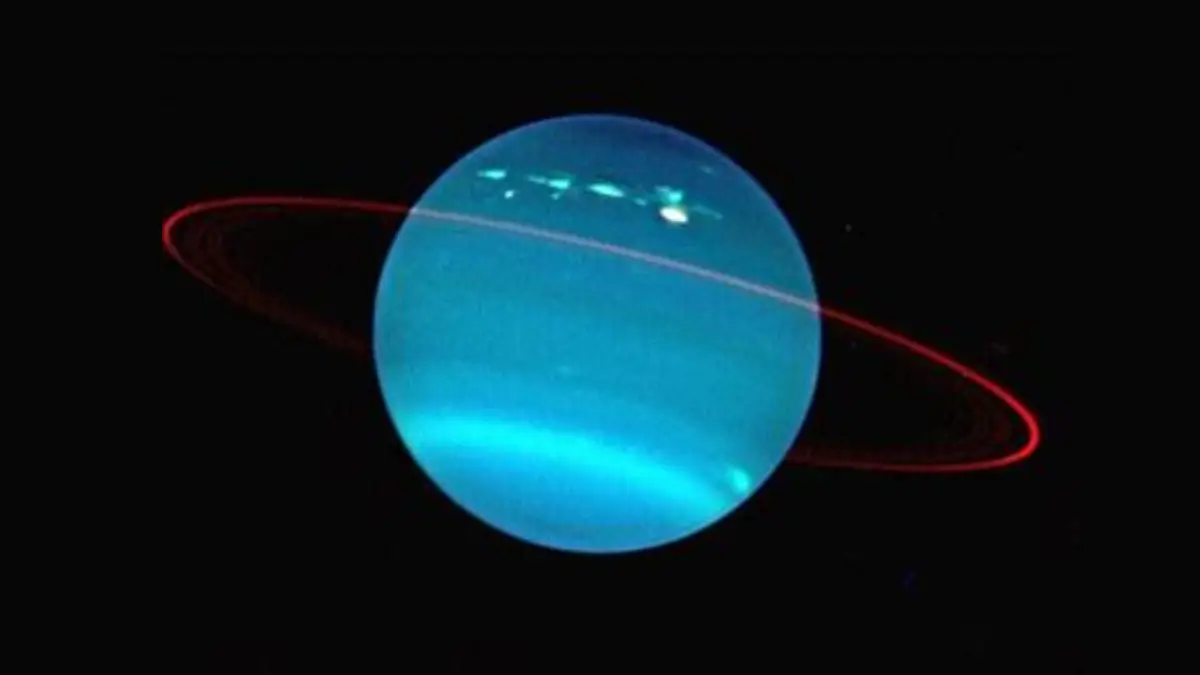
The planet often called the Green Planet is Uranus. It is the seventh planet from the Sun and is classified as an ice giant. Uranus appears blue-green when viewed through telescopes or spacecraft images.
This colour comes mainly from the gases present in its atmosphere. The planet is made mostly of hydrogen, helium, water, ammonia, and methane. Among these gases, methane plays the most important role in creating the planet’s colour.
Uranus is very different from the rocky planets like Earth or Mars. Instead of having a solid surface, it is made mostly of thick layers of gas and icy materials.
Check This: Which Planet is known as the Fastest Planet?
Why Uranus Appears Green?
The greenish colour of Uranus is mainly caused by methane gas in its atmosphere. When sunlight reaches the planet, it contains many colours of light.
Methane absorbs the red portion of sunlight. Because the red light is removed, the remaining blue and green light is reflected back into space. This reflected light makes Uranus appear blue-green or cyan when observed from far away.
This process is similar to a filter that removes certain colours and allows others to pass through.
Position of Uranus in the Solar System
Uranus is located very far from the Sun. It is the seventh planet in the solar system, placed between Saturn and Neptune.
Because of this great distance, the planet receives very little heat and sunlight. As a result, it is one of the coldest planets in the entire solar system.
A year on Uranus is extremely long. It takes about 84 Earth years for the planet to complete one orbit around the Sun.
The Unique Rotation of Uranus
One of the most unusual features of Uranus is the way it rotates. Most planets spin almost upright, but Uranus rotates on its side.
The planet is tilted at an angle of about 98 degrees, which means it looks as if it is rolling around the Sun rather than spinning like a top. This strange tilt also causes extreme seasons that last for many years.
Scientists believe this tilt may have been caused by a massive collision with another large object long ago.
Atmosphere and Temperature
The atmosphere of Uranus is mainly composed of hydrogen and helium, along with a small amount of methane. Strong winds blow across the planet, sometimes reaching speeds of hundreds of kilometres per hour.
Uranus is also one of the coldest places in the solar system. Temperatures can drop to around −224°C, making it even colder than some planets that are farther from the Sun.
The cold environment helps methane form thin clouds, which also contribute to the planet’s pale green appearance.
Moons and Rings of Uranus
Like many other large planets, Uranus has a system of moons and rings. Scientists have discovered 27 moons orbiting the planet.
Some of the most well-known moons include Miranda, Ariel, Umbriel, Titania, and Oberon. These moons are made mostly of rock and ice.
Uranus also has a faint ring system. Although the rings are not as bright as those of Saturn, they still form an interesting feature of the planet.
Discovery of Uranus
Uranus was discovered in 1781 by the famous astronomer William Herschel. It was the first planet ever discovered using a telescope.
Before this discovery, people believed that the solar system ended with Saturn. Herschel’s observation expanded our understanding of the solar system and led to the discovery of more distant planets later.
Interesting Facts About Uranus
- Uranus is the coldest planet in the solar system.
- It rotates sideways compared to other planets.
- The planet takes 84 Earth years to complete one orbit around the Sun.
- Scientists believe that extreme pressure inside the planet may form diamond rain deep in its atmosphere.
These fascinating features make Uranus one of the most mysterious planets in the solar system.


 What is National Investigation Agency? C...
 Which State is the Largest Petroleum Pro...
 Largest Crude Oil Supplier Countries to ...