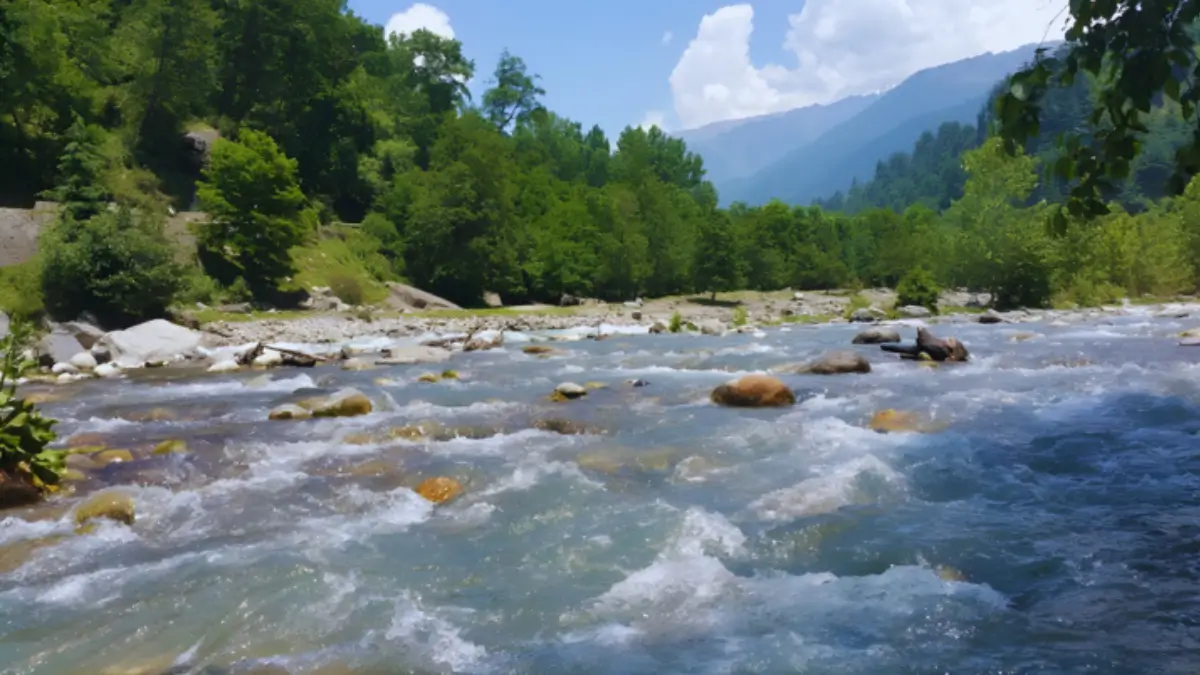
Did you know that in many countries, rivers are not just water sources but the backbone of life and history? They support agriculture, provide drinking water, and shape the way people live. In a region like the Middle East, where water is scarce, rivers become even more valuable and meaningful.
For thousands of years, civilizations have grown and flourished around important rivers. These rivers have helped people farm their land, travel from one place to another, and build strong communities. Their importance is often reflected in culture, religion, and daily life.
In Israel, water plays a very important role because much of the land is dry and receives limited rainfall. Because of this, having a reliable river source is essential for survival and development. It supports farming, supplies water to cities, and helps maintain the natural environment.
Such a river becomes more than just a natural feature. It turns into a symbol of life and continuity for the nation. Its presence has influenced the country’s growth, economy, and even its history over time.
Understanding which river holds this special place helps us learn more about the geography and importance of water resources in Israel.
Which River is known as the Lifeline of Israel?
The Jordan River is known as the lifeline of Israel. It is the most important and famous river in the region, providing essential freshwater in an otherwise dry environment.
This river is not only important for daily water needs but also plays a key role in farming, ecosystems, and even religious traditions. Its continuous flow makes it a reliable source of life in the region.
Source and Origin of the River
The Jordan River begins near Mount Hermon in the north. It is formed by the meeting of three smaller streams: Dan, Banias, and Hasbani.
From these origins, the river starts its journey southward, carrying fresh water through different landscapes. These headwaters ensure that the river has a steady supply throughout the year.
Journey through Israel
After its formation, the river flows through the fertile Hula Valley and then enters the Sea of Galilee, which is the largest natural freshwater lake in the country.
From there, it continues south through the Jordan Rift Valley. Along this path, the river forms a natural boundary between Israel and Jordan.
Although the straight distance is not very long, the river twists and turns a lot, making its total length around 251 kilometers.
Where does the River End?
The Jordan River finally flows into the Dead Sea, which is the lowest point on Earth.
Since the Dead Sea has no outlet, the water from the river stays there and slowly evaporates. This process leaves behind high amounts of salt and minerals, making the Dead Sea extremely salty.
Why is the Jordan River So Important?
- Main Source of Freshwater: In a country where rainfall is limited, the Jordan River provides a significant portion of natural freshwater. It supports drinking water supplies and helps maintain water balance in the region.
- Support for Agriculture: The river plays a major role in irrigation. It helps farmers grow crops in areas that would otherwise be too dry, especially in northern Israel.
- Ecological Importance: The Jordan Valley is rich in biodiversity. It is also one of the world’s major bird migration routes, with millions of birds passing through every year.
- Historical and Religious Value: The Jordan River holds deep religious importance, especially in Christianity and Judaism. Many important historical and spiritual events are believed to have taken place along its banks.
Other River in Israel
While the Jordan River is the most important, Israel also has other smaller rivers such as:
- Kishon River
- Yarkon River
These rivers are shorter and mainly provide local benefits like irrigation and urban green spaces.
Lesser-Known Facts About the Jordan River
- It is the lowest river in the world in terms of elevation.
- Its winding path makes it almost twice as long as its straight-line distance.
- It once supported a hydroelectric power station that supplied a large part of the region’s electricity.
- Over 500 million birds migrate through the Jordan Valley every year.


 What is the Old Name of Punjab? Check He...
 GK Quiz on Strait of Hormuz, Questions a...
 Which Countries Border the Strait of Hor...