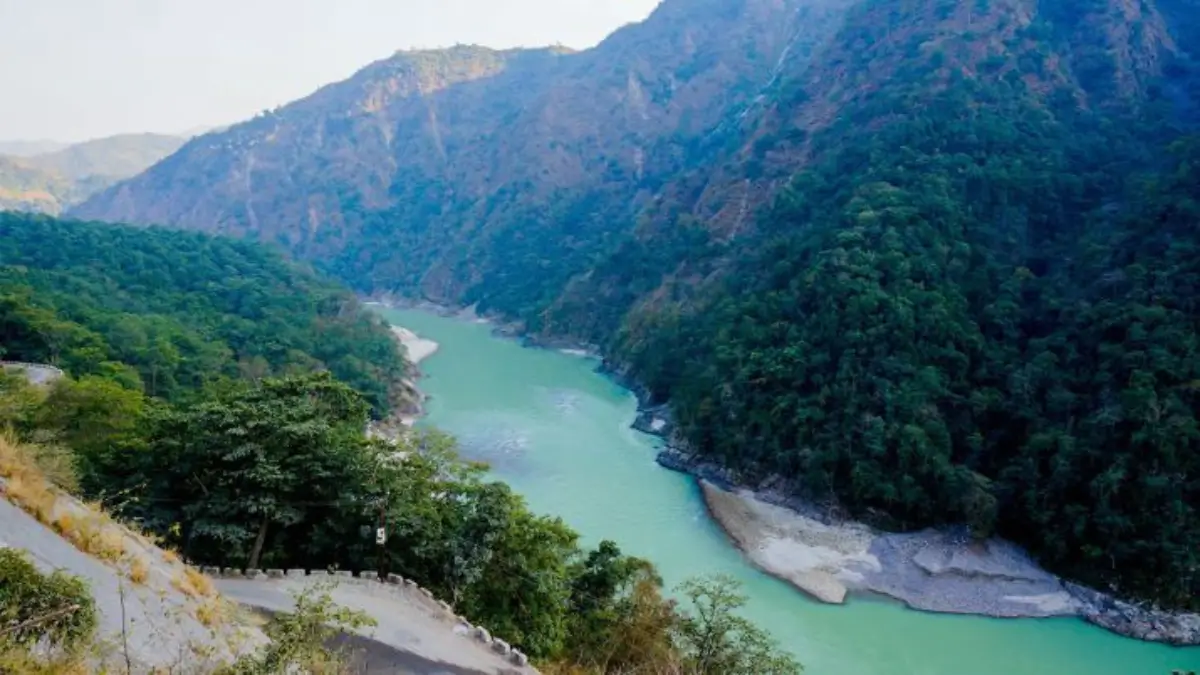
The Eastern Himalayas are home to many beautiful rivers that flow through mountains and valleys, giving life to forests, farms, and villages. These rivers are a vital source of water, food, and energy for the people living in this region. One such river plays a very special role and is often called the lifeline of the Eastern Himalayas because of its great importance.
Lifeline of Eastern Himalayas
The Teesta River is known as the Lifeline of the Eastern Himalayas. It originates from the Tso Lhamo Lake in Sikkim and flows through Sikkim, West Bengal, and Bangladesh before joining the Brahmaputra River. The Teesta provides water for farming, electricity, and daily use, supporting the people, forests, and wildlife of the Eastern Himalayan region.
Origin and Course of the Teesta River
The Teesta River begins its journey from the Tso Lhamo Lake, located near the Kangse Glacier in the northern part of Sikkim, at an altitude of over 5,000 meters in the Himalayas.
From there, it flows through the narrow valleys and deep gorges of Sikkim, cutting through the beautiful landscapes of the Eastern Himalayas. After leaving Sikkim, it enters West Bengal, where it flows across the plains and provides water for farming and irrigation.
The river then crosses into Bangladesh, where it merges with the Brahmaputra River, completing a journey of around 414 kilometers.
Why the Teesta is Called the Lifeline of the Eastern Himalayas?
The Teesta River is called the Lifeline of the Eastern Himalayas because it plays a vital role in the lives of people living in Sikkim and North Bengal.
- It provides drinking water, irrigation, and hydropower to the region.
- The fertile plains along the river support the cultivation of rice, tea, and maize, which are the main crops of the area.
- The river also nourishes the forests, wildlife, and ecosystems of the Eastern Himalayas, helping maintain the region’s natural balance.
Without the Teesta, much of the region’s agriculture, greenery, and livelihood would not be possible.
Economic and Hydropower Importance
The Teesta River is a major source of electricity and irrigation in northeastern India.
Several hydropower projects, such as Teesta Stage III and Stage IV, use its fast-flowing waters to produce electricity for Sikkim and nearby states.
In West Bengal, the Teesta Barrage Project provides water for irrigation, benefiting thousands of farmers who depend on it for growing crops. The fertile floodplains of the Teesta also support fishing and agriculture, making it a backbone of the local economy.
Cultural and Spiritual Significance
For the people of Sikkim and North Bengal, the Teesta is more than just a river — it is a symbol of faith and prosperity. Many communities consider it sacred, believing that it brings peace, purity, and abundance to their lives.
The river is often mentioned in local legends, folk songs, and festivals, showing its deep connection with the region’s traditions and way of life.
Environmental Importance
The Teesta River flows through one of the most biodiverse regions in the world — the Eastern Himalayan ecosystem. It supports a wide range of plants, animals, and birds, many of which are rare or endangered.
However, the river also faces environmental challenges such as glacial melting, climate change, and excessive dam construction. Protecting the Teesta is crucial for maintaining the ecological balance and ensuring a sustainable future for the people and nature of the Himalayas.


 Which Animal of the World has the Larges...
 Which Movies Have won the Most Oscars of...
 How Many Seats are there in Rajya Sabha,...