
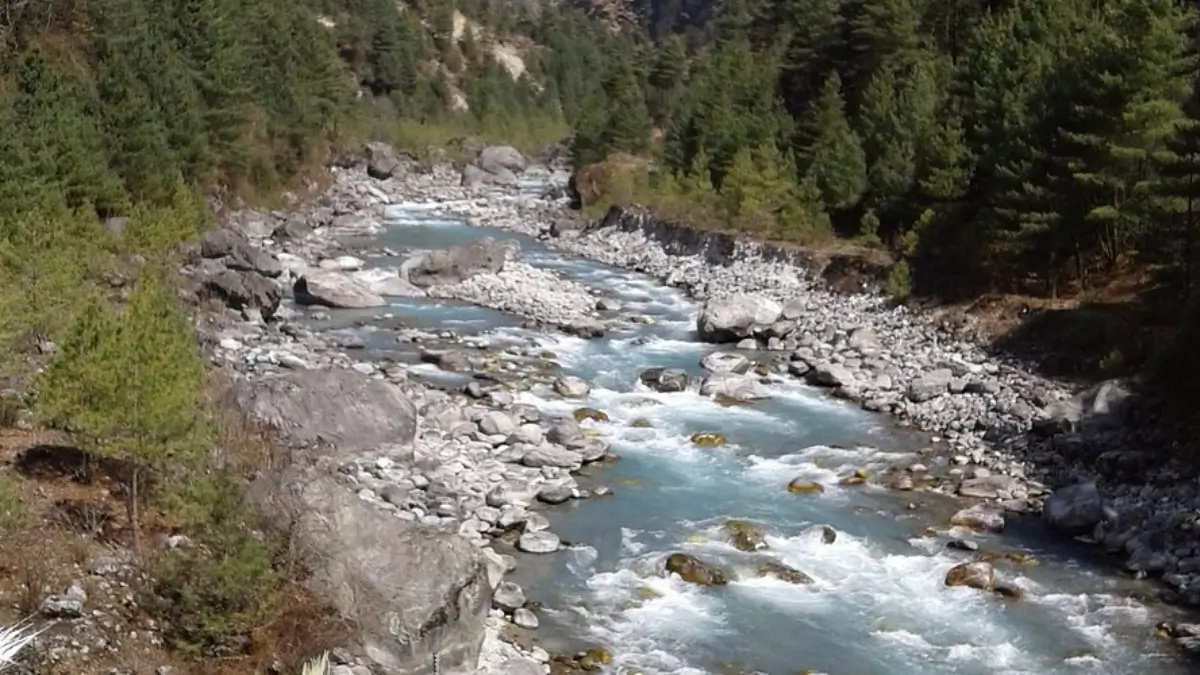
Did you know some rivers are so unique that people give them sweet-sounding nicknames based on their colour and appearance? In India, many rivers are not only water sources but also part of culture, stories, and daily life.
One special river got its name because its water often looks pale and cloudy, almost like diluted milk. This unusual colour comes from fine sediments carried from the mountains and forests.
People living along its banks have admired this feature for centuries. They use the river for farming, washing, and rituals, and the nickname became popular among travellers and locals alike.
Interestingly, the river changes its look during different seasons. In the rainy season it flows strongly and spreads fertile soil, while in the dry months it becomes calmer but still keeps its milky appearance.
So when you hear about the “Milk River of India,” remember — the name is not about dairy at all, but about nature’s beautiful illusion created by water and earth together.
Which River is known as the Milk River of India?
The Palar River is known as the Milk River of India because of the meaning of its name and its natural features. The word Palar comes from two Tamil words—paal meaning milk and aaru meaning river. This name reflects the river’s pale sandy bed, mineral-rich water, and its life-giving role in dry regions.
Origin and End of the River
The Palar River begins its journey in the Nandi Hills region of Karnataka. From there, it travels for about 348 kilometres before finally merging into the Bay of Bengal, south of Chennai.
States Covered by the Palar River
During its long journey, the Palar River flows through three South Indian states:
- Karnataka: The river starts here and flows for nearly 93 km through rocky and mineral-rich land.
- Andhra Pradesh: It flows briefly through this state for about 33 km.
- Tamil Nadu: This is where the river flows the longest—around 222 km—passing through districts like Vellore, Ranipet, and Kanchipuram.
Check This: What is the State Flower of Delhi?
Why is the Palar River known as the Milk River of India?
The Palar River is not called the Milk River just for poetic reasons. There are strong natural and scientific explanations behind this name.
1. White and Pale Sandy Riverbed
The riverbed of the Palar is rich in quartz and feldspar. When these rocks break down, they form fine, light-coloured sand. During dry seasons or bright sunlight, the riverbed looks white and milky, giving the river its name.
2. An Underground or “Hidden” River
One of the most interesting facts about the Palar River is that it flows underground for much of its course. Instead of visible surface water, the river moves through deep sand layers. When water rises during the monsoon, it often appears suddenly from white sand, looking frothy and milk-like. Because of this, the river is also called Guptagamini, meaning a hidden river.
3. Mineral-Rich and Clear Water
The Palar River basin passes through areas rich in lime and calcium. These minerals mix with the water, making it clear and sweet in taste. In earlier times, people compared its purity to milk, which strengthened its identity as the Milk River.
4. A Natural Groundwater Recharger
The sandy bed of the river acts like a sponge. It stores rainwater and slowly releases it into the ground. This helps recharge groundwater levels over large areas on both sides of the river, which is extremely important in drought-prone regions.
5. Lifeline for Dry Regions
Just like milk nourishes life, the Palar River supports agriculture, drinking water needs, and daily life in dry districts of Tamil Nadu. Farmers depend heavily on wells and borewells recharged by this river. Because it quietly sustains life, people see it as a nurturing mother.
Lesser Known Facts About the Palar River
- The river once supplied water to the famous Kolar Gold Fields.
- It has very few major tributaries.
- Some geologists believe it may have been an ancient path of the Cauvery River.
- A water-sharing agreement signed in 1892 still governs the river today.


 Which is the largest Coriander Producing...
 Which is the Most Consumed Beverage in t...
 Which is the Only Continent with No Tree...











