
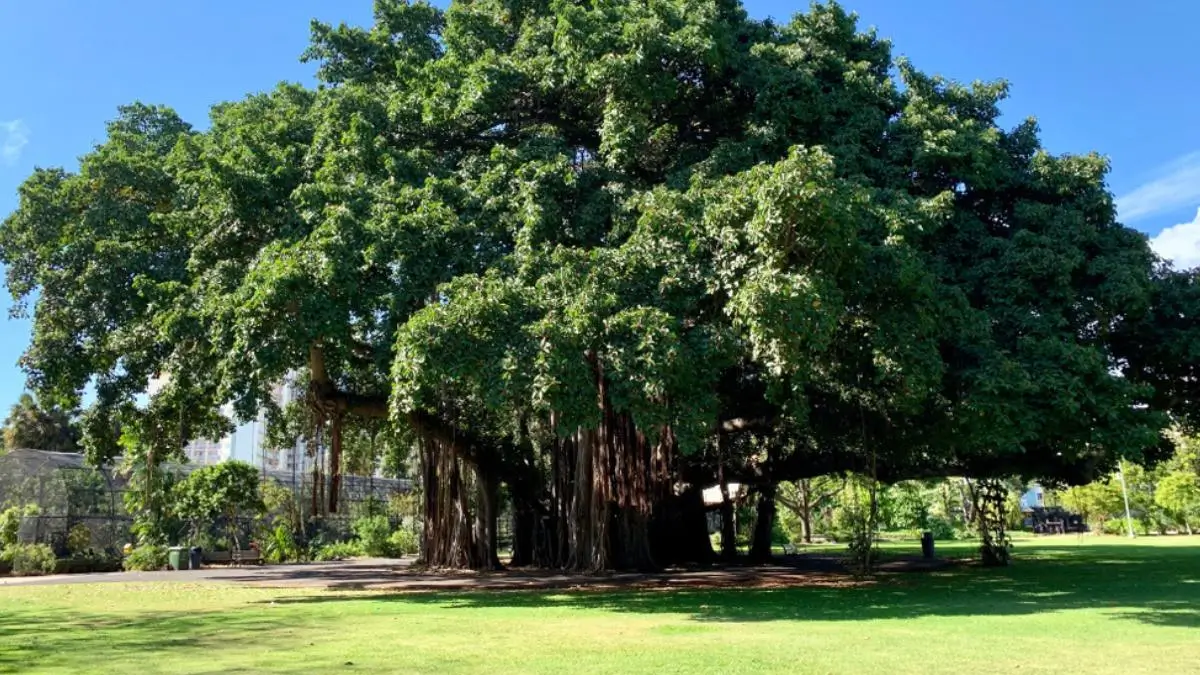
Trees are among the greatest gifts of nature. They give us fresh air, shade, fruits, and shelter. Some trees grow small, while others become huge and powerful over time. One special tree is admired for its vast size, long life, and strong presence. It looks grand and majestic, spreading wide like a natural palace. Because of these royal qualities, people honor it with a noble title.
Which Tree is known as the King of Trees?

The Banyan Tree is known as the King of Trees. It earns this title because of its huge size, long life, and special way of growing. Its branches send down roots that become new trunks, allowing one tree to spread like a forest. It gives shade, shelter, and food to many living beings and stands for strength and endurance.
Why is the Banyan Tree known as the King of Trees?
The Banyan tree earns this royal title because of its grand size, long life, and special way of growing. It sends down roots from its branches, which turn into new trunks. In this way, one tree can spread over a large area and look like a small forest. It gives shade, shelter, food, and comfort to many living beings, just like a caring king.
Basic Information About the Banyan Tree
The common name of this tree is the Banyan Tree.
- Its scientific name is Ficus benghalensis.
- It is known as the King of Trees.
- It is the National Tree of India.
- It can live for several hundred years.
- It is native to the Indian subcontinent.
- It is an evergreen fig tree.
Scientific Name of the Banyan Tree
The scientific name of the Banyan tree is Ficus benghalensis. It belongs to the fig family. The most special feature of this tree is its aerial roots, which grow down from branches and become strong trunks over time.
Where is the Banyan Tree Found?
The Banyan tree mainly grows in India, Sri Lanka, Nepal, and Bangladesh. It prefers warm, tropical, and subtropical climates. It is often seen near villages, along roads, in open fields, and around temples, where people gather and rest.
Ecological Importance of the Banyan Tree
The Banyan tree plays a major role in nature. Its wide canopy keeps the surroundings cool. It improves air quality and offers shelter to birds, insects, monkeys, and many small animals. Its fruits feed wildlife throughout the year. In this way, it supports a rich natural life around it.
Cultural and National Importance
In Indian culture, the Banyan tree stands for long life, wisdom, and strength. Many stories and traditions are linked with it. People believe it represents stability and protection. Because of these values, it is honoured as the National Tree of India, showing unity and endurance.
Interesting Facts About the Banyan Tree
- Huge Spread: A single Banyan tree can cover several acres of land. Its branches grow wide and far, making it look like a forest.
- Natural Pillars: The hanging roots grow into thick trunks. These act like natural pillars that support the heavy branches.
- Very Long Life: Many Banyan trees live for hundreds of years. Some famous ones in India are believed to be over two centuries old.
- Home for Wildlife: Birds, bats, insects, and animals live on and around this tree. Its figs are an important food source.
- Symbol of Strength: As India’s National Tree, it shows strength, unity, and endless growth.


 Which River is known as the Lifeline of ...
 What is the Old Name of Jharkhand?
 Which City is known as the Perfume Capit...











