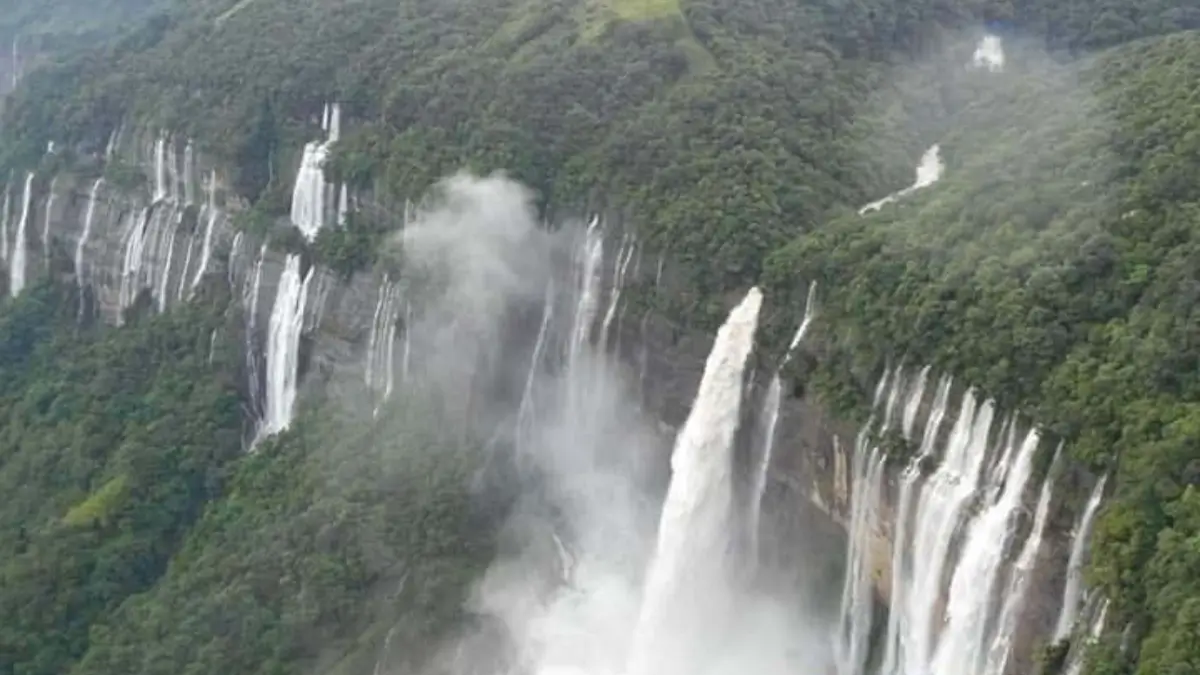
A very famous waterfall in India is loved for its unique look and natural beauty. What makes it special is that the water does not fall in just one stream. Instead, it flows down in seven separate lines, especially during the rainy season. This magical sight attracts many visitors who come to enjoy the peaceful surroundings, cool mist, and breathtaking views of nature.
Which is the Seven Sisters Waterfall?
The Seven Sisters Waterfall is a famous seasonal waterfall in Meghalaya, India. It is also called Nohsngithiang Falls. During the rainy season, the water spreads out into seven separate streams that fall side-by-side from a high cliff near Cherrapunji. This beautiful waterfall is best seen in the monsoon months and is one of the most popular natural attractions in Northeast India.
Where is the Seven Sisters Waterfall Found?
The Seven Sisters Waterfall, also known as Nohsngithiang Falls, is located near Cherrapunji in Meghalaya. It lies close to the small village of Mawsmai, right on the steep edge of the Meghalaya Plateau. The area receives very heavy rainfall, which is why the waterfall becomes especially beautiful during the monsoon months.
Why is it Called the Seven Sisters?
The waterfall gets its name because the water splits into seven thin streams that fall side-by-side. When seen from a distance, these streams look like seven sisters standing together, gently flowing down the tall rock wall.
Height and Special Features
The Seven Sisters Waterfall drops from a height of nearly 315 metres, making it one of the tallest waterfalls in India. During the rainy season, the wide cliff turns into a glowing curtain of water, creating an unforgettable view.
Geographical Importance
This waterfall is part of the Khasi Hills. The rock here is mainly limestone, which naturally cracks and forms channels. Over many years, rain has carved paths into the cliffs, helping the water separate into seven streams when the flow is heavy.
How do the Seven Streams Form?
Rainwater falls over the wide rock surface and flows through tiny grooves and cracks. These natural pathways guide the water into seven different channels, which is how the famous seven streams appear.
Why does it Vanish in the Dry Season?
During winter and summer, rainfall becomes very low in this region. Because of this, the water supply reduces, and the streams either become very thin or disappear completely. That is why the Seven Sisters Waterfall is called a seasonal waterfall.
Best Time to See the Waterfall
This waterfall is seasonal. It flows in full strength only during the monsoon season, when Meghalaya receives heavy rain. During the rains, the seven streams stretch widely across the cliff, creating a powerful and beautiful sight. In the dry months, the flow becomes very small or may even stop.
Beauty at Sunset
One of the most magical moments at Nohsngithiang Falls is during sunset. When the sunlight falls on the water, it creates golden and colourful reflections. This glowing effect on the waterfall makes the view truly unforgettable.
Other Waterfalls Nearby
The Sohra (Cherrapunji) region is famous for its rainfall and has many waterfalls. Some nearby waterfalls include:
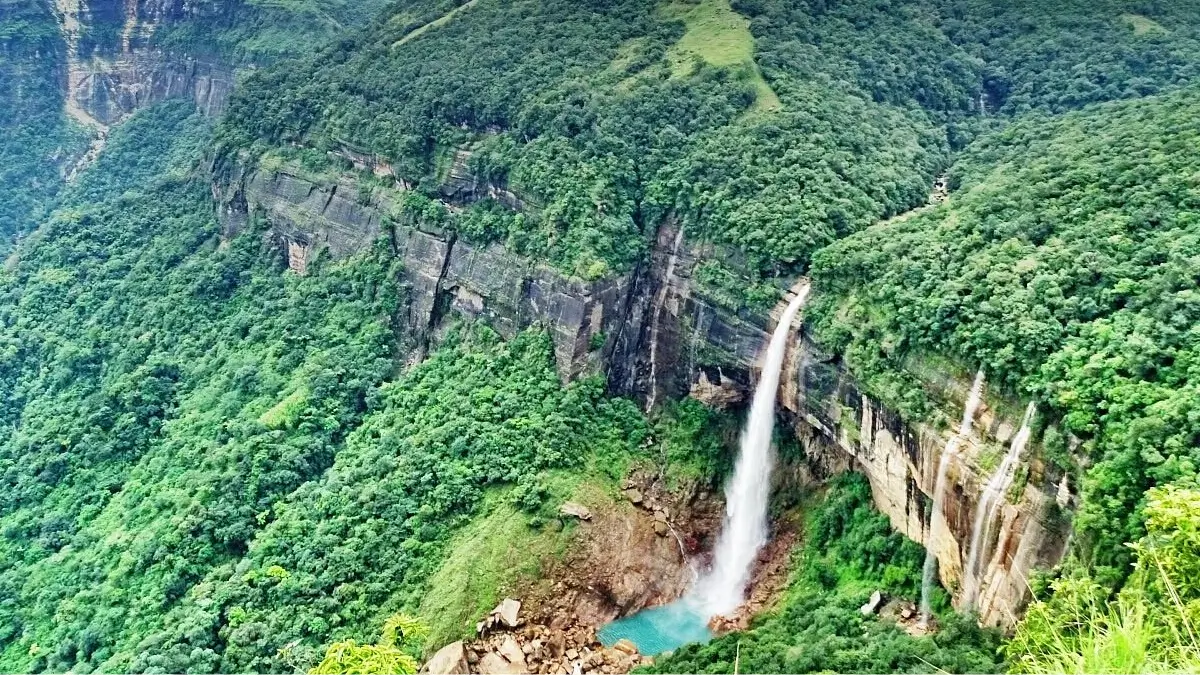
- Nohkalikai Falls
- Dain Thlen Falls
Other parts of Meghalaya, like the Jaintia Hills and Garo Hills, also have beautiful waterfalls such as Tyrchi Falls and Pelga Falls.
Interesting Facts About the Seven Sisters Waterfall
- One of India’s Tall Waterfalls: With a huge drop of about 315 metres, it is counted among the tallest waterfalls in the country.
- Visible Only During Heavy Rain: The seven-stream pattern appears only when there is enough rainfall.
- Located in One of the Wettest Places on Earth: Cherrapunji receives massive rainfall every year.
- Sometimes Hidden by Clouds: Fog often covers the cliffs, making the waterfall appear and disappear throughout the day.
- Flows Over a Limestone Cliff: The pale rock makes the falling water look bright and shiny.


 Which City is known as the City of Thous...
 Which State has the Most River in India?
 Top-10 Polluted Countries in the World a...