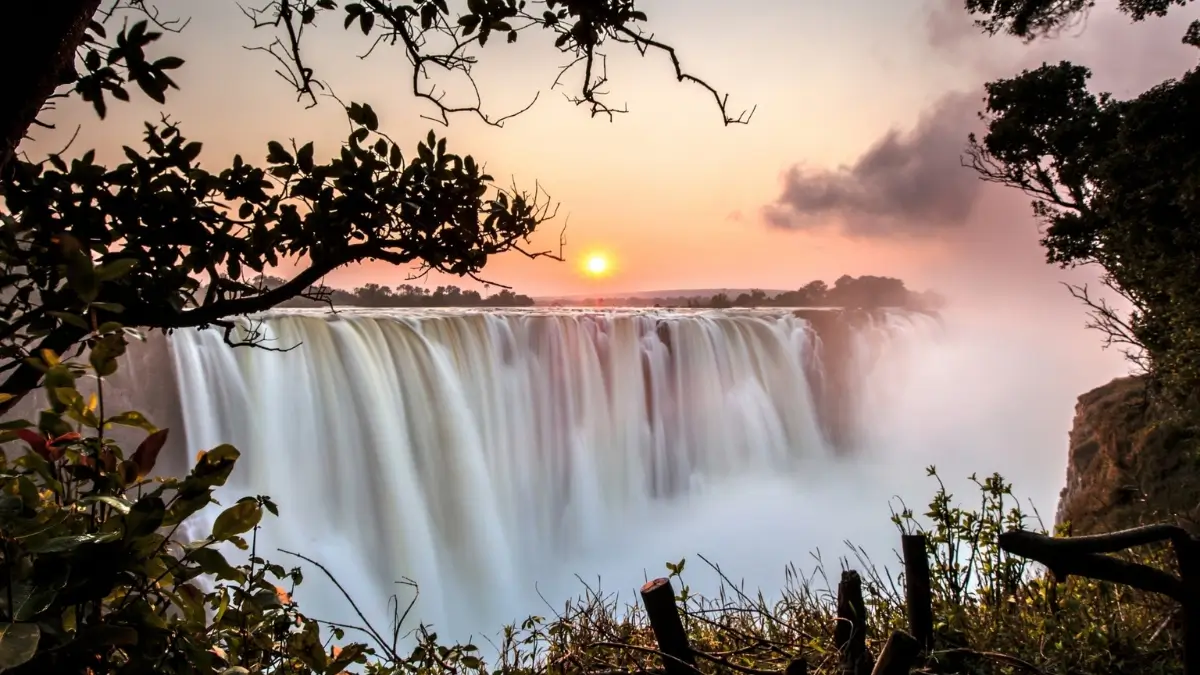
Waterfalls are one of nature’s most beautiful and powerful sights. They show how water can move with incredible force, creating mist, noise, and amazing views. People from all over the world travel to see large waterfalls because they are both exciting and peaceful at the same time. These natural wonders are often surrounded by rivers, forests, and wildlife, making them truly special places to visit and admire.
Which Waterfall is known as the Smoke that Thunders?
Victoria Falls is known as the “Smoke That Thunders.” It is located on the Zambezi River, forming a border between Zambia and Zimbabwe. The waterfall gets its name from the huge mist that rises like smoke and the loud roar of falling water that sounds like thunder. It is one of the largest waterfalls in the world, famous for its rainbows, moonbows, and the lush rainforest created by its constant spray.
Why it’s called the Smoke that Thunders?
Victoria Falls got this name because of the huge mist and loud roar created by the falling water. When the Zambezi River drops into the gorge below, it produces massive clouds of mist that rise very high. The water’s impact also creates a thunder-like sound that can be heard from far away, especially during the rainy season.
Location of Victoria Falls
Victoria Falls is on the Zambezi River in southern Africa. It forms a natural border between Zambia and Zimbabwe. Nearby towns like Livingstone in Zambia and Victoria Falls Town in Zimbabwe make it easy for tourists to visit this amazing waterfall.
One of the Largest Waterfalls in the World
Victoria Falls is very wide and tall, making it one of the largest waterfalls on Earth. It is about 1,708 meters wide and 108 meters high. This combination of width and height creates the largest single sheet of falling water in the world.
The Power of Water and Sound
During the rainy season, the Zambezi River carries an enormous amount of water, sometimes more than 500 million cubic meters per minute. The water’s impact produces a deep, loud roar that travels across the surrounding area, leaving visitors amazed.
Mist, Rainbow and Moonbows
The waterfall produces mist that rises more than 400 meters. In the daytime, this mist often creates colorful rainbows. On full moon nights, visitors may see a rare “moonbow,” which is a rainbow caused by moonlight.
UNESCO World Heritage Site
Victoria Falls was declared a UNESCO World Heritage Site in 1989. The constant mist has created a rainforest along the gorge, which supports many rare plants and animals, even in a generally dry region.
Interesting Facts About Victoria Falls
- Local Name: The local Tonga name, Mosi-oa-Tunya, means “The Smoke That Thunders,” describing the mist and roar of the waterfall long before Europeans discovered it.
- Border Between Two Countries: The waterfall sits on the border of Zambia and Zimbabwe, so tourists can enjoy views from both sides. Each side offers a unique perspective.
- Rainforest Created by Mist: The spray from the waterfall has created a lush rainforest that stays green even in dry seasons. It is home to unique plants and animals.
- Visible from Space: During the peak flow, the mist rises so high and spreads so wide that it can even be seen from space in satellite images.
- Adventure and Tourism: Victoria Falls is a popular destination for tourists seeking adventure. Activities include bungee jumping, white-water rafting, helicopter rides, and swimming in the Devil’s Pool, a natural pool right on the edge of the falls.


 Top-10 Largest Oil Consuming Countries i...
 What is the National Fruit of Malaysia? ...
 What is the Difference Between LPG and P...