
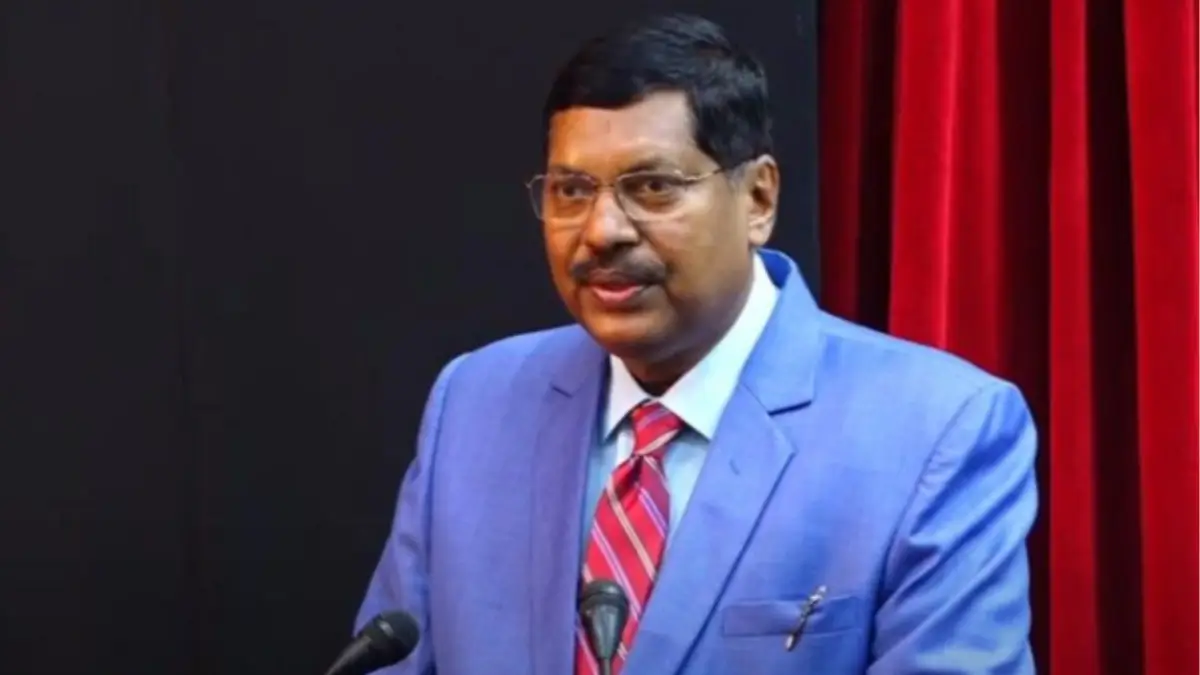
Justice Bhushan Ramkrishna Gavai is one of India’s most respected judges and currently serves as the 52nd Chief Justice of India (CJI). Sworn in on 14 May 2025, he is known for his balanced judgments, deep knowledge of law, and strong commitment to justice and equality. His appointment is a historic milestone in the Indian judiciary.
Early Life and Education of Justice B.R. Gavai
Bhushan Ramkrishna Gavai was born on 24 November 1960 in Amravati, Maharashtra. He attended local schools in Amravati and later continued his studies at Holy Name High School in Mumbai.
He earned degrees in Commerce and Law from Amravati University. After completing his education, he joined the legal profession in 1985, beginning a remarkable career that would later lead him to the highest judicial office in the country.
Career Journey of Justice Gavai
Justice Gavai started his career by working under Raja S. Bhonsale, a former Advocate General and High Court judge. He practiced law at the Bombay High Court and later focused his work at the Nagpur Bench, specializing in constitutional and administrative law.
He served as standing counsel for several government bodies, including the Nagpur and Amravati Municipal Corporations and Amravati University. In 2000, he was appointed as the Government Pleader and Public Prosecutor at the Nagpur Bench.
In 2003, he was elevated as a judge of the Bombay High Court, becoming a permanent judge in 2005. After serving 14 years in the High Court, he was appointed as a judge of the Supreme Court of India in May 2019.
On 14 May 2025, President Droupadi Murmu administered the oath of office, making him the 52nd Chief Justice of India. His tenure will continue until 23 November 2025.
Historical Significance of Justice Gavai
Justice Gavai’s appointment is highly significant for several reasons:
- He is the first Chief Justice of India from the Buddhist community.
- He is only the second Dalit (Scheduled Caste) judge to become the Chief Justice after Justice K. G. Balakrishnan.
- His leadership represents greater diversity and inclusion in India’s highest court.
At the start of 2025, the Supreme Court had three judges from the Scheduled Castes, marking the highest representation in its history.
Important Judgements
Justice Gavai has contributed to several landmark Supreme Court judgments:
Article 370 Abrogation Case
He was part of the five-judge Constitution Bench that upheld the abrogation of Article 370, confirming the constitutional validity of revoking Jammu and Kashmir’s special status.
Electoral Bonds Case
Justice Gavai was on the Constitution Bench that struck down the Electoral Bonds Scheme, calling it a violation of citizens’ right to information under Article 19(1)(a).
Bulldozer Demolitions
He co-authored a ruling that criticized illegal demolitions by state authorities, stressing that such actions violated the rule of law and due process.
Sub-classification Among Scheduled Castes
In the Davinder Singh case, he supported allowing sub-classification within Scheduled Castes, ensuring fairer distribution of benefits and identifying the creamy layer.
Rahul Gandhi Conviction Stay
In 2023, his bench stayed the conviction of Rahul Gandhi in a defamation case, noting that the punishment had major political consequences, including disqualification from Parliament.
Personal Life of Bhushan Ramakrishna Gavai
Justice Gavai was born into a family deeply influenced by Dr. B. R. Ambedkar’s ideals. His father, R. S. Gavai, was a prominent politician — a Governor, MP, and leader of the Republican Party of India (Gavai) faction.
His daughter, Karishma Gavai, works as an assistant professor at National Law University, Nagpur, and his brother Rajendra Gavai is also active in politics. The family follows Buddhism and is dedicated to social equality and education.


 Who is known as the Father of Mobile Pho...
 Which is the Highest Airport in the Worl...
 Which Country is the Largest Exporter of...











