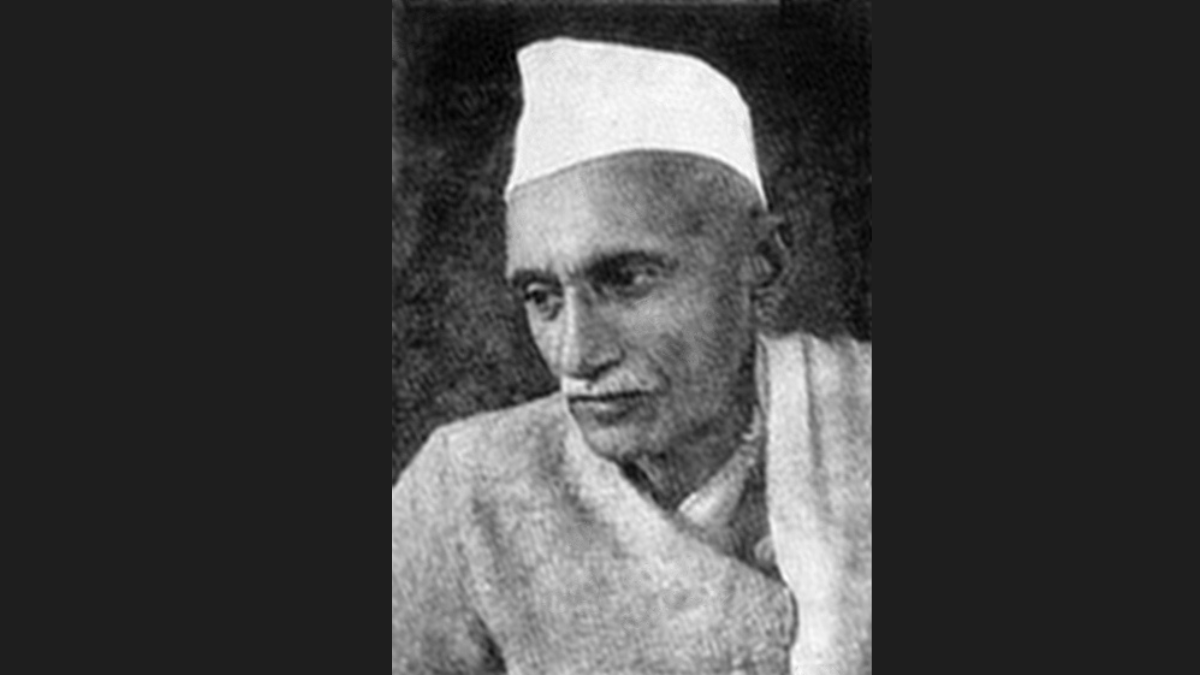
The title ”Father of Gujarat” is given to a great leader who dedicated his entire life to the service of people. Known for living simple and working selflessly, he contributed greatly to social reform, rural development and the freedom struggle. His efforts were key in the creation of the state of Gujarat in 1960, making him a beloved and respected figure in the state’s history.
Father of Gujarat
Gujarat, known for its rich culture and proud history, honours one man as its ‘‘Father of Gujarat.” This title belongs to Ravishankar Vyas, more lovingly remembered as Ravishankar Maharaj. He was a freedom fighter, social worker and a true follower of Mahatma Gandhi’s ideals. His life was devoted to serving the people, fighting for India’s freedom and shaping the future of Gujarat.
Early Life and Background
Ravishankar Maharaj was born on 25 February 1884, on the festival of Mahashivaratri, in Radhu village (present day Kheda district, Gujarat). He belonged to a Vadara Brahmin peasant family. His parents, Pitambar Shivram Vyas and Nathiba, were simple farmers.
From an early age, he faced challenges. He left school after the sixth standard to help his family in agriculture. By the time he was 22 years old, he had lost both his parents. He was married to Surajba, but his life’s path soon led him to dedicate himself completely to the service of society.
Influence of Arya Samaj and Mahatma Gandhi
As a younger man, he was deeply influenced by the Arya Samaj philosophy, which promoted truth, self-reliance and social reform. In 1915, he met Mahatma Gandhi. This meeting changed his life forever. Inspired movement and social reform activities.
He became one of Gandhi’s closest associates along with Sardar Vallabhbhai Patel. In Gujarat, he worked with leaders like Darbar Gopaldas Desai, Narhari Parikh and Mohanlal Pandya to organize nationalist revolts during the 1920s and 1930s.
Role in the Freedom Struggle
Ravishankar Maharaj gave up his rights to his ancestral property and dedicated himself fully to the freedom movement. His contributions included:
- Borsad Satyagraha (1923): Protested against the unjust Haidiya Tax.
- Bardoli Satyagraha (1928): Supported farmers’ rights and was jailed for six months.
- Salt March (1930): Walked alongside Gandhi and was imprisoned for two years.
- Quit India Movement (1942): Took party actively and worked to stop communal violence in Ahmedabad.
his courage and commitment made him a respected leader in Gujarat’s fight for freedom.
Social Work and Rural Development
Even before independence, Ravishankar Maharaj worked for the upliftment of rural communities. He helped in the rehabilitation of Baraiya Koli and Patanvadiya Koli communities in coastal Gujarat. In 1920, he founded the Rashtriya Shala (National School) in Sunav village to provide education based on Indian values.
He also took part in flood relief work in 1927, which brought him recognition as a compassionate leader. After independence, his focus shifted even more towards social service.
Leader of Post-Independence Gujarat
After India became independent in 1947, Ravishankar Maharaj played a big role in shaping Gujarat’s future. At that time, Gujarat was part of the larger Bombay State. There was a strong demand to form a separate state for Gujarati-speaking people.
On 1 May 1960, Gujarat was officially created and Ravishankar Maharaj had the honour of inaugurating the new state. This historic role earned him the title of ”Father of Gujarat.”
Movements and Campaigns After Independence
Ravishankar Maharaj did not stop working after freedom. He:
- Joined Vinoba Bhave in the Bhoodan Movement (1955-1958), walking 6,000 km to encourage land donations for the poor.
- Supported the Sarvodaya Movement in the 1960s to promote self-reliance and equality.
- Opposed the Emergency (1975), standing for democracy and people’s rights.
It also became a tradition for every newly appointed Chief Minister of Gujarat to visit him for blessings before taking office.
Simple Life of Father of Gujarat
Despite his fame, Ravishankar Maharaj lived a simple life. He wore Khadi clothes, stayed in villages and worked directly with common people. His life was an example of service before self.
Death and Legacy
Ravishankar Maharaj passed away on 1 July 1984 in Borsad, Gujarat, at the age of 100. His memory continues to inspire generations. A memorial dedicated to him is located at Adhyapan Mandir, Vallabh Vidyalaya, Bochasan.
In 1985, the Government of India honoured him with a postal stamp. The Ravishankar Maharaj Award for social work, worth Rs.1 lakh, was created in his honour by the Government of Gujarat.
In Literature and Culture
Writers celebrated his life through books such as:
- ”Manasai Na Diva” by Jhaverchand Meghani, based on their work together among tribal people.
- ”Jene Jivi Janyu” (1984), a biographical novel by Pannalal Patel.


 Which Country is the Largest Coal Produc...
 Which Lake is known as the Lake Above th...
 How many International Airports are ther...