
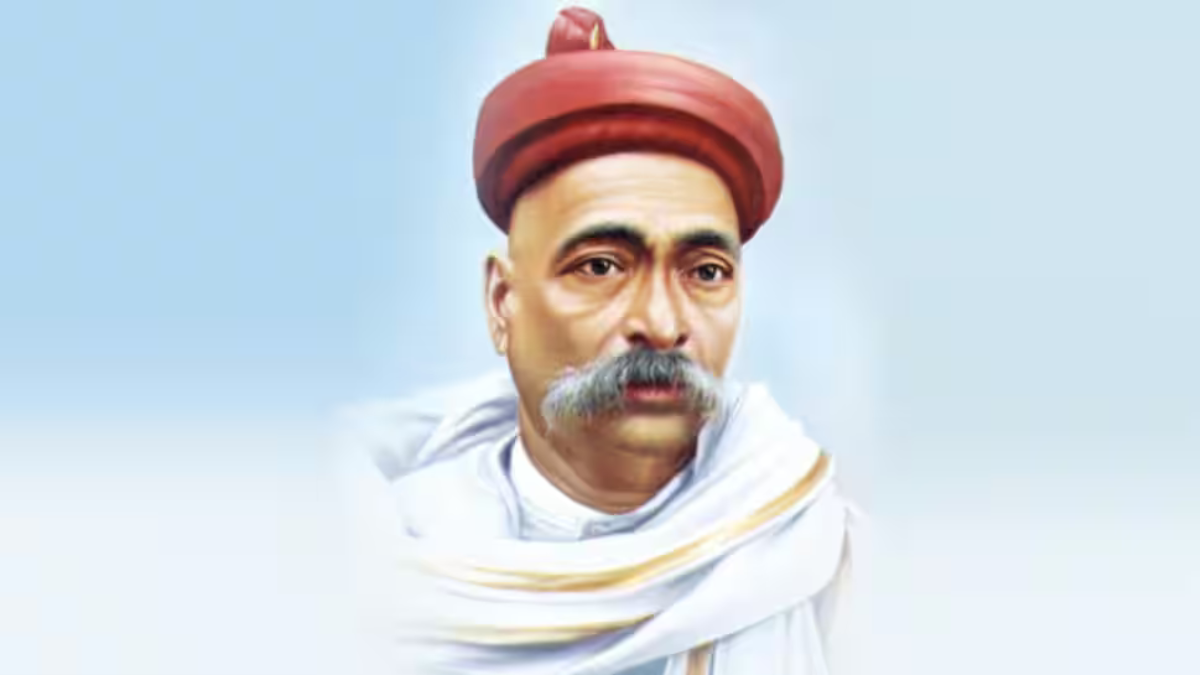
India’s struggle for independence saw the rise of many fearless leaders who inspired people to stand up against British rule. Among them, one leader from Maharashtra stood out for his courage, powerful speeches, and unshakable belief in self-rule. He was called the “Lion of Maratha” for his boldness and leadership — Bal Gangadhar Tilak.
Lion of Maratha
Bal Gangadhar Tilak is famously known as the Lion of Maratha for his fearless fight against British rule and his inspiring leadership in India’s freedom struggle. A strong advocate of Swaraj, he motivated millions through his speeches, writings, and movements like the Swadeshi campaign, earning respect as a bold and determined nationalist leader.
Early Life of Bal Gangadhar Tilak
- Birth: 23 July 1856, Ratnagiri, Maharashtra.
- Family: Born into a Marathi Hindu Chitpavan Brahmin family. His father, Gangadhar Tilak, was a Sanskrit scholar and teacher.
- Education: Completed B.A. in Mathematics from Deccan College (1877) and LLB from Government Law College (1879).
- Teaching Career: Started as a mathematics teacher but later turned towards journalism and public service.
Tilak’s vision was shaped by both education and a deep sense of duty towards his motherland. He believed religion, practical life, and service to society were all interconnected.
Entry into Public Life and Education Reforms
Tilak co-founded the New English School in 1880 and later the Deccan Education Society in 1884 to promote Indian culture and nationalist thinking. The Society also set up Fergusson College, where Tilak taught mathematics.
His focus was not only on academic learning but also on instilling patriotism among the youth.
The Rise of the Lion of Maratha
Tilak became a prominent leader in the Indian National Congress in 1890. Unlike moderate leaders, Tilak believed that self-rule must be achieved through assertive action. He, along with Lala Lajpat Rai and Bipin Chandra Pal, formed the famous Lal-Bal-Pal trio of extremist leaders who inspired the masses.
He openly challenged British policies, especially during:
- Plague Epidemic (1897) – Criticized harsh British measures in Pune.
- Partition of Bengal (1905) – Led the Swadeshi and Boycott movements to promote Indian goods and reject foreign products.
Journalism and the Power of the Press
Tilak started two influential newspapers:
- Kesari (Marathi)
- The Mahratta (English)
Through these papers, he strongly criticized British rule and encouraged Indians to unite for independence.
Sedition Charges and Imprisonment
Tilak faced three sedition trials (1897, 1909, and 1916). In 1908, he was sentenced to six years in Mandalay Prison in Burma, where he wrote his famous book “Gita Rahasya”, interpreting the Bhagavad Gita as a call to action (Karma Yoga).
Home Rule Movement
In 1916, Tilak founded the All India Home Rule League with Annie Besant, demanding self-rule for India. He toured villages, motivating farmers and ordinary citizens to join the movement. His slogan “Swaraj is my birthright” echoed across the nation.
Social and Cultural Contributions
Tilak believed festivals could unite people for political causes. He:
- Started Sarvajanik Ganeshotsav (1894) to bring people together in public celebrations.
- Revived Shiv Jayanti to honor Chhatrapati Shivaji Maharaj and inspire pride in India’s history.
While Tilak was a great political leader, his social views were often conservative, especially regarding women’s rights and caste issues.
Relationship with Other Leaders
Tilak shared mutual respect with Swami Vivekananda, agreeing to work in the political arena while Vivekananda focused on spiritual awakening.
He also tried to convince Mahatma Gandhi to adopt a more assertive approach rather than complete non-violence.
Final and Death
Tilak’s health declined after his imprisonment in Mandalay. On 1 August 1920, the “Lion of Maratha” breathed his last in Mumbai. His funeral was attended by lakhs of grieving Indians, showing the depth of love and respect he commanded.
Legacy of the Lion of Maratha
- His portrait hangs in the Central Hall of Parliament in New Delhi.
- Schools, coins, and memorials honor his name.
- His ideas inspired generations of freedom fighters.
Tilak will always be remembered as the man who infused courage into the hearts of Indians and made Swaraj a common dream.


 Who is known as the Father of Mobile Pho...
 Which is the Highest Airport in the Worl...
 Which Country is the Largest Exporter of...











