
In today’s fast-moving world, we often try to complete work faster and more efficiently. But the idea of working “smart” instead of just “hard” did not start today. It began more than 100 years ago with a man who carefully studied how people work. His ideas changed industries and still influence modern workplaces, apps and even technology.
Who is known as the Father of Scientific Management?
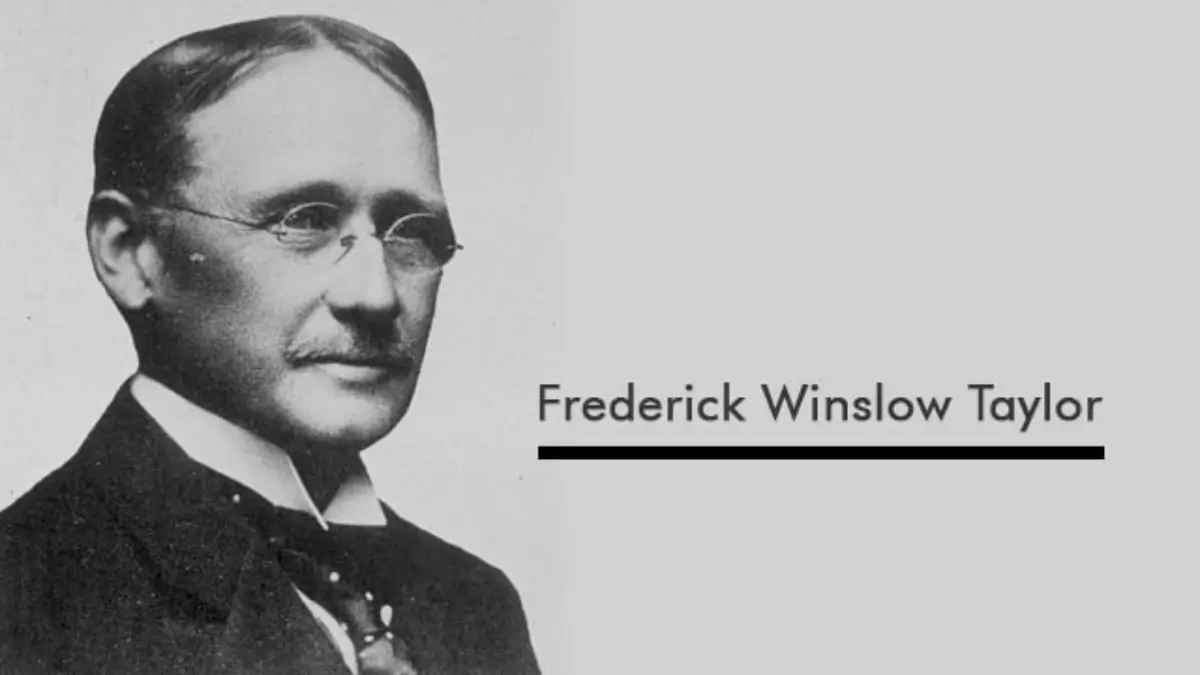
The title of Father of Scientific Management is given to Frederick Winslow Taylor. He was an American engineer who lived from 1856 to 1915.
Taylor introduced a new way of managing work by using science and observation. His famous book, The Principles of Scientific Management, was published in 1911 and explained his ideas in detail.
What Inspired Taylor’s Ideas?
Taylor worked in factories where he noticed that workers used different methods to do the same job. Many of these methods were slow and unorganized.
He believed that work could be improved if it was studied carefully. Instead of guessing the best way to do a task, he wanted to find it through observation and experiments.
What is Scientific Management?
Scientific Management is a method of managing work in the most efficient way.
Taylor believed that:
- Every job has one best way to do it.
- Managers should study and plan work scientifically.
- Workers should focus on doing tasks efficiently.
This method removed guesswork and made work more organized and productive.
Main Idea of Taylor Theory
The main idea of Taylor’s theory is simple: Use science to improve work efficiently.
He used techniques like time studies (measuring how long tasks take) and motion studies (observing how tasks are done) to find better ways of working.
Four Principles of Scientific Management
Here are the four principles of scientific management:
- Science, Not Guesswork: Work should be done using old habits or rough ideas. Instead, every task should be studied and improved using scientific methods.
- Harmony Between Workers and Managers: There should be a peaceful and friendly relationship between workers and management. Cooperation helps improve productivity.
- Cooperation, Not Individual Effort: Work should be done together. Managers plan the work, and workers perform it. Both depend on each other.
- Maximum Output: The goal is to increase production. When more work is done efficiently, both workers and employers benefit.
Importance of Taylor’s Ideas Today
Even today, Taylor’s ideas are used in many areas:
- Factories and industries
- Business management
- Productivity tools and apps
- Modern technologies and systems
Many companies still use his methods to improve efficiency and save time.
Criticism of Scientific Management
Some people believe that Taylor’s method treats workers like machines. If focuses more on work speed and less on human feelings.
However, despite criticism, his ideas have greatly influenced modern management.


 Which River is known as the River of Lif...
 Who is known as the King of the Deccan?
 Which Place is known as the Paragliding ...











